
Yucca Cane
Yucca elephantipes
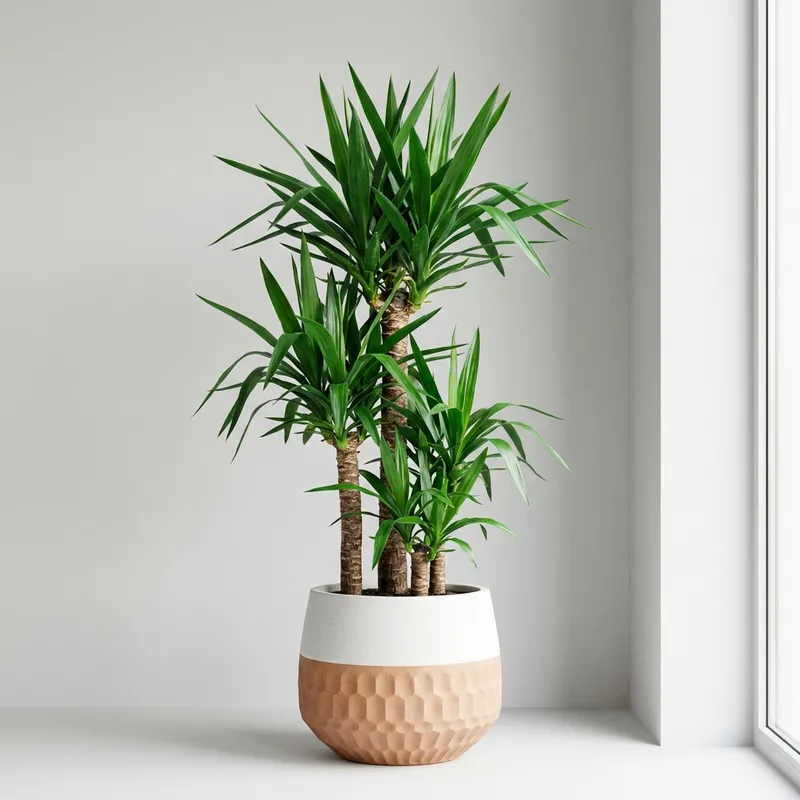
An architectural marvel, the Yucca elephantipes features bold, sword-shaped evergreen leaves atop a distinctive, thick 'elephant-foot' trunk. Originating from the arid regions of Central America, it brings a dramatic, desert-inspired aesthetic to any indoor space without the sharp spines found on many of its relatives.
Light
Full Sun
Water
Low
Difficulty
Easy
Humidity
Low
Pet Warning
Contains steroidal saponins, which are toxic to cats and dogs. Ingestion can cause drooling, vomiting, diarrhea, and weakness.
Care Guide
Light
Yucca elephantipes thrives in bright, direct sunlight. While it can tolerate bright indirect light, low light conditions will cause the plant to stretch and produce weak growth.
Watering
This plant is highly drought-tolerant. Allow at least 50% to 75% of the soil volume to dry out before watering. When watering, soak the soil thoroughly until water drains from the bottom, then discard excess water to prevent root rot.
Soil
A well-draining potting mix is essential. Use a specialty cactus or succulent soil, or amend standard potting soil with perlite or coarse sand to ensure rapid drainage.
Seasonal Tips
During winter, the plant enters a dormant phase. Reduce watering significantly, only providing enough to prevent the trunk from shriveling. In summer, you can move the plant outdoors, but acclimate it slowly to avoid leaf burn.
Common Issues
Yellow Leaves: Usually a sign of overwatering.
Brown Tips: Often caused by low humidity or fluoride in tap water.
Pests: Keep an eye out for mealybugs or scale in the leaf axils.
In-Depth Care & Growth
Feeding & Soil
Fertilizer
Balanced 10-10-10 water-soluble fertilizer
Soil
Well-draining, sandy or loamy cactus and succulent mix.
Physical Attributes
Mature Size
5 to 10 feet indoors
Growth Rate
Slow
Propagation
Stem cuttings or offsets (pups).
Common Varieties
Silver Star
The 'Silver Star' Yucca Cane features stiff, sword-shaped leaves characterized by pale green centers and striking, silvery-white margins.
Jewel
The 'Jewel' Yucca Cane features upright, sword-shaped leaves distinguished by a striking variegation pattern of vibrant green centers framed by broad, creamy-yellow margins.
Variegata
The 'Variegata' Yucca Cane is distinguished by its upright, sword-shaped leaves that feature a deep green center framed by striking creamy-white or pale yellow margins.