White Princess Philodendron
Philodendron erubescens 'White Princess'
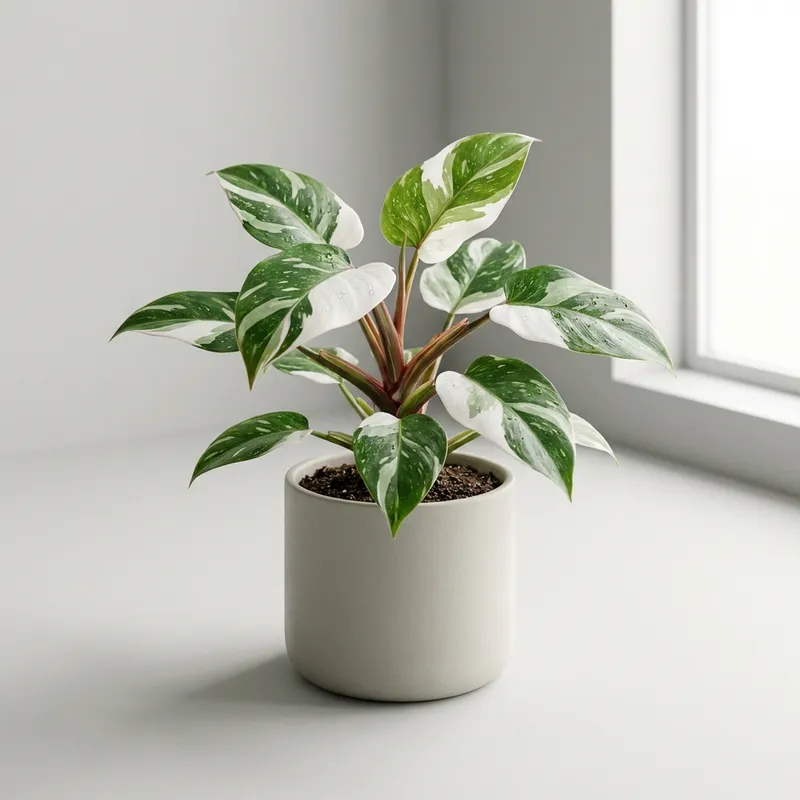
The Philodendron 'White Princess' is a highly coveted collector's plant known for its stunning lance-shaped leaves that feature splashes and sectors of brilliant white variegation against a deep emerald green background. Unlike its cousins the White Knight or White Wizard, the White Princess is distinguished by its green stems often edged with thin lines of pink or white. It is a self-heading variety that grows upright and creates a spectacular focal point in any indoor jungle.
Light
Bright Indirect
Water
Moderate
Difficulty
Moderate
Humidity
High
Pet Warning
Contains insoluble calcium oxalate crystals. If ingested, it can cause severe mouth irritation, swelling of the throat, drooling, and vomiting in cats, dogs, and humans.
Care Guide
White Princess Philodendron Care Guide #### Light Requirements To maintain the high-contrast variegation, provide plenty of bright, indirect light. Direct afternoon sun will burn the white sections of the leaves, while too little light will cause the plant to revert to solid green. A north or east-facing window is ideal. #### Watering Strategy Water when the top 50% of the soil feels dry to the touch. Saturate the soil until water drains from the bottom, then discard excess water. Avoid letting the plant sit in soggy soil, which leads to root rot. #### Soil and Potting Use a well-draining, chunky aroid mix. A combination of orchid bark, perlite, peat moss, and horticultural charcoal works best to ensure oxygen reaches the roots. #### Humidity and Temperature This plant thrives in humidity levels above 60%. Use a humidifier or a pebble tray if your home is dry. Keep temperatures between 65°F and 85°F and avoid cold drafts or air conditioning vents. #### Seasonal Tips In winter, growth will slow significantly. Reduce watering frequency and stop fertilizing until the first signs of spring growth appear. #### Troubleshooting * Reverting Variegation: If new leaves are solid green, move the plant to a brighter location. * Brown Leaf Edges: This usually indicates low humidity or the use of tap water with high mineral content. * Yellowing Lower Leaves: Often a sign of overwatering or poor drainage.
In-Depth Care & Growth
Feeding & Soil
Fertilizer
Balanced liquid fertilizer diluted to half-strength
Soil
Well-aerated aroid mix containing orchid bark, perlite, and coco coir.
Physical Attributes
Mature Size
2-3 feet tall and 1-2 feet wide
Growth Rate
Moderate
Propagation
Stem cuttings with at least one node, rooted in water, sphagnum moss, or perlite.