Staghorn Fern
Platycerium bifurcatum
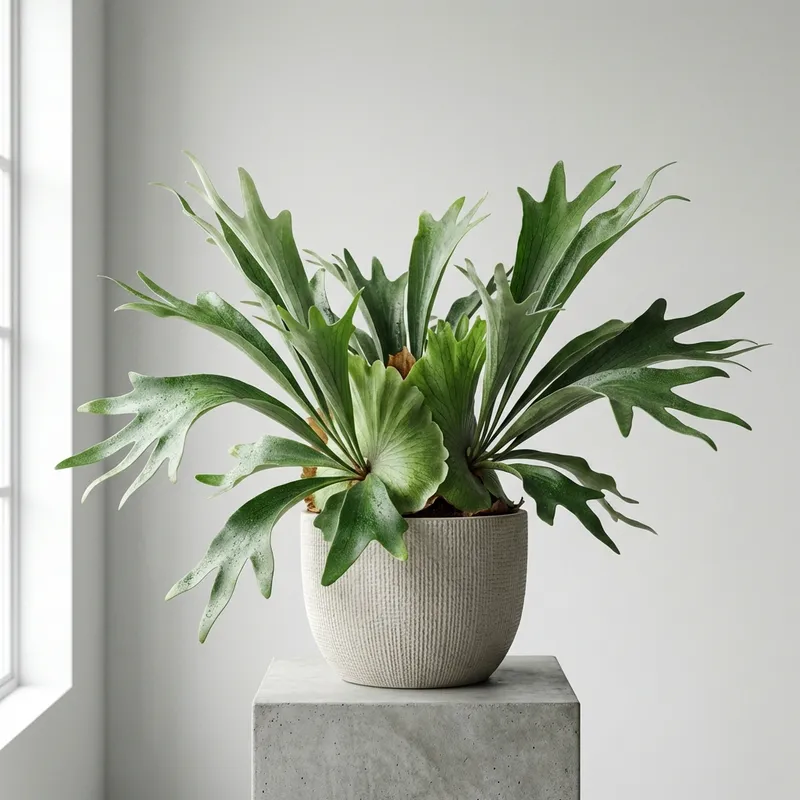
The Staghorn Fern is a stunning epiphytic plant known for its unique, antler-like fronds. Naturally found clinging to trees in tropical regions, it features two distinct types of fronds: flat, shield-like sterile fronds that protect the roots and anchor the plant, and fertile fronds that bifurcate into the iconic 'horns'. Its silvery-green foliage is covered in fine, white hairs called trichomes that help it retain moisture and nutrients.
Light
Bright Indirect
Water
Moderate
Difficulty
Moderate
Humidity
High
Pet Friendly
The Staghorn Fern is considered non-toxic to cats, dogs, and horses. However, it is best kept out of reach to prevent damage to the plant's delicate fronds.
Care Guide
Staghorn Fern Care Guide
Watering: The most effective method is ‘dunking’. Submerge the entire mount or root ball in a sink or tub of room-temperature water for 10-20 minutes. Allow it to drip dry before rehanging. In summer, do this once a week; in winter, every 2-3 weeks.
Shield Fronds: Never remove the brown, papery fronds at the base. These are sterile ‘shield’ fronds that protect the roots and collect organic matter. They are supposed to turn brown as they age.
Light: Place in a spot with plenty of bright, filtered light. Avoid direct afternoon sun, which can scorch the fronds. North or east-facing windows are often ideal.
Airflow: Since they are epiphytes, they require excellent air circulation. Avoid stagnant, humid corners and ensure the plant isn’t crowded by others.
Cleaning: Do not wipe the fronds with a cloth, as this removes the protective silver trichomes. Instead, use a gentle misting to remove dust.
In-Depth Care & Growth
Feeding & Soil
Fertilizer
Balanced liquid fertilizer or organic fish emulsion
Soil
Epiphytic medium such as long-fiber sphagnum moss, peat moss, or orchid bark; ideally mounted on wood.
Physical Attributes
Mature Size
2 to 3 feet in height and spread
Growth Rate
Moderate
Propagation
Division of offsets (pups) or germination of spores.
Common Varieties
Netherlands
The 'Netherlands' variety is characterized by its compact growth habit and stiff, silvery-green fertile fronds that branch into deep, upright, antler-like lobes.
Majus
The 'Majus' variety is distinguished by its large, stiff, dark green fertile fronds that fork into deep, dramatic, antler-like lobes.
Roberts
The 'Roberts' variety is distinguished by its compact, stiffly upright fertile fronds that feature a silvery-green sheen and multiple narrow, finger-like divisions at the tips.
Ziesenhenne
The 'Ziesenhenne' variety is a compact cultivar distinguished by its narrow, stiffly upright fronds that are deeply forked into slender segments and coated in a characteristic silvery-green sheen.