
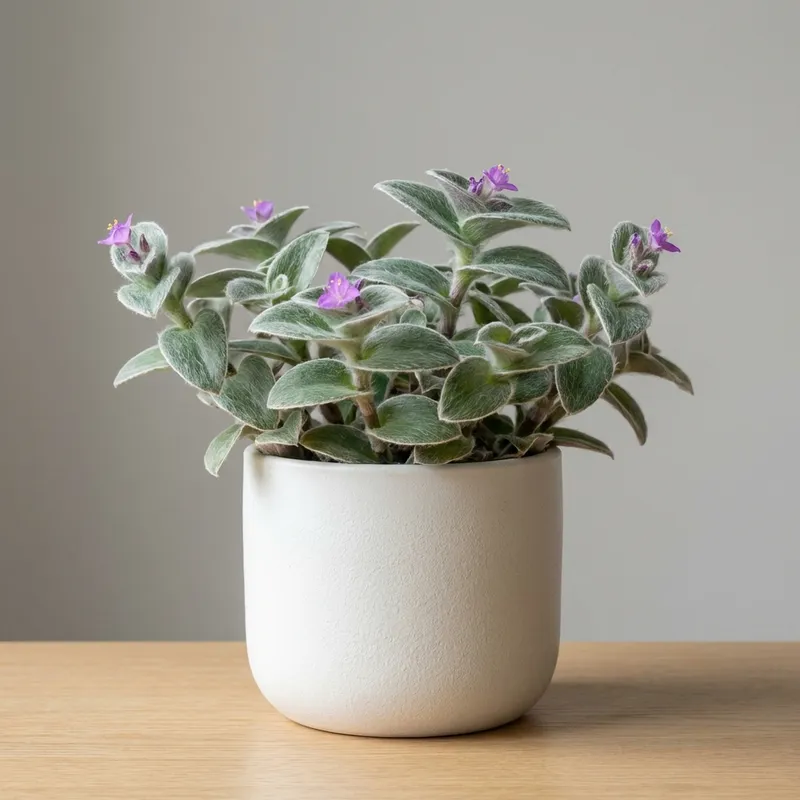
Pussy Ears
Cyanotis somaliensis
Cyanotis somaliensis, commonly known as Pussy Ears, is a delightful trailing perennial succulent native to Northern Somalia. It is widely admired for its small, lance-shaped leaves that are densely covered in fine, soft white hairs, giving the plant a velvety or furry texture. This plant features a compact, creeping habit and produces charming, small purple or blue flowers with prominent yellow anthers during the growing season. Its unique tactile appeal and manageable size make it a favorite for indoor gardeners and succulent collectors alike.
Light
Bright Indirect
Water
Moderate
Difficulty
Easy
Humidity
Moderate
Pet Friendly
Cyanotis somaliensis is generally considered non-toxic to pets. However, as with most plants, ingestion of large quantities may cause minor gastrointestinal upset in sensitive animals.
Care Guide
Light
Place your Pussy Ears in a spot that receives bright, indirect sunlight. While it can tolerate some direct morning sun, harsh afternoon light can scorch the foliage and damage the delicate silver-white hairs.
Watering
Water when the top 50% of the soil has dried out. When watering, pour directly onto the soil surface; avoid getting water on the leaves, as the dense hairs can trap moisture and lead to rot or fungal issues. Significantly reduce watering frequency during the winter months.
Temperature and Humidity
Maintain a temperature range between 60°F and 80°F (15°C - 27°C). Unlike many succulents, it appreciates moderate humidity levels. If your home is particularly dry, consider placing the pot on a pebble tray with water, but ensure the roots do not sit in water.
Soil and Potting
Use a well-draining potting mix specifically formulated for succulents and cacti. A mixture of potting soil, perlite, and coarse sand works best to ensure rapid drainage.
Common Issues
Leggy growth is a sign that the plant is not receiving enough light. If the leaves lose their fuzziness or turn brown, it may be a result of low humidity or direct sun damage. Overwatering is the most common cause of death, leading to root rot.
In-Depth Care & Growth
Feeding & Soil
Fertilizer
Balanced liquid fertilizer diluted to half-strength
Soil
Well-draining cactus or succulent mix with added grit or perlite.
Physical Attributes
Mature Size
Trailing stems reaching 12-18 inches in length
Growth Rate
Moderate
Propagation
Stem cuttings are highly successful when rooted in either water or moist potting medium.
Common Varieties
The straight species is the most common; often confused with Cyanotis kewensis (Teddy Bear Vine).
The straight species of Pussy Ears features narrow, lance-shaped bright green leaves densely covered in soft, silvery-white hairs that create its signature fuzzy appearance.