
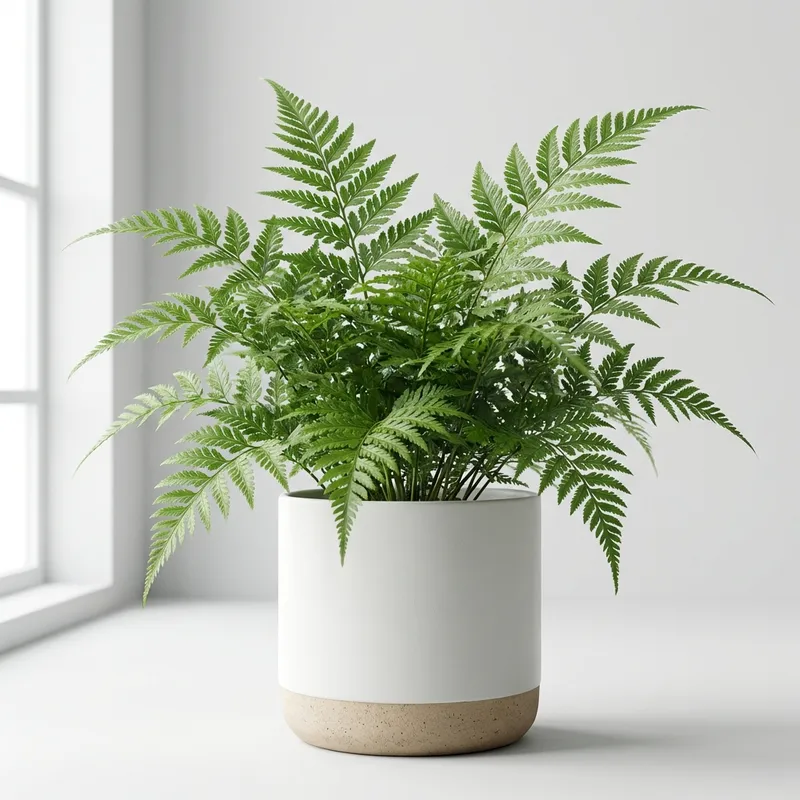
Pteris Fern
Pteris spp.
Commonly known as the Brake Fern or Table Fern, Pteris is a genus of roughly 300 species of ferns. These plants are prized for their unique, often variegated foliage and architectural frond shapes. Ranging from delicate, lacy textures to bold, strap-like leaves, they bring a prehistoric elegance to indoor spaces. Many cultivars feature a striking silvery-white band down the center of each leaflet, making them a favorite for terrariums and shaded plant stands.
Light
Bright Indirect
Water
High
Difficulty
Moderate
Humidity
High
Pet Friendly
Pteris ferns are generally considered non-toxic to cats, dogs, and humans, making them an excellent choice for pet-friendly households.
Care Guide
Pteris Fern Care Guide
Watering Pteris ferns should never be allowed to dry out completely. Keep the soil consistently moist but not soggy. If the soil dries too much, the delicate fronds will quickly turn brown and crispy.
Lighting These ferns prefer bright, filtered light. Direct afternoon sun will scorch their leaves, while too little light will cause growth to become leggy and variegation to fade.
Humidity & Temperature High humidity is vital. If your home is dry, use a pebble tray or a humidifier to maintain moisture levels above 50%. They prefer stable temperatures between 60°F and 75°F (15°C - 24°C).
Seasonal Maintenance In the winter, growth slows down, so you may reduce the watering frequency slightly, but never let the root ball dry out. Avoid placing near radiators or drafty windows.
Common Issues If you see brown tips, it is usually a sign of low humidity or chemical buildup from tap water. Consider using filtered or rainwater.
In-Depth Care & Growth
Feeding & Soil
Fertilizer
Balanced liquid fertilizer
Soil
A rich, peat-based potting mix with excellent drainage properties.
Physical Attributes
Mature Size
12-24 inches tall and wide
Growth Rate
Moderate
Propagation
Division of the root ball during repotting or by sowing spores found on the undersides of mature fronds.
Common Varieties
Pteris cretica 'Albolineata' (Silver Brake Fern)
The Silver Brake Fern is distinguished by its slender, ribbon-like leaflets that feature a striking creamy-white central stripe contrasted against vibrant green margins.
Pteris ensiformis 'Victoriae' (Silver Lace Fern)
The Silver Lace Fern is distinguished by its slender, arching fronds that feature a bold silvery-white stripe running down the center of each narrow, dark-green leaflet.
Pteris tremula (Australian Brake Fern)
The Australian Brake Fern is characterized by its large, arching fronds of delicate, light-green foliage that are intricately divided into a fine, lace-like pattern.