
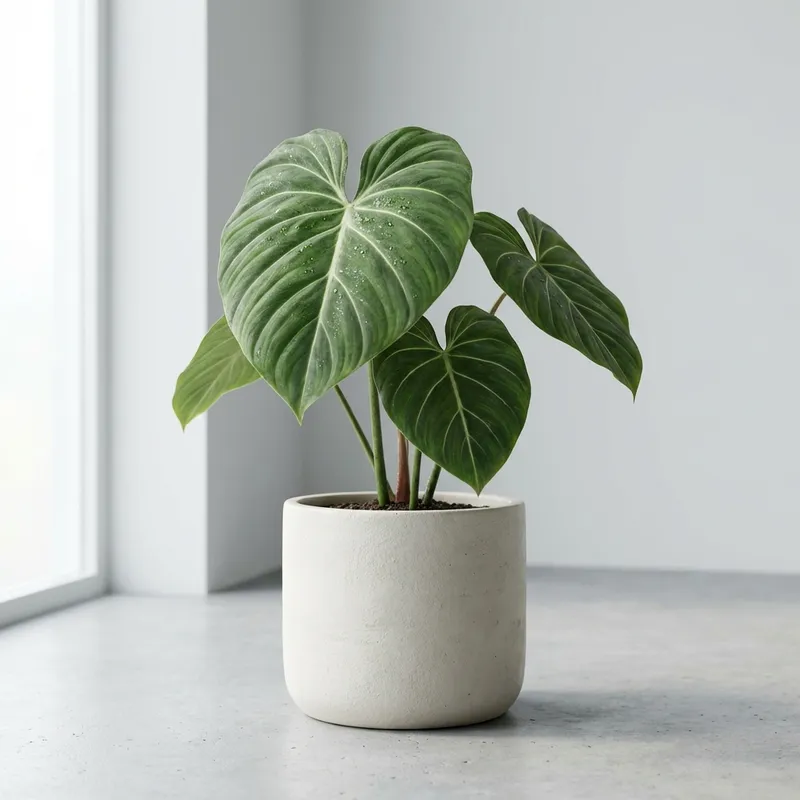
Philodendron
Philodendron
Philodendrons are a diverse genus of plants in the family Araceae, highly valued as houseplants for their lush, attractive foliage and incredible resilience. They range from climbing vines with heart-shaped leaves to large, self-heading shrubs, making them suitable for various interior design styles.
Light
Bright Indirect
Water
Moderate
Difficulty
Easy
Humidity
Moderate
Pet Warning
All parts of the Philodendron contain calcium oxalate crystals, which are toxic to cats, dogs, and humans. Ingestion can cause oral irritation, swelling, and vomiting.
Care Guide
Philodendron Care Guide
Light
Thrives in bright, indirect light. Prolonged direct sun will scorch leaves, while low light can cause leggy stems and smaller leaves.
Water
Water when the top inch of soil feels dry. These plants prefer consistent moisture but are prone to root rot if left in standing water. Reduce watering in winter.
Temperature and Humidity
Ideal temperatures are between 65°F and 80°F. They appreciate moderate to high humidity; use a humidifier or mist the leaves if the air is dry.
Maintenance
Wipe leaves with a damp cloth periodically to remove dust. This helps the plant breathe and keeps it looking vibrant.
Common Issues
Yellow leaves may indicate overwatering, while brown, crispy edges usually suggest low humidity or underwatering.
In-Depth Care & Growth
Feeding & Soil
Fertilizer
Balanced liquid houseplant fertilizer
Soil
Well-draining, peat-based potting mix with perlite.
Physical Attributes
Mature Size
Vining types can reach 10-20 feet indoors; upright types reach 3-6 feet.
Growth Rate
Moderate
Propagation
Stem cuttings in water or soil, division, or air layering.
Common Varieties
Heartleaf (P. hederaceum)
The Heartleaf Philodendron is characterized by its glossy, solid deep-green foliage that takes the form of perfectly symmetrical, pointed heart shapes.
Brasil
The Philodendron 'Brasil' features glossy, heart-shaped leaves distinguished by a vibrant, paintbrush-like stripe of lime green and yellow down the center of each dark green leaf.
Pink Princess
The 'Pink Princess' Philodendron features glossy, heart-shaped leaves that range from deep burgundy to near-black, strikingly accented with irregular splashes and sectors of vibrant bubblegum pink variegation.
Birkin
The Philodendron 'Birkin' features glossy, dark green, heart-shaped leaves distinguished by a striking and intricate pattern of thin, creamy-white pinstripe variegation.
Micans
The Philodendron ‘Micans’ features velvety, heart-shaped leaves with a shimmering iridescent finish that shifts between deep forest green, bronze, and rich burgundy tones.
Xanadu
The Philodendron ‘Xanadu’ is distinguished by its glossy, leathery, dark green leaves that feature deeply lobed, finger-like margins.
Moonlight
The Philodendron ‘Moonlight’ is a compact, self-heading plant distinguished by its vibrant, lance-shaped leaves that emerge in a glowing neon chartreuse before maturing into a soft emerald green.
Philodendron 'Birkin
The Philodendron 'Birkin' is a stunning, non-climbing cultivar known for its unique pinstripe variegation. Each heart-shaped leaf is deep green with striking white or cream-colored streaks that develop as the plant matures. It is a spontaneous mutation of the Philodendron 'Rojo Congo' and is highly prized for its compact growth habit and dramatic foliage.
Philodendron Brasil
Philodendron Brasil is a striking variegated cultivar of the classic Heartleaf Philodendron. It features heart-shaped leaves with a distinctive pattern of deep green, lime green, and creamy yellow. This fast-growing vining plant is incredibly resilient and adds a splash of tropical color to any indoor space, whether trailing from a hanging basket or climbing a totem.
Philodendron 'Burle Marx
Philodendron 'Burle Marx' is a fast-growing, low-maintenance tropical plant celebrated for its glossy, heart-shaped leaves and dense, clumping growth habit. Named after the iconic Brazilian landscape architect Roberto Burle Marx, this variety is prized for its ability to brighten indoor spaces with a lush, jungle-like aesthetic. It is particularly versatile, thriving as either a ground-covering mound or a climbing vine when provided with support.
Philodendron 'Florida Beauty' x tortum
A breathtaking botanical cross that merges the multi-lobed leaf shape of 'Florida Beauty' with the deeply pinnate, skeletal structure of Philodendron tortum. This hybrid produces large, architectural leaves with multiple slender, needle-like lobes that unfurl in a light green hue before maturing into a deep, glossy emerald. Its climbing growth habit and unique textural presence make it a highly desirable specimen for serious aroid collectors and interior designers alike.
Philodendron 'Florida Ghost
The Philodendron 'Florida Ghost' is a mesmerizing tropical hybrid prized for its unique foliage metamorphosis. Its deeply lobed, oak-like leaves emerge in a startling, ghostly white shade before gradually maturing through mint green to a deep, lustrous forest green. As an epiphytic climber, it brings a dramatic vertical element and a touch of the ethereal to indoor spaces.
Philodendron gloriosum
The Philodendron gloriosum is a breathtaking terrestrial aroid native to the tropical rainforests of Colombia. Unlike its climbing relatives, this species crawls across the forest floor. It is most famous for its massive, heart-shaped leaves that feature a velvety texture and deep green hue, accentuated by dramatic, contrasting white veins. This plant is a true showstopper for indoor gardens, offering an architectural elegance that few other foliage plants can match.
Philodendron 'Lemon Lime
The Philodendron 'Lemon Lime' is a vibrant, eye-catching cultivar of the classic heartleaf philodendron. Its most striking feature is its brilliant, neon-yellow to lime-green foliage that maintains its intensity even as the plant matures. This vining tropical plant is highly adaptable and brings a burst of electric color to indoor spaces, whether trailing from a hanging basket or climbing a moss pole.
Philodendron mayoi
Philodendron mayoi is a striking climbing aroid native to the rainforests of Brazil. It is highly valued by collectors for its deeply lobed, pinnatifid leaves that resemble the fronds of a palm or a fern. As the plant matures and is given vertical support, the foliage becomes increasingly dramatic and complex, offering a lush, architectural element to indoor tropical collections.
Philodendron Pink Princess
The Philodendron Pink Princess is a stunning and highly coveted tropical plant known for its dramatic, heart-shaped leaves. These leaves feature a deep burgundy-green base with unpredictable splashes and sectors of bright, bubblegum pink. As a climbing plant, it is an epiphyte in its natural habitat, using aerial roots to scale trees. It is prized by collectors for its rare color palette and architectural growth habit.
Philodendron Polypodioides
The Philodendron polypodioides is a rare and striking hemiepiphytic climber native to the tropical rainforests of South America. It is most famous for its deeply pinnatifid leaves that bear a remarkable resemblance to fern fronds or skeletal fingers. As the plant matures and is given the opportunity to climb, the foliage becomes increasingly complex and elongated, making it a highly architectural and sought-after specimen for serious aroid collectors.
Philodendron 'Prince of Orange
A stunning self-heading hybrid Philodendron prized for its extraordinary foliage color transitions. New leaves emerge in a brilliant, fiery orange, gradually fading to a pale apricot and eventually maturing into a deep, glossy green. Unlike many climbing Philodendrons, this variety grows in a neat, upright rosette pattern, making it a perfect architectural statement for indoor spaces.
White Princess Philodendron
The Philodendron 'White Princess' is a highly coveted collector's plant known for its stunning lance-shaped leaves that feature splashes and sectors of brilliant white variegation against a deep emerald green background. Unlike its cousins the White Knight or White Wizard, the White Princess is distinguished by its green stems often edged with thin lines of pink or white. It is a self-heading variety that grows upright and creates a spectacular focal point in any indoor jungle.
Heartleaf Philodendron
A classic, trailing houseplant beloved for its glossy, heart-shaped leaves and exceptional resilience. Often called the sweetheart plant, it produces long, graceful vines that can climb or cascade, making it perfect for hanging baskets or bookshelves. Its ability to adapt to various indoor environments makes it an ideal choice for beginners and enthusiasts alike.