Ocean Spider Plant
Chlorophytum comosum 'Ocean'
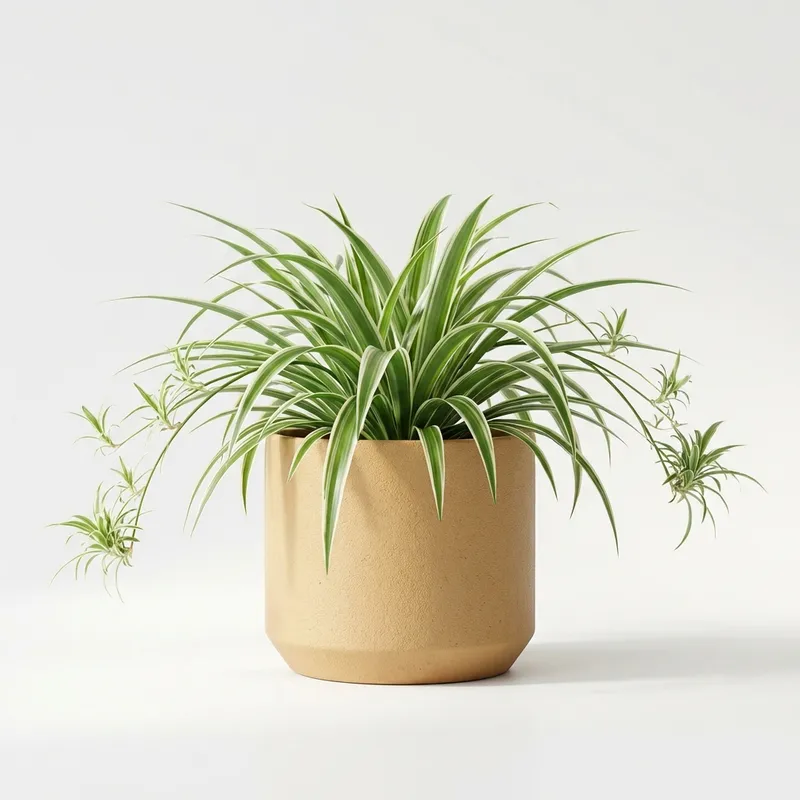
The 'Ocean' variety is a compact and exceptionally hardy cultivar of the classic Spider Plant. It is distinguished by its shorter, broader leaves compared to the standard species, featuring vibrant green centers edged with crisp, creamy-white margins. This plant is renowned for its air-purifying capabilities and its prolific growth of 'spiderettes'—tiny clones that cascade from arching stems, resembling a green and white fountain.
Light
Bright Indirect
Water
Moderate
Difficulty
Easy
Humidity
Moderate
Pet Friendly
Chlorophytum comosum is non-toxic to both cats and dogs. However, cats are often attracted to the grass-like leaves which contain mild hallucinogenic compounds similar to catnip. While not poisonous, excessive ingestion may cause a minor stomach upset.
Care Guide
Ocean Spider Plant Care Guide
Light Requirements
Place your 'Ocean' Spider Plant in bright, indirect sunlight. It can tolerate lower light levels, but its growth will slow and the variegation may become less distinct. Avoid direct midday sun, which can bleach or burn the leaves.
Watering Protocol
Water thoroughly when the top inch of soil feels dry. This plant prefers to stay consistently moist but not waterlogged. Pro-tip: Use filtered or rainwater if possible, as spider plants are sensitive to fluoride in tap water, which often causes brown leaf tips.
Soil & Potting
Use a well-draining potting mix rich in organic matter. Because these plants have thick, tuberous roots that store water, they can become root-bound quickly. Plan to repot every 1 to 2 years.
Seasonal Care
- Spring/Summer: This is the active growing phase. Ensure regular watering and feeding. You will likely see long stems with small white flowers followed by plantlets.
- Fall/Winter: Growth will naturally slow. Reduce watering frequency and stop fertilizing until the following spring.
Troubleshooting Common Issues
- Brown Tips: Usually caused by low humidity, over-fertilization, or chemicals in tap water. Increase humidity with a pebble tray or switch to distilled water.
- Yellowing Leaves: Often a sign of overwatering or poor drainage. Ensure the pot has drainage holes.
In-Depth Care & Growth
Feeding & Soil
Fertilizer
Balanced liquid water-soluble fertilizer
Soil
Well-draining, peat-based potting soil
Physical Attributes
Mature Size
12-15 inches tall and wide
Growth Rate
Fast
Propagation
Rooting plantlets (offsets) in water or soil, or division of the main root ball.