Norfolk Island Pine
Araucaria heterophylla
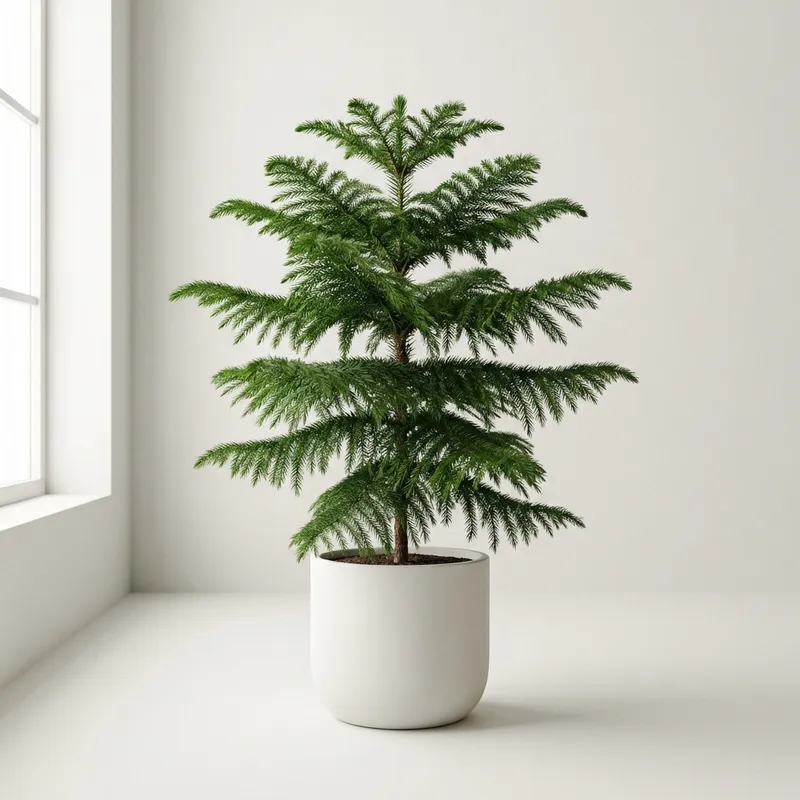
The Norfolk Island Pine is a stately evergreen conifer that brings a touch of the forest indoors. Despite its name and appearance, it is not a true pine but a member of the ancient Araucariaceae family. It features tiered, symmetrical branches covered in soft, bright green needles. In its native habitat of Norfolk Island, it can reach heights of 200 feet, but as a houseplant, it remains a manageable and elegant indoor tree often used as a living Christmas tree.
Light
Bright Indirect
Water
Moderate
Difficulty
Moderate
Humidity
High
Pet Warning
Ingestion of needles can cause stomach upset, vomiting, and lethargy in cats and dogs. The sharp needles can also cause physical irritation to the digestive tract.
Care Guide
Lighting
Place your Norfolk Island Pine in a spot that receives bright, indirect sunlight. A south or west-facing window is ideal. Rotate the pot a quarter turn every week to ensure even growth and prevent the tree from leaning towards the light.
Watering
Keep the soil consistently moist but never soggy. Water when the top inch of soil feels dry to the touch. Ensure the pot has excellent drainage to prevent root rot. If the needles become crispy and brown, the plant is likely thirsty.
Humidity
Native to a humid island environment, this plant struggles in dry indoor air. Maintain high humidity by using a humidifier, misting the foliage daily, or placing the pot on a tray filled with pebbles and water.
Temperature
Prefer moderate temperatures between 65°F and 75°F (18°C-24°C). Avoid placing the plant near cold drafts, heat vents, or fireplaces, as sudden temperature fluctuations can cause needle drop.
In-Depth Care & Growth
Feeding & Soil
Fertilizer
Balanced liquid fertilizer (20-20-20)
Soil
Well-draining, peat-based potting mix with a slightly acidic pH.
Physical Attributes
Mature Size
3-8 feet tall indoors
Growth Rate
Slow
Propagation
Primarily via seeds; terminal branch cuttings are possible but extremely difficult to root for non-professionals.
Common Varieties
Usually sold as the straight species; occasionally more compact cultivars or variegated forms exist in specialist collections.
This species typically features a symmetrical, tiered growth habit with soft, needle-like bright green foliage, though rare specialized forms may display more compact structures or striking creamy-white variegation.