Kentia Palm
Howea forsteriana
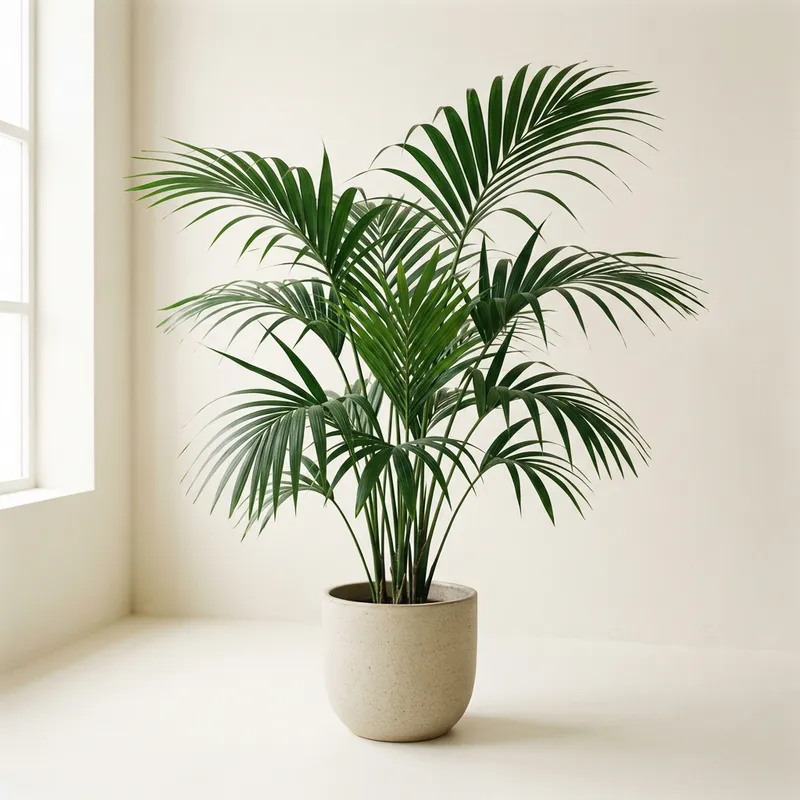
The Kentia Palm is an elegant, slow-growing palm renowned for its slender trunk and arching, feathery fronds. Native to Lord Howe Island, it has been a staple of interior design since the Victorian era due to its remarkable resilience and architectural beauty. Unlike many palms, it thrives in typical indoor environments and can tolerate less-than-ideal conditions with grace.
Light
Bright Indirect
Water
Moderate
Difficulty
Easy
Humidity
Moderate
Pet Friendly
Howea forsteriana is considered non-toxic to cats, dogs, and horses.
Care Guide
Kentia Palm Care Guide
Light While it prefers bright, indirect light, it is highly adaptable and can tolerate lower light levels better than most palm species.
Avoid direct sunlight as it can scorch the fronds.
Water Allow the top 1 to 2 inches of soil to dry out before watering thoroughly.
Ensure the pot has adequate drainage to prevent root rot. Reduce watering frequency in winter.
Humidity and Temperature Kentia palms prefer temperatures between 65°F and 75°F (18°C-24°C).
They enjoy moderate humidity; if your home is dry, mist the leaves occasionally or use a humidifier.
Maintenance Wipe the large fronds periodically with a damp cloth to remove dust and deter pests like spider mites or mealybugs.
Only prune fronds that have turned completely brown.
In-Depth Care & Growth
Feeding & Soil
Fertilizer
Balanced liquid palm fertilizer with micronutrients
Soil
High-quality, well-draining potting mix, ideally with a slightly acidic to neutral pH.
Physical Attributes
Mature Size
5 to 12 feet indoors
Growth Rate
Slow
Propagation
Propagated primarily through seeds, though this is a very slow process; division is generally not recommended as palms have sensitive root systems.
Common Varieties
Howea forsteriana (Standard Kentia)
The Howea forsteriana (Standard Kentia) is characterized by its graceful, arching fronds of deep forest green composed of long, slender leaflets that taper into elegant, drooping points.
Howea belmoreana (Sentry Palm)
Distinguished by its compact and upright growth, the Sentry Palm features dark green fronds that arch more sharply and possess more closely-spaced leaflets than the standard Kentia Palm.