
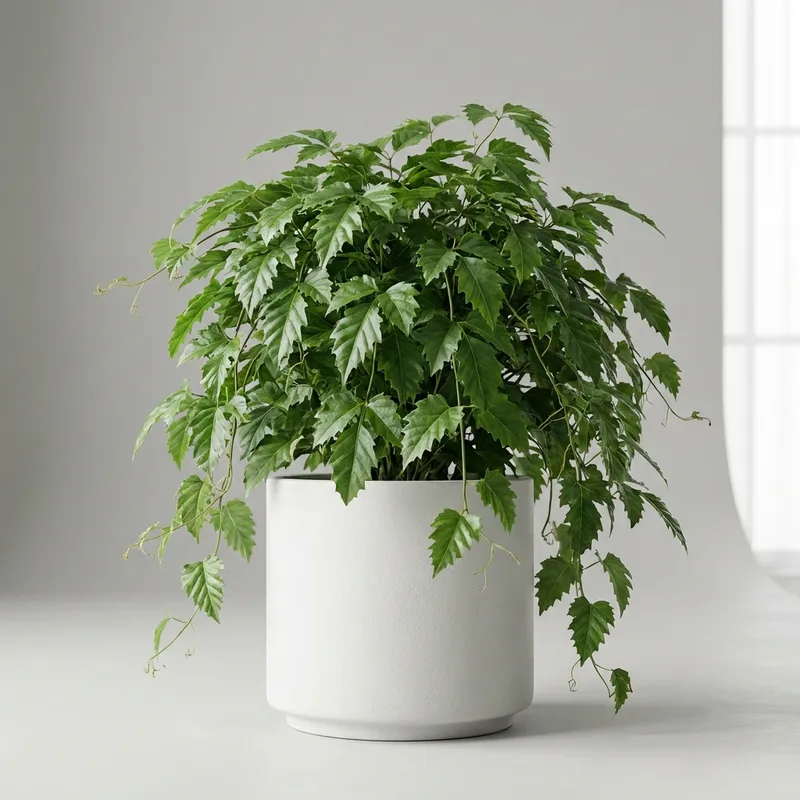
Kangaroo Vine
Cissus antarctica
The Kangaroo Vine is a robust and fast-growing climber native to the rainforests of Australia. It is highly valued as an indoor plant for its glossy, dark-green, heart-shaped leaves with serrated edges and its ability to thrive in various indoor conditions. Its versatile growth habit allows it to be trained on a trellis, trailed from a hanging basket, or grown as a dense floor plant, making it a favorite for adding lush greenery to homes and offices.
Light
Medium
Water
Moderate
Difficulty
Easy
Humidity
Moderate
Pet Friendly
Cissus antarctica is non-toxic to dogs, cats, and horses, making it an excellent choice for pet-friendly households.
Care Guide
Lighting
Kangaroo Vines prefer bright, indirect light but are well-known for their tolerance of medium light levels. Avoid direct midday sun, as it can burn the foliage.
Watering
Maintain evenly moist soil during the spring and summer. Allow the top inch of soil to dry out before watering again. Be careful not to overwater, as they are susceptible to root rot if left in standing water. Reduce watering significantly during the winter months.
Humidity and Temperature
This plant enjoys moderate humidity and standard household temperatures between 60°F and 75°F (15°C to 24°C). If the air is very dry, use a humidifier or mist the leaves occasionally to prevent leaf drop or brown tips.
Pruning and Maintenance
To maintain a bushy appearance, pinch back the growing tips regularly. This prevents the plant from becoming too leggy and encourages lateral growth. Wipe the leaves periodically with a damp cloth to remove dust and keep the foliage glossy.
In-Depth Care & Growth
Feeding & Soil
Fertilizer
Balanced water-soluble houseplant fertilizer
Soil
A well-draining potting mix, such as a blend of peat moss, perlite, and standard potting soil.
Physical Attributes
Mature Size
6 to 10 feet indoors
Growth Rate
Fast
Propagation
Stem tip cuttings are the easiest method; take 3-4 inch cuttings with a few leaves and root them in water or directly in moist soil during spring or summer.
Common Varieties
Cissus antarctica 'Minima' (a dwarf
*Cissus antarctica* 'Minima' is a compact dwarf variety featuring small, glossy deep green leaves with a heart-like shape and distinctively serrated edges.
more compact cultivar)
This compact cultivar features dense, glossy dark green foliage characterized by leathery, ovate-pointed leaves with deeply veined patterns and distinctively serrated margins.