Hoya obovata
Hoya obovata
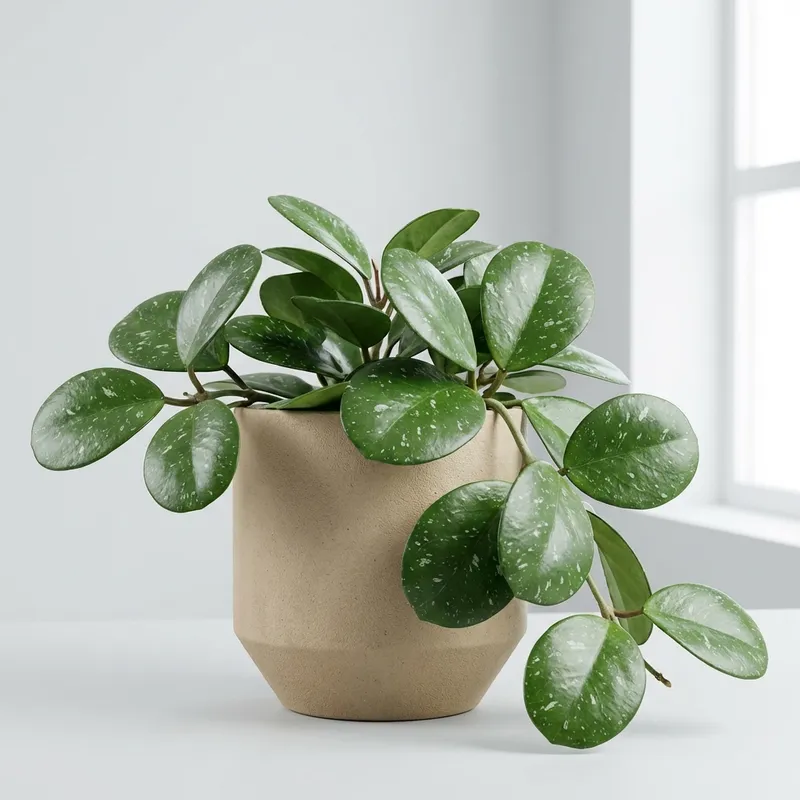
Hoya obovata is a magnificent semi-succulent vining plant known for its thick, paddle-shaped leaves that often display beautiful silver speckling or 'splashes'. This epiphytic climber is native to the tropical forests of Indonesia and is a favorite among collectors for its resilience and stunning clusters of fragrant, waxy, star-shaped flowers that bloom in shades of white and pale pink with deep rose centers. It is an ideal plant for both beginners and experienced collectors due to its striking appearance and low-maintenance nature.
Light
Bright Indirect
Water
Low
Difficulty
Easy
Humidity
Moderate
Pet Friendly
The plant is non-toxic to cats and dogs according to the ASPCA, though its milky sap can be a mild irritant to the skin or if ingested in large quantities.
Care Guide
Lighting Guidelines: Hoya obovata thrives best in bright, indirect light.
A spot near an east or west-facing window is ideal; if placed in a south-facing window, use a sheer curtain to filter the harsh rays. Higher light levels will often trigger the silver ‘splashing’ on the leaves and encourage blooming.
Watering Practices: Allow the potting medium to dry out completely before watering.
These plants store water in their thick leaves and are prone to root rot if kept too wet. Use the soak-and-dry method and ensure the pot has ample drainage holes.
Soil Preferences: Use a chunky, airy mix designed for epiphytes.
A combination of two parts orchid bark, one part perlite, and one part high-quality potting soil provides the necessary aeration for root health.
Temperature and Environment: Maintain temperatures between 65 and 85 degrees Fahrenheit.
Protect the plant from cold drafts and sudden temperature drops in the winter. While it appreciates higher humidity (50 percent or more), it adapts well to average home environments.
Common Issues and Maintenance: Keep a lookout for mealybugs in the leaf joints.
Do not prune the flowering spurs (peduncles) after the blossoms fall, as new flowers will grow from the same spot year after year. Clean the large leaves regularly with a damp cloth to remove dust and maintain photosynthesis efficiency.
In-Depth Care & Growth
Feeding & Soil
Fertilizer
Balanced liquid or orchid-specific fertilizer
Soil
Well-draining, chunky mix of orchid bark, perlite, and coco coir
Physical Attributes
Mature Size
Vines can reach lengths of 12 to 20 feet
Growth Rate
Moderate
Propagation
Stem cuttings with at least one node rooted in water, sphagnum moss, or a perlite-vermiculite mix.
Common Varieties
Hoya obovata 'Splash
Hoya obovata 'Splash' is distinguished by its thick, large, and nearly circular deep green leaves that are uniquely patterned with irregular, silvery-white flecks.
Hoya obovata 'Variegata
The *Hoya obovata* 'Variegata' features thick, nearly circular dark green leaves distinguished by bold splashes of creamy-white or yellow variegation and occasional silver flecking.
Hoya obovata 'Silver
The Hoya obovata 'Silver' features thick, orbicular, deep-green leaves distinguished by an abundance of shimmering silver-gray splashing across their broad, succulent-like surfaces.