
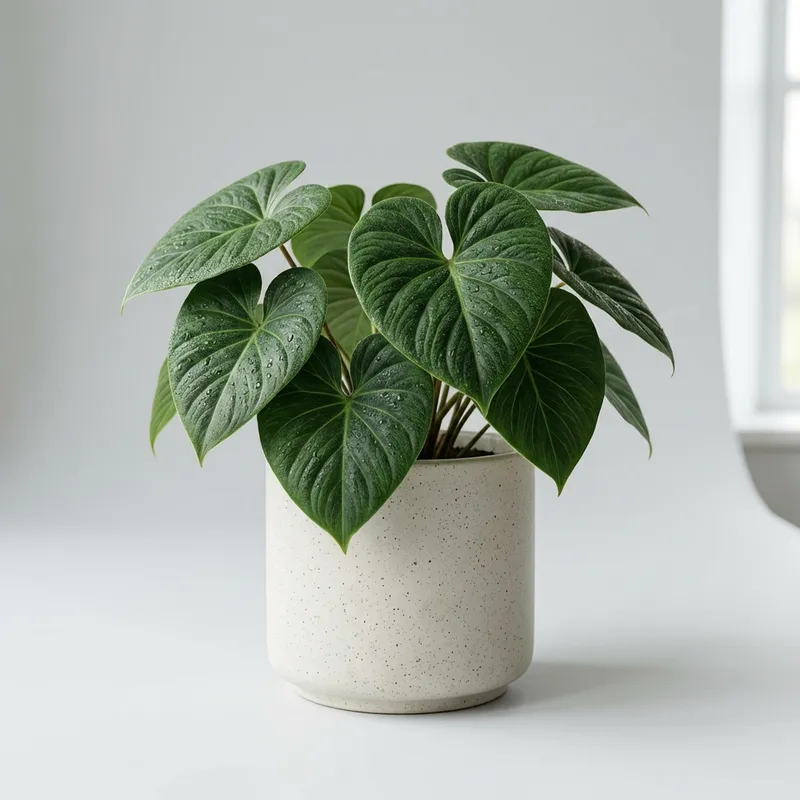
Heart Fern
Hemionitis arifolia
The Heart Fern is a charming and unique tropical fern characterized by its thick, leathery, heart-shaped fronds and contrasting dark, wiry stems. Native to Southeast Asia, it offers a sophisticated aesthetic that differs from the feathery appearance of most ferns, making it a prized addition to any indoor garden. Its deep green, glossy leaves grow in a compact rosette, providing a lush, woodland feel to humid indoor spaces.
Light
Bright Indirect
Water
High
Difficulty
Difficult
Humidity
High
Pet Friendly
Hemionitis arifolia is considered non-toxic to cats, dogs, and horses, making it an excellent choice for pet-friendly households.
Care Guide
Heart Fern Care Guide
Watering: This fern requires consistently moist soil. It does not possess a drought-tolerance mechanism; if the soil dries out completely, the fronds will quickly shrivel and may not recover. Water when the surface of the soil just begins to feel slightly less moist.
Light: Thrives in bright, indirect light. Avoid direct sunlight, which will scorch the heart-shaped leaves. It can tolerate medium light but growth will slow significantly.
Humidity: High humidity (60%+) is non-negotiable for this species. It is an ideal candidate for terrariums, glass cloches, or placement near a high-quality humidifier.
Temperature: Maintain a warm environment between 60°F and 85°F. Protect the plant from cold drafts, air conditioning vents, and heaters.
Soil & Potting: Use a moisture-retentive but well-draining mix, such as a combination of peat moss, perlite, and pine bark. Ensure the pot has drainage holes to prevent root rot.
Common Issues: Brittle, brown edges usually indicate low humidity. Yellowing leaves may suggest overwatering or waterlogged soil.
In-Depth Care & Growth
Feeding & Soil
Fertilizer
Balanced liquid fertilizer diluted to half-strength
Soil
Peat-based potting mix with added perlite or vermiculite for drainage.
Physical Attributes
Mature Size
6 to 10 inches tall and wide
Growth Rate
Slow
Propagation
Division of the rhizome or cultivation of spores found on the underside of fertile fronds.
Common Varieties
While there are few commercial cultivars
This variety is distinguished by its thick, leathery, deep green fronds that boast a striking heart-shaped silhouette and grow from contrasting, wiry black stems.
variations in frond size exist depending on the specific Southeast Asian region of origin.
Ranging in scale across its Southeast Asian origins, this variety features leathery, deep green foliage characterized by glossy, heart-shaped sterile fronds and taller, more elongated fertile stems.