Giant Staghorn Fern
Platycerium superbum
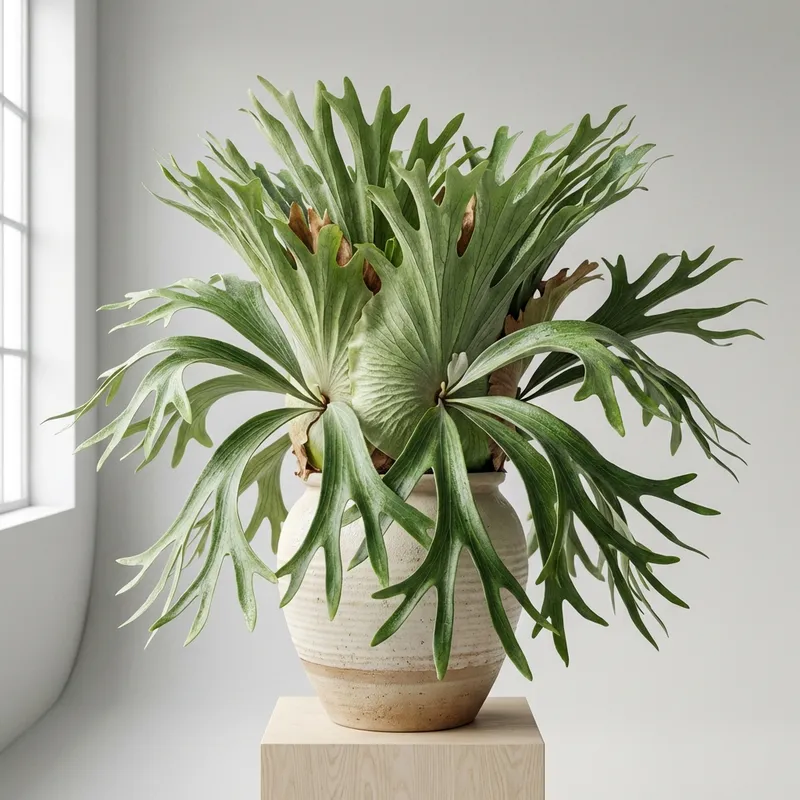
An architectural marvel of the plant world, Platycerium superbum is a massive epiphytic fern native to the rainforests of Australia. It features two distinct frond types: large, broad, shield-like sterile fronds that form a nest to collect nutrients and moisture, and dramatic, pendant-like fertile fronds that resemble the antlers of a stag. This species is unique for its solitary growth habit, often becoming a massive, singular specimen that commands attention in any brightly lit indoor environment.
Light
Bright Indirect
Water
Moderate
Difficulty
Moderate
Humidity
High
Pet Friendly
This species is non-toxic to cats and dogs according to botanical safety standards, making it an excellent choice for pet owners.
Care Guide
Platycerium superbum Care Guide
Mounting and Substrate
Platycerium superbum is an epiphyte and should never be planted in soil. Use a mounting board, cork bark, or a slatted orchid basket filled with high-quality sphagnum moss. Secure the plant with fishing line or nylon strips.
Watering Technique
The ‘soak-and-dry’ method is most effective. When the moss feels dry to the touch, submerge the entire mount or basket in a basin of room-temperature water for 15 minutes. Ensure the ‘nest’ fronds have time to dry out to prevent fungal rot.
Light and Air
Provide bright, filtered light. Avoid direct midday sun which can scorch the delicate fronds. These ferns thrive with consistent air movement, which mimics their natural canopy environment.
Temperature and Humidity
Maintain temperatures between 60-85°F (15-29°C). High humidity is essential; use a humidifier or mist the fronds regularly if the air is dry.
Maintenance
Do not remove the brown, shield-like sterile fronds; they are a vital part of the plant’s biology and protect the root system.
In-Depth Care & Growth
Feeding & Soil
Fertilizer
Balanced liquid seaweed or fish emulsion
Soil
Sphagnum moss, orchid bark, or mounting on wooden plaques
Physical Attributes
Mature Size
3 to 5 feet wide
Growth Rate
Moderate
Propagation
Propagated via spores; unlike other species, it rarely produces 'pups' or offsets.
Common Varieties
Distinct species; often confused with Platycerium grande or Platycerium bifurcatum.
This massive epiphyte is distinguished by its broad, silvery-green shield fronds that form an upright, nest-like crown and long, pendulous, forked fertile fronds featuring a single, large central spore patch.