
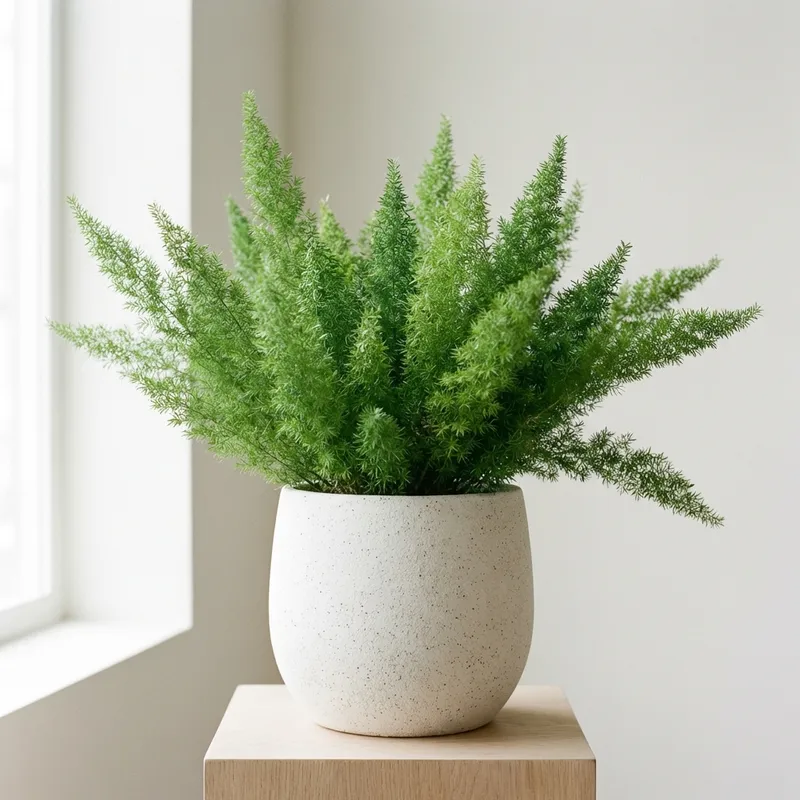
Foxtail Fern
Asparagus densiflorus 'Meyeri'
The Foxtail Fern is a striking evergreen perennial that features unique, plume-like fronds radiating from a central clump. Despite its name and fern-like appearance, it is actually a member of the Lily family (Liliaceae). Its dense, needle-like foliage creates a soft, architectural texture that makes it a popular choice for both indoor containers and hanging baskets. It is highly resilient and more drought-tolerant than most true ferns due to its tuberous root system.
Light
Bright Indirect
Water
Moderate
Difficulty
Easy
Humidity
Moderate
Pet Warning
The Foxtail Fern is toxic to dogs and cats. The berries can cause gastrointestinal upset if ingested, and the sap can cause skin irritation or allergic dermatitis.
Care Guide
Foxtail Fern Care Guide
Light Requirements
Place your Foxtail Fern in a location that receives bright, indirect light. While it can tolerate some direct morning sun, harsh afternoon rays can cause the ‘needles’ to turn yellow or brown. It can survive in medium light, but the growth will be less dense.
Watering Routine
Water thoroughly when the top inch of soil feels dry to the touch. The plant has thick, tuberous roots that store water, making it somewhat forgiving of occasional underwatering. However, it thrives best with consistent moisture. Avoid letting the plant sit in standing water to prevent root rot.
Humidity and Temperature
Foxtail Ferns prefer a moderate humidity level. If your home is particularly dry during the winter, consider misting the plant or using a pebble tray. They prefer temperatures between 65°F and 75°F (18°C-24°C) and should be protected from temperatures below 50°F.
Maintenance and Pruning
To keep the plant looking tidy, prune out any brown or yellowing stems at the base. As the plant grows, it may become root-bound; repotting every two years into a container one size larger is recommended.
Common Issues
Yellow Needles: Often a sign of too much direct sunlight or extreme underwatering.
Needle Drop: Usually caused by a sudden change in light levels or significant underwatering.
In-Depth Care & Growth
Feeding & Soil
Fertilizer
Balanced liquid fertilizer
Soil
Well-draining potting mix rich in organic matter.
Physical Attributes
Mature Size
2-3 feet tall and 3-4 feet wide
Growth Rate
Moderate
Propagation
Division of the tuberous root clump during repotting.
Common Varieties
Sprengeri
The **'Meyeri' Foxtail Fern** features dense, emerald-green needle-like foliage clustered into stiff, upright, cylindrical plumes that mimic the bushy shape of a fox’s tail.
Mazeppa
The 'Mazeppa' Foxtail Fern is characterized by its exceptionally dense, upright, and cylindrical plumes of vibrant green, needle-like foliage that create a compact, architectural bottle-brush appearance.
Crousii
The 'Crousii' variety features dense, upright, and tapering plumes of fine-textured, emerald-green needle-like foliage that create a distinct, architectural bottle-brush appearance.