Dinner Plate Aralia
Polyscias scutellaria
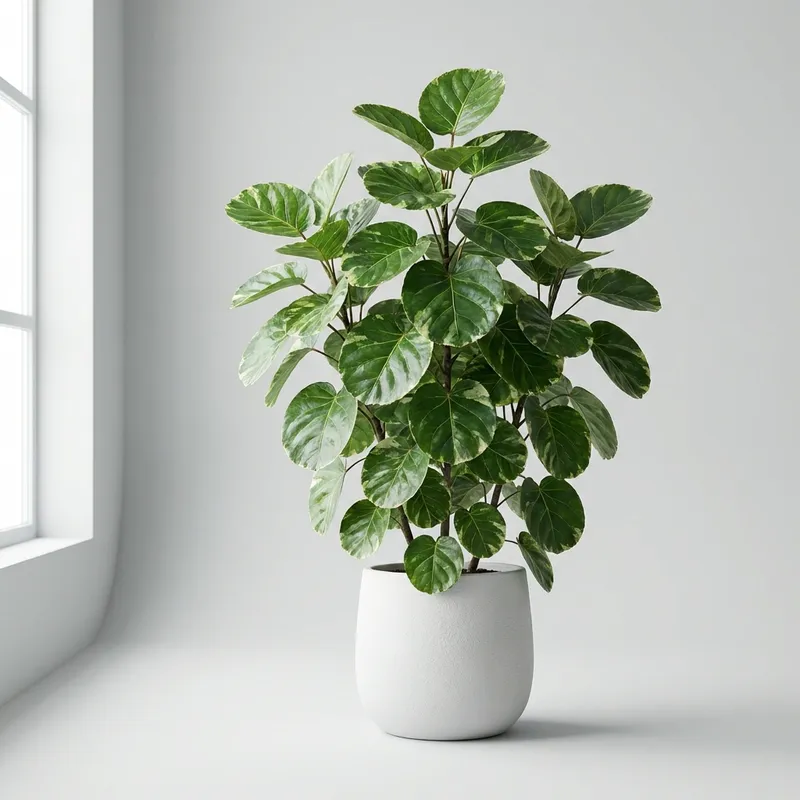
The Polyscias scutellaria, commonly known as the Dinner Plate Aralia, is a striking evergreen shrub prized for its distinctive, large, leathery leaves that curve upward like shallow bowls. Native to the Pacific Islands, this plant brings a lush, architectural feel to indoor spaces with its woody stems and dense, verdant canopy. It is particularly favored for its ability to be trained as a tall specimen plant or even a sophisticated indoor bonsai, offering a unique silhouette compared to other houseplants.
Light
Bright Indirect
Water
Moderate
Difficulty
Moderate
Humidity
High
Pet Warning
The plant contains saponins which are toxic to cats, dogs, and horses if ingested. Ingestion can cause vomiting, diarrhea, and oral irritation. The sap may also cause skin irritation in some individuals.
Care Guide
Light
Place your Dinner Plate Aralia in bright, indirect light. Avoid direct afternoon sun, which can scorch the leaves, but ensure it receives plenty of ambient light to maintain its dense foliage.
Watering
Keep the soil consistently moist but never waterlogged. Wait until the top inch of soil feels dry before watering again. Ensure the pot has excellent drainage to prevent root rot.
Humidity & Temperature
This plant thrives in high humidity (above 50%). Use a humidifier, mist the leaves regularly, or place the pot on a pebble tray with water. Maintain temperatures between 65°F and 85°F (18°C-29°C) and avoid cold drafts or air conditioning vents.
Seasonal Care
In the winter, growth will slow significantly. Reduce watering frequency and stop fertilizing until spring. Ensure the plant stays away from heating radiators which can dry out the air.
Common Issues
Leaf drop is the most common issue, usually caused by sudden changes in temperature, light levels, or moving the plant to a new location. Consistency is key for this species.
In-Depth Care & Growth
Feeding & Soil
Fertilizer
Balanced liquid houseplant fertilizer (10-10-10)
Soil
A well-draining, rich, peat-based potting mix with added perlite or coarse sand for aeration.
Physical Attributes
Mature Size
3 to 6 feet tall indoors
Growth Rate
Slow
Propagation
Stem cuttings taken in late spring or summer, ideally with bottom heat.
Common Varieties
Fabian (maroon-edged leaves)
The 'Fabian' variety features glossy, dinner-plate-shaped leaves with a rich dark green center and striking deep maroon-purple undersides and scalloped edges.
Balfouriana (variegated edges)
The 'Balfouriana' Dinner Plate Aralia features large, orbicular green leaves distinguished by their irregular, creamy-white variegated margins and slightly scalloped edges.
Marginata
The 'Marginata' variety features large, rounded, cup-shaped green leaves uniquely defined by a striking creamy-white border along their scalloped edges.