
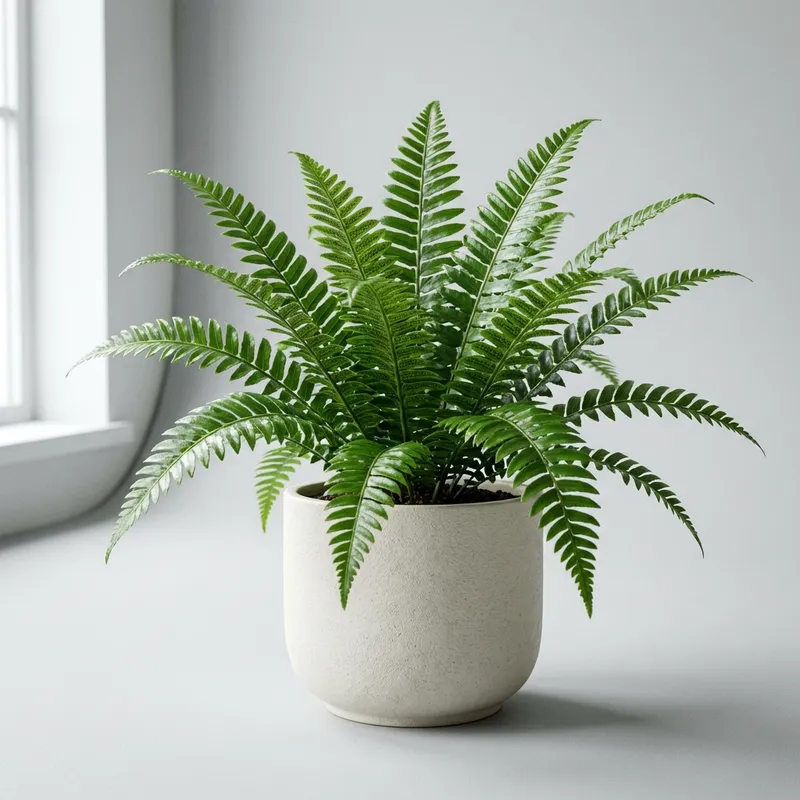
Christmas Fern
Polystichum acrostichoides
The Christmas Fern is a hardy, evergreen perennial native to the moist woodlands of eastern North America. It is beloved for its fountain-like clumps of glossy, leathery, deep green fronds that retain their color even through the winter months. Its name refers to both its evergreen nature and the stocking-like shape of its individual pinnae (leaflets), making it a popular choice for naturalistic shade gardens and indoor greenery.
Light
Low
Water
Moderate
Difficulty
Easy
Humidity
High
Pet Friendly
Polystichum acrostichoides is non-toxic to cats, dogs, and horses, making it an excellent choice for pet owners.
Care Guide
Christmas Fern Care Guide
Lighting
This fern thrives in low to medium indirect light. It is naturally adapted to forest floors, so avoid direct sunlight, which will scorch and bleach the fronds.
Watering
Keep the soil consistently moist but never waterlogged. Water when the surface of the soil just begins to feel dry to the touch. Ensure the pot has drainage holes to prevent crown rot.
Humidity
Like most ferns, it enjoys high humidity. Mist the fronds regularly, use a pebble tray, or place it near a humidifier, especially in winter when indoor air is dry.
Soil and Potting
Use a potting mix that is rich in organic matter and well-draining, such as a mix containing peat moss or leaf mold with perlite.
Maintenance
In early spring, you may trim back old or tattered fronds from the previous year. New ‘fiddleheads’ will emerge from the center of the clump and unfurl as the weather warms.
Seasonal Tips
If grown outdoors, the fronds may lay flat on the ground in winter; this is a natural protection mechanism against the weight of snow. Indoors, keep away from heating vents.
In-Depth Care & Growth
Feeding & Soil
Fertilizer
Balanced liquid houseplant fertilizer at half-strength
Soil
Moist, well-drained, acidic to neutral soil rich in humus.
Physical Attributes
Mature Size
1-2 feet tall and 2 feet wide
Growth Rate
Moderate
Propagation
Division of mature clumps in early spring or via spores.
Common Varieties
Primarily grown as the straight species; distinct cultivars are uncommon in the trade.
The Christmas Fern is characterized by its leathery, lance-shaped dark green fronds composed of serrated leaflets that each feature a distinctive, stocking-shaped lobe at the base.