Cast Iron Plant
Aspidistra elatior
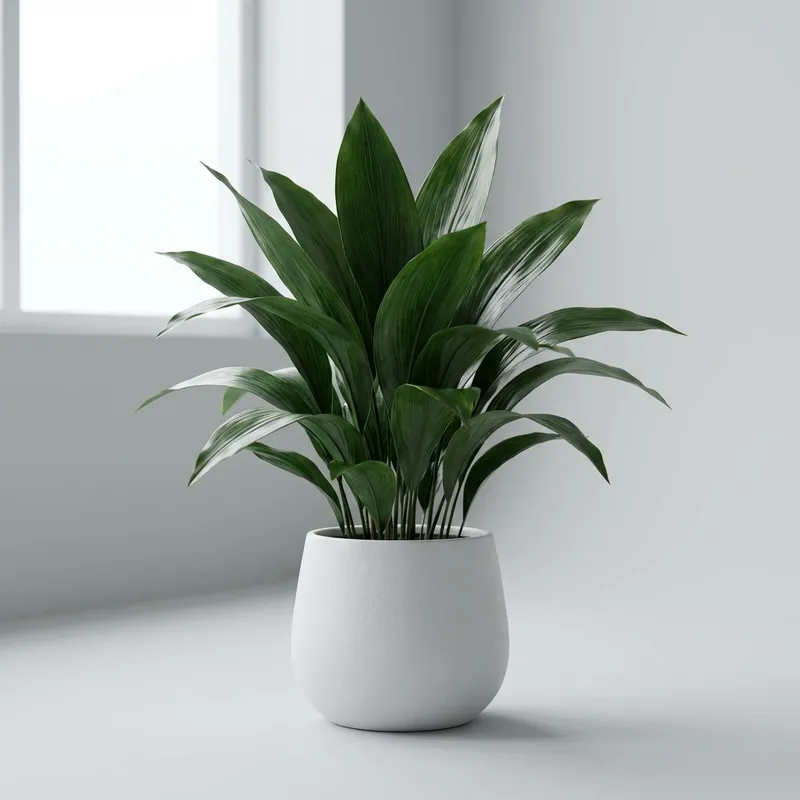
The Cast Iron Plant is a legendary survivor in the world of houseplants, earned its name by being nearly impossible to kill. Native to Japan and Taiwan, it features elegant, dark green, lance-shaped leaves that rise directly from the soil. It is the perfect choice for dim corners where other plants might struggle, offering a lush, architectural presence with minimal effort.
Light
Low
Water
Low
Difficulty
Easy
Humidity
Moderate
Pet Friendly
Aspidistra elatior is considered non-toxic to dogs, cats, and horses.
Care Guide
Cast Iron Plant Care Guide
Lighting
While it is famous for surviving in
Low Light, it will grow more robustly in
Bright Indirect Light. Avoid direct sunlight, which will scorch the leaves.
Watering
Water when the top 2 inches of soil are dry. It is drought-tolerant, so it is better to underwater than overwater. Ensure the pot has drainage holes to prevent root rot.
Seasonal Care
Spring/Summer: This is the active growth phase. Keep the soil slightly more moist and fertilize monthly. *
Fall/Winter: Reduce watering significantly as growth slows down. Do not fertilize during these months.
Maintenance
Cleaning: Dust the large leaves regularly with a damp cloth to help the plant breathe. *
Repotting: Because it is slow-growing, it only needs repotting every 3-4 years.
Troubleshooting
Brown Tips: Usually a sign of low humidity or tap water chemicals. Try using filtered water. *
Yellow Leaves: Typically indicates overwatering.
In-Depth Care & Growth
Feeding & Soil
Fertilizer
Balanced all-purpose liquid fertilizer
Soil
Well-draining, peat-based potting mix with a slightly acidic to neutral pH.
Physical Attributes
Mature Size
24 to 36 inches tall
Growth Rate
Slow
Propagation
Division of the rhizomes during repotting.
Common Varieties
Variegata (White stripes)
The 'Variegata' Cast Iron Plant features upright, lance-shaped deep green foliage accented by striking, irregular vertical stripes of creamy white.
Milky Way (White spots)
The 'Milky Way' Cast Iron Plant features long, lance-shaped, dark green leaves elegantly stippled with a galaxy of small white or creamy yellow spots.
Asahi (White tips)
The 'Asahi' variety features broad, upright, lance-shaped leaves of deep green, uniquely distinguished by a striking splash of creamy white that develops across the tips as the plant matures.
Cast Iron Plant 'Milky Way
A stellar cultivar of the legendary Cast Iron Plant, 'Milky Way' is a slow-growing evergreen perennial known for its extreme durability. It features upright, lance-shaped leaves of deep forest green, uniquely splashed with tiny white and cream spots that mimic a galaxy of stars. This plant is celebrated for its ability to thrive in dim light, neglect, and poor air quality, making it an ideal choice for challenging indoor environments.
Variegated Cast Iron Plant
The Variegated Cast Iron Plant is the epitome of botanical resilience, featuring architectural, deep green leaves elegantly streaked with creamy white vertical stripes. Known for its ability to thrive in low-light environments where other plants struggle, this variegated cultivar adds a touch of sophisticated contrast to interior spaces. Its leathery foliage is tough enough to withstand neglect, temperature fluctuations, and low humidity, making it a legendary 'indestructible' houseplant that matures into a stately, dense clump over time.