
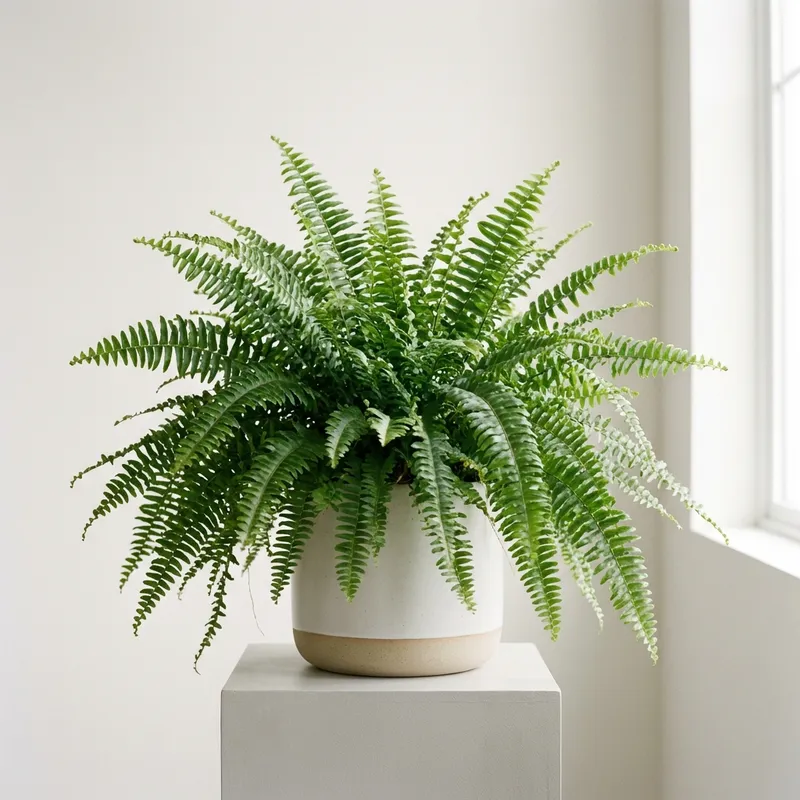
Boston Fern
Nephrolepis exaltata
The Boston Fern is a classic and elegant indoor plant celebrated for its lush, arching fronds adorned with small, feather-like pinnae. This tropical evergreen creates a soft, airy texture in any space and is particularly stunning when displayed in hanging baskets or on pedestals where its foliage can gracefully cascade. It is well-regarded not only for its beauty but also for its air-purifying qualities.
Light
Bright Indirect
Water
High
Difficulty
Moderate
Humidity
High
Pet Friendly
The Boston Fern is considered non-toxic to cats, dogs, and horses, making it an excellent choice for pet owners.
Care Guide
Light Requirements Boston Ferns prefer bright, filtered light.
Direct sunlight should be avoided as it can scorch the delicate fronds, while too little light may lead to sparse growth and leaf drop.
Watering Routine The key to a healthy Boston Fern is consistent moisture.
The soil should remain damp but not soggy. Water the plant whenever the soil surface begins to feel slightly dry. Ensure the pot has adequate drainage to prevent root rot.
Humidity and Temperature These plants thrive in high humidity.
To maintain health, mist the fronds regularly, use a pebble tray, or place the plant in a naturally humid room like a bathroom. They prefer temperatures between 60°F and 75°F (15°C to 24°C).
Pruning and Maintenance Trim away any brown or dead fronds at the base of the plant to encourage new, green growth and maintain a tidy appearance.
Seasonal Tips In the winter, move the plant away from drafty windows and heating vents, which can dry out the air and the soil rapidly.
In-Depth Care & Growth
Feeding & Soil
Fertilizer
Balanced liquid houseplant fertilizer diluted to half-strength
Soil
Peat-based potting mix with good aeration and drainage, such as a mix containing perlite or vermiculite.
Physical Attributes
Mature Size
2 to 3 feet tall and wide
Growth Rate
Moderate
Propagation
Division of the root ball during repotting or by planting the runners (stolons) that grow from the base of the plant.
Common Varieties
Bostoniensis
The 'Bostoniensis' variety features vibrant green, gracefully arching fronds with sword-shaped, finely textured leaflets that create a lush, weeping silhouette.
Rita's Gold
The 'Rita's Gold' variety is distinguished by its vibrant chartreuse to golden-yellow foliage and dense, feathery fronds that maintain a classic arching growth habit.
Tiger Fern
The Tiger Fern is distinguished by its gracefully arching fronds that feature a striking marbled pattern of vibrant green and golden-yellow variegation across its feathery leaflets.
Fluffy Ruffles
The 'Fluffy Ruffles' Boston Fern is characterized by its compact, upright fronds of bright green foliage that feature a dense, multi-layered, and intricately ruffled texture.
Florida Ruffle
The 'Florida Ruffle' Boston Fern is distinguished by its vibrant green, upright fronds featuring deeply cut and heavily crinkled leaflets that create a dense, feathery texture.