
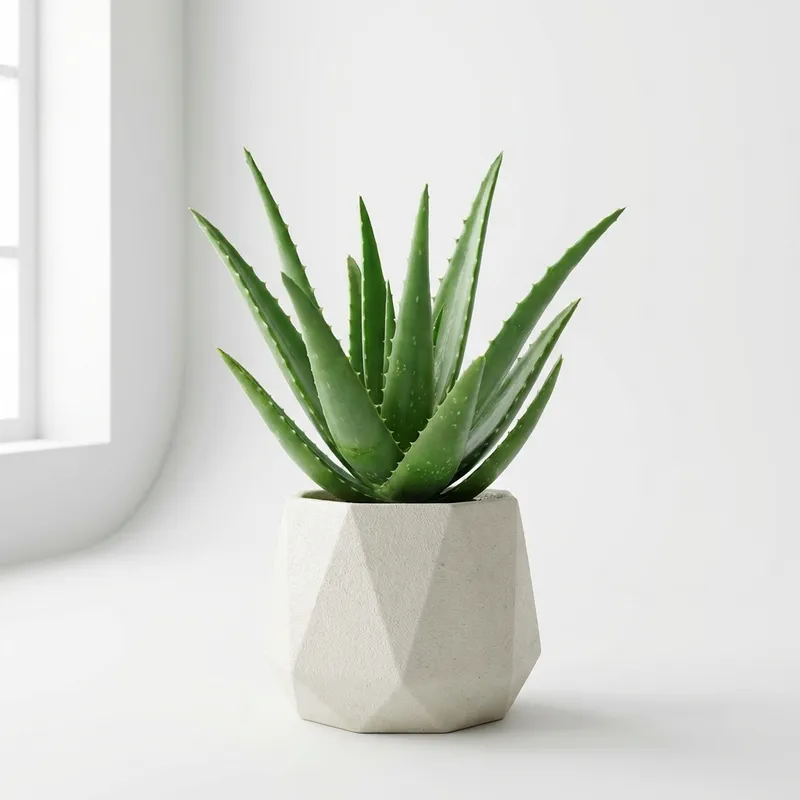
Aloe Vera
Aloe vera
A thick-leaved succulent known for its medicinal properties and architectural beauty. Its fleshy, spear-like leaves contain a clear gel often used for soothing burns and skin irritations. It is a resilient indoor plant that thrives on sunny windowsills.
Light
Full Sun
Water
Low
Difficulty
Easy
Humidity
Low
Pet Warning
Toxic to cats and dogs. Contains saponins and anthraquinones which can cause vomiting, diarrhea, and lethargy if ingested.
Care Guide
Light
Place your Aloe in a spot that receives plenty of bright, direct light. A south or west-facing window is ideal. At least six hours of sun is required to prevent the plant from becoming leggy.
Watering
Follow the ‘soak and dry’ method. Water the soil deeply until it drains from the bottom, then allow the potting mix to dry out completely before the next session. Overwatering is the most common cause of root rot.
Seasonal Tips
Protect from temperatures below 50°F (10°C) as Aloe is not frost-tolerant. If kept outdoors in summer, bring it inside before the first frost. Reduce watering to once every 6-8 weeks in winter.
Common Issues
Soft, mushy leaves are a sign of overwatering. If leaves are thin and curling, the plant is likely dehydrated and needs a deep soak.
In-Depth Care & Growth
Feeding & Soil
Fertilizer
Balanced liquid fertilizer diluted to half-strength or specialized cactus fertilizer
Soil
Well-draining potting mix specifically formulated for cacti and succulents, containing sand, perlite, or pumice.
Physical Attributes
Mature Size
12-24 inches tall and wide
Growth Rate
Slow
Propagation
Separation of 'pups' (offsets) that grow at the base of the parent plant.
Common Varieties
Aloe barbadensis Miller
*Aloe barbadensis Miller* is characterized by its thick, upright, lanceolate leaves of a glaucous green hue, often featuring distinct white speckles and small, sharp teeth along the margins.
Aloe aristata (Lace Aloe)
Lace Aloe features dense rosettes of dark green, lance-shaped leaves adorned with raised white spots and delicate, hair-like white teeth along the margins.
Aloe variegata (Tiger Aloe)
The Tiger Aloe is distinguished by its thick, lance-shaped leaves adorned with irregular horizontal white bands and arranged in three distinct, overlapping columns.
Aloe juvenna (Tiger Tooth Aloe)
Tiger Tooth Aloe features bright green, triangular leaves adorned with white speckles and rimmed with sharp, tooth-like spines that grow in a distinctive, compact stacking habit.