
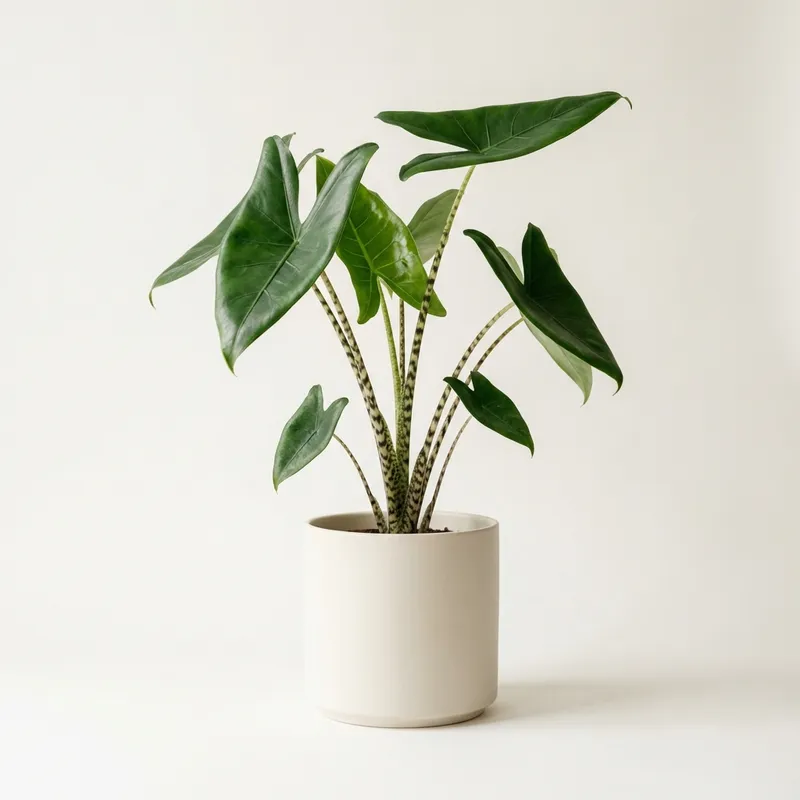
Alocasia zebrina
Alocasia zebrina
The Alocasia zebrina is a striking tropical plant celebrated for its exceptional stems, which feature a distinct yellow and black striped pattern reminiscent of a zebra. Native to the Philippines, this 'Elephant Ear' variety boasts glossy, arrow-shaped leaves that reach toward the light, making it a sophisticated architectural statement for any interior space. It is highly sought after by collectors for its unique aesthetic and bold silhouette.
Light
Bright Indirect
Water
Moderate
Difficulty
Moderate
Humidity
High
Pet Warning
This plant contains insoluble calcium oxalate crystals. If ingested, it can cause severe irritation of the mouth and throat, excessive drooling, vomiting, and difficulty swallowing in both pets and humans.
Care Guide
Light
Alocasia zebrina thrives in bright, indirect light. Direct sunlight can scorch the delicate leaves, while low-light conditions may cause the plant to drop leaves or lose its vibrant stem patterns.
Water
Allow the top 2 inches of soil to dry out before watering. This plant is sensitive to overwatering and 'wet feet,' so ensure the pot has excellent drainage. Reduce watering in the winter when the plant may enter a period of dormancy.
Humidity & Temperature
Maintain high humidity levels above 60%. Use a humidifier or a pebble tray to prevent brown leaf tips. Keep the temperature between 65°F and 80°F (18°C–27°C) and strictly avoid cold drafts or proximity to heaters.
Soil & Repotting
Use a chunky, well-draining aroid mix consisting of orchid bark, perlite, and coco coir to ensure oxygen reach to the roots. Repot every 18-24 months during spring.
Common Issues
Yellow Leaves: Usually a sign of overwatering or poor drainage. Drooping Leaves: Can indicate underwatering, low light, or the beginning of natural dormancy during colder months.
In-Depth Care & Growth
Feeding & Soil
Fertilizer
Balanced liquid foliage fertilizer
Soil
Well-draining, airy organic mix often called an 'aroid mix' (bark, perlite, and peat/coir)
Physical Attributes
Mature Size
3 feet tall and 2-3 feet wide
Growth Rate
Moderate
Propagation
Division of rhizomes or harvesting of corms (offsets) during the repotting process