
Zebra Haworthia Care
Grow Haworthia fasciata (Zebra Haworthia) with bright indirect light, a full dry-down, and a gritty mix so the white-banded rosette stays compact and firm.


Zebra Haworthia
Haworthia fasciata
Care Level
Easy
Light
Bright Indirect
Water
Low
Humidity
Low
If your Zebra Haworthia turns mushy, stretches into a skinny tower, or blushes red-brown at the tips, light and water are the usual fixes. Those pointed leaves store moisture. The plant prefers a full dry pause more than a regular sip, even though it looks small and thirsty on a desk.
Plant pros weigh in on a simple baseline: bright indirect light, soak until it drains, then wait until the mix is fully dry. Keep water out of the rosette center. This one is considered non-toxic to cats and dogs, which makes it a safe small planter for pet homes.
Full plant profile: /plant/zebra-haworthia/.
Quick Facts
- Difficulty: Easy
- Light: Bright Indirect
- Water: Soak and dry; wait until the mix is fully dry
- Pet Safety: Safe
Light Requirements
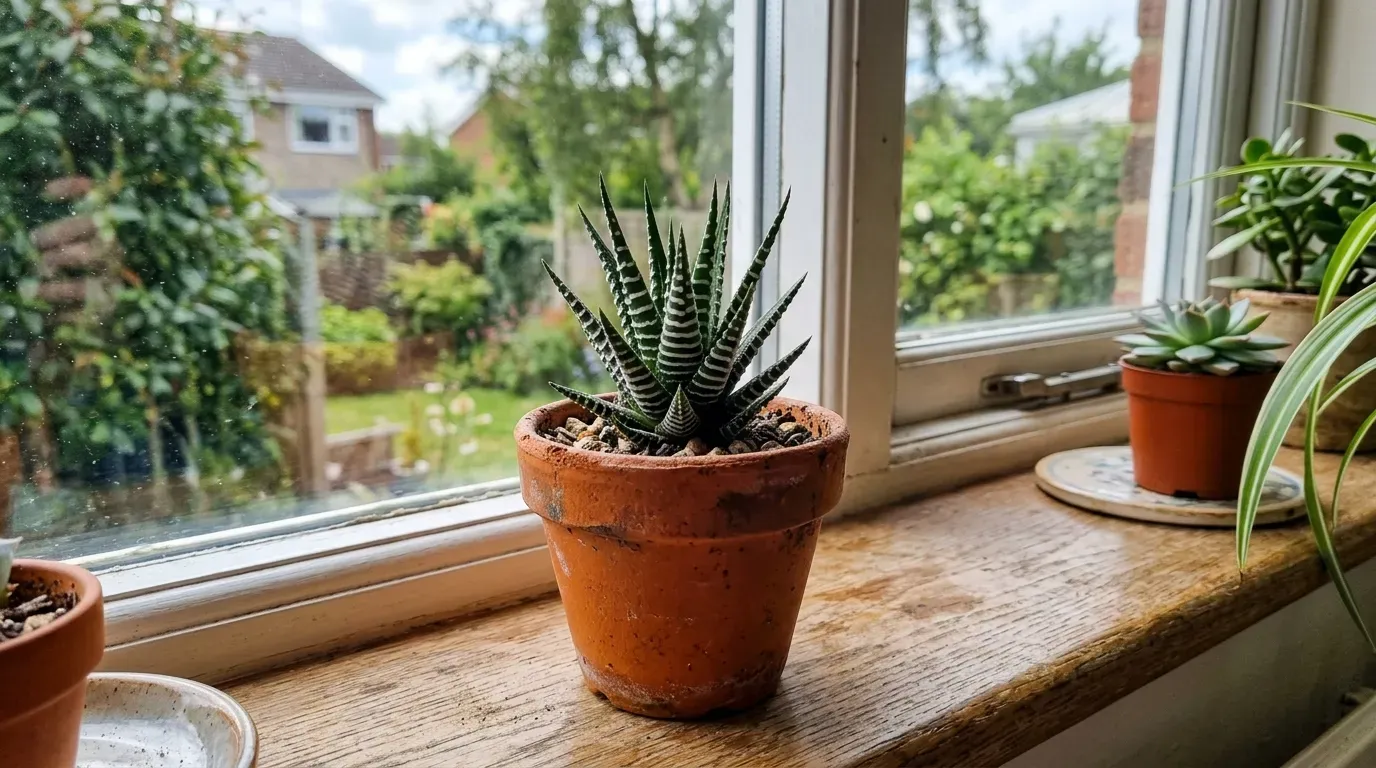
Zebra Haworthia (Haworthia fasciata) thrives in bright, indirect light. A south window with a sheer curtain works well. Morning sun is usually fine. Long stretches of hot afternoon sun can turn leaf tips red or brown.
In weak light, the rosette stretches and the white bands look faded. Move it closer to the glass before you assume it needs more water. Cathedral Window Haworthia wants a similar filtered-bright setup, with even more care to avoid scorching the translucent leaf windows.
Watering Schedule
Use soak-and-dry. Water until it runs out the drainage holes, then wait until the mix is fully dry. In winter, that can mean once a month or even less. Lift the pot. A light planter is a better cue than the calendar.
Avoid pooling water in the rosette center. Water the soil, not the leaves. Constant moisture leads to soft, translucent leaves and root rot. Slightly thirsty leaves that feel a bit less plump are safer than a wet mix.
Humidity & Temperature
Low humidity is fine. Keep temperatures around 60°F to 80°F and away from drafts and temps below about 50°F. This is a small succulent, not a tropical fern. A pebble tray is optional, not required.
Protect it from heater blast in winter. Dry heat plus a wet mix is a common way a windowsill haworthia fails.
Soil & Potting
Use a fast-draining cactus or succulent mix with extra perlite, pumice, or coarse sand. Standard bagged houseplant soil holds water too long for this root system.
Choose a small pot with drainage holes. Terracotta helps wick extra moisture. Repot only when pups crowd the pot or the mix has compacted, which is slow work on a plant that stays 5 to 8 inches tall.
Fertilizer
Feed once every 4 to 6 weeks in spring and summer with a diluted liquid cactus or succulent fertilizer. Skip autumn and winter. A little is enough. Heavy feeding makes weak, stretched growth.
Pruning & Maintenance
Peel away old withered leaves at the base as they dry. Dust the white bands with a soft, dry or slightly damp brush. Do not scrub hard. Those raised tubercles are part of the look.
If a leaf is mushy, remove it so rot does not spread into the crown.
Propagation
The reliable method is division of offsets (pups). Wait until a pup has a few roots of its own, twist or cut it free, and pot it in gritty mix. Leaf cuttings can work but are slower and less consistent. Keep new plants in bright, indirect light and wait for the mix to dry between soaks.
Common Problems
Soft, mushy leaves: Overwatering. Stop watering, unpot if the base is soft, and restart firm pups in dry gritty mix.
Stretched, leaning rosette: Not enough light. Move to a brighter filtered window.
Red or brown tips: Too much direct sun or a sudden move into hot glass. Filter the light.
Shriveled, wrinkled leaves with dry mix: It is thirsty. Give a deep soak, then return to a full dry-down.
Pro Tips for Long-Term Maintenance
Water the soil of your Zebra Haworthia, never the crown. A turkey baster or a narrow-spout can makes that easy in a tight rosette. Pair that habit with a full dry-down, and the zebra bands stay crisp in a small terracotta pot.

About the Author
Silas
The Practical Greenhouse Mentor
"Silas treats the greenhouse like a workshop of practical results. After 40 years of dirty hands, he’s learned that thriving plants are the result of honest observation and small, correct moves rather than luck. He’s the neighbor who knows exactly why your Pothos is pouting and how to fix it without the fuss."