
Tillandsia: The Magic of Life Without Soil
Everything you need to know about growing plants that don't need soil. Silas explains the weekly soak, the critical dry, and the secret of the trichomes.
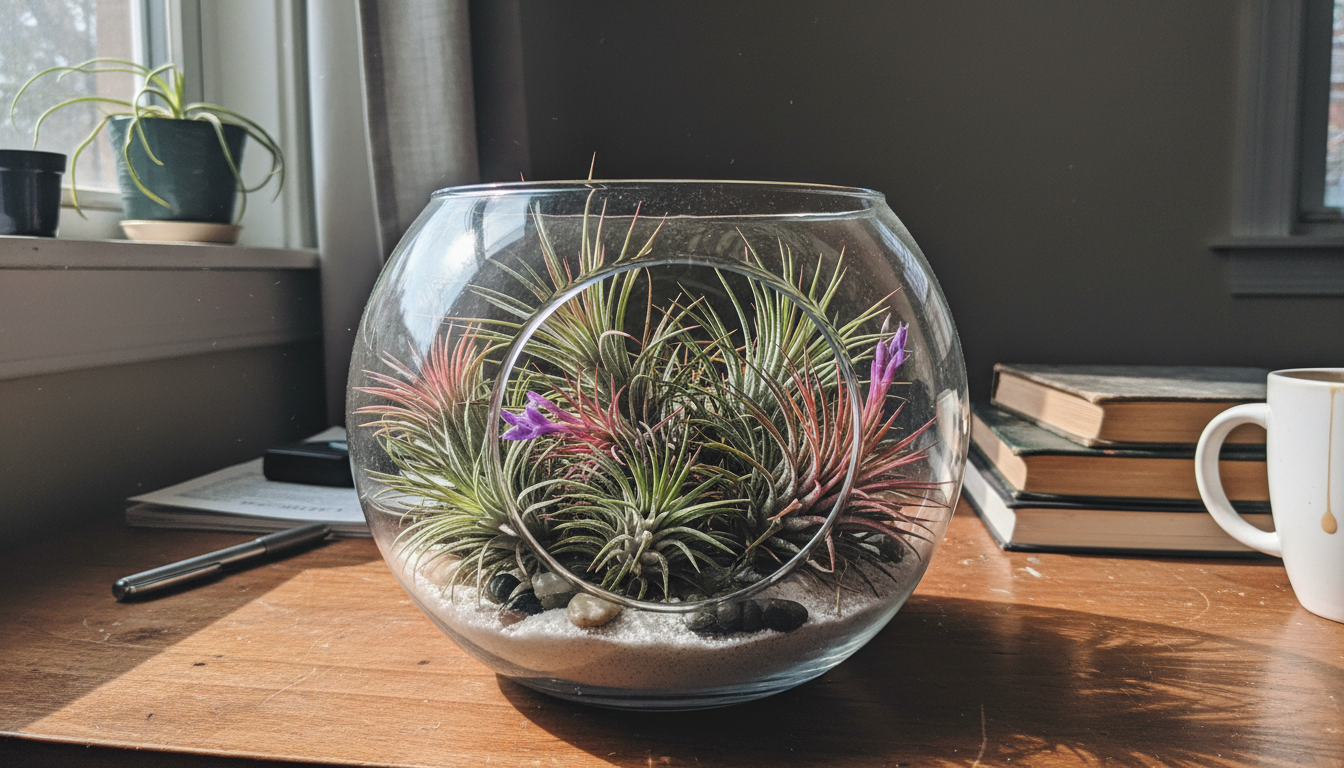
Tillandsia: Exotic Life in the Air
The Quick Dirt
The Tillandsia (Air Plant) is a fascinating departure from everything we know about gardening. They do not need soil because they drink entirely through their leaves. They ask for bright, indirect light, a weekly deep soak, and—most importantly—a place where the air moves freely. They are the perfect companions for those who want to see nature from a different, more weightless perspective.
The Deep Dive
I have always thought of Air Plants as the nomads of the greenhouse. In the wild, they do not bother with the ground. They cling to trees, rocks, and even telephone wires, catching whatever moisture the wind brings them. They remind us that there is more than one way to thrive in this world. But “low maintenance” doesn’t mean “no maintenance.” These little travelers have a very specific rhythm.
I. The Golden Rule: The Soak and the Shake
The most common mistake people make is treating an Air Plant like a cactus. They are tropical, and they are thirsty. In the wild, they don’t have roots in the ground to pull from; they catch the humidity of the wind. In your home, you have to mimic that rain.
Once a week, I submerge all my Tillandsia in a bowl of room-temperature water for 20 to 30 minutes. The shake is the most critical step. After their bath, you must gently but firmly shake the excess water out of their leaves. If water stays trapped in the base (the “cup”), the plant will rot from the inside out within days. I always place mine upside down on a towel in a spot with great airflow. They need to be bone-dry within four hours. Gardening is a practice of patience, and waiting for that dry-down is the difference between a thriving plant and a slimy one.
II. Light: Bright but Filtered
In nature, Tillandsia often grow under the dappled shade of a canopy. They want bright, indirect sunlight. A spot near an east or west window is perfect—they want to see the sky without the heat of the afternoon sun.
Direct midday sun will dehydrate them faster than you can imagine, turning them into crispy brown husks. If the leaves start to curl more tightly than usual into a “U” shape, the plant is telling you it is parched. Listen to what the leaves are telling you—a thirsty Air Plant is a vocal one. If you live in a very dry climate, a light misting twice a week between soaks will help keep them supple.
III. Understanding the Fuzz: Trichomes
Have you noticed the silvery, fuzzy scales on your Air Plant? Those are trichomes. They are specialized cells that act like tiny sponges, pulling water directly from the air.
- Xeric species: These are the ones that look very silvery and fuzzy. They come from drier climates and can handle a bit more light and less frequent watering.
- Mesic species: These are greener and smoother. They come from humid rainforests and want more frequent soaking and higher humidity. The “fuzzier” the plant, the tougher it is.
IV. Atmosphere: Circulation is Key
The name “Air Plant” isn’t a suggestion—it is a requirement. These plants need to breathe. I see a lot of people keeping them in enclosed glass globes or deep containers. While it looks nice, it is a dangerous trap. Without airflow, the air becomes stagnant and humid, which is a recipe for fungal rot. If you use a globe, make sure it has large openings and that you never put the plant back in until it is 100% dry from its bath.
V. Lifecycle: Blooming and Pups
Like their Bromeliad cousins, most Air Plants only bloom once in their lifetime. When they are happy, they will send up a vibrant spike with colorful flowers. It is a spectacular show that can last for weeks.
After the bloom fades, the mother plant will slowly stop growing and put all her remaining energy into producing “pups” (offsets) at her base. You can leave them to form a beautiful, large clump or gently separate them once they are about a third of the mother’s size. It is a beautiful cycle of legacy and new beginnings.
The Focus Moment
The Tillandsia is a reminder that we do not always need deep roots to be strong. Sometimes, all we need is the right atmosphere and the ability to absorb what the world offers us. Having these plants in your home—hanging from strings or nestled in driftwood—brings a sense of weightless peace to a room. It teaches us to be light, to breathe, and to trust the environment we have created. Keep your hands dirty and your mind clear.
Want more plant tips? Follow us on Facebook!
About the Author
Silas
The Practical Greenhouse Mentor
"Silas treats the greenhouse like a workshop of practical results. After 40 years of dirty hands, he’s learned that thriving plants are the result of honest observation and small, correct moves rather than luck. He’s the neighbor who knows exactly why your Pothos is pouting and how to fix it without the fuss."