Complete Care Guide for Pteris Fern
How to keep these elegant, silvery ferns happy by mastering moisture and humidity.
Pteris Fern
Pteris spp.
Care Level
Moderate
Light
Bright Indirect
Water
High
Humidity
High
The Quick Dirt
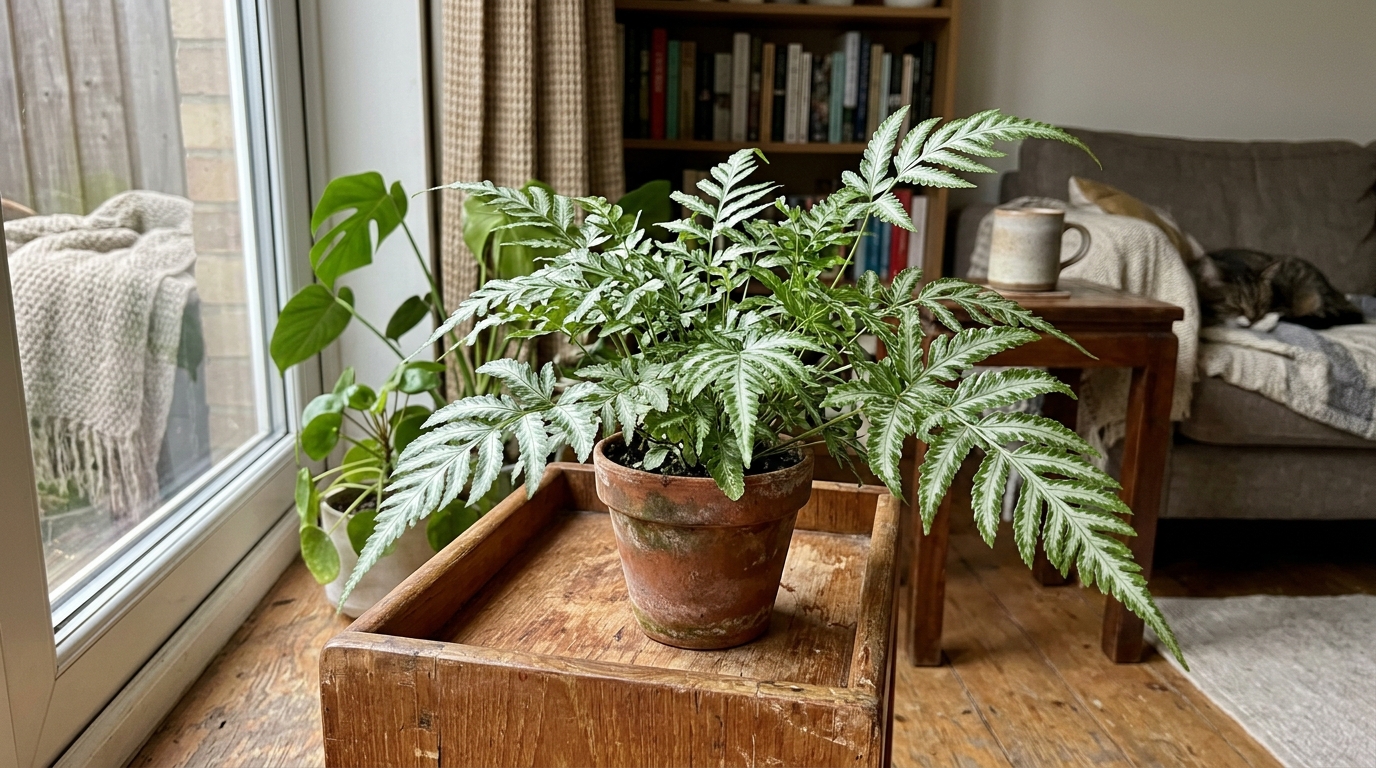
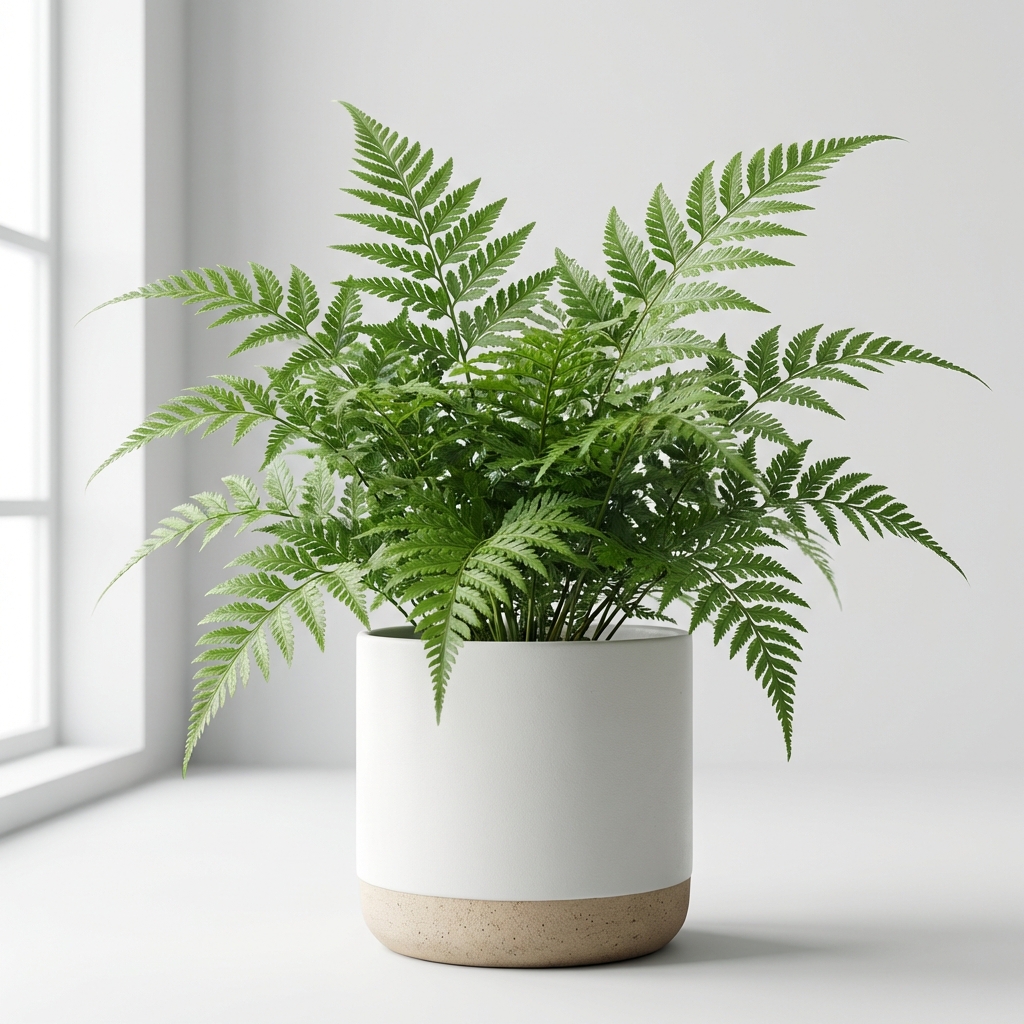
The Pteris Fern, or Brake Fern, is a prehistoric-looking plant that thrives on consistency. Keep the soil moist and the humidity high. Those silvery, variegated fronds will reward you with steady growth. It’s a non-toxic choice that’s perfect for low-light corners. Just don’t let it dry out.
Light Physics: The Filtered Forest Floor
Think like a forest floor dweller. These plants evolved under a massive canopy that filters out harsh, direct photons. In your home, “bright indirect light” is a mechanical requirement for survival. Place this fern where the sun hits the fronds directly and you’re essentially microwaving the delicate tissue. Those thin fronds are designed to capture scattered light, not withstand a direct UV assault.
Many of these ferns, like the Silver Brake varieties, have a striking silvery band down the center. Those variegated areas have less chlorophyll. They are even more sensitive to light intensity. If the light is too low, the plant will pump out more chlorophyll to compensate. You’ll watch that silver variegation fade into a dull green. It’s the plant’s way of trying to catch every stray photon it can find.
Read the leaves. If you see brown, scorched margins appearing overnight, your light source is too aggressive. If the new growth comes in “leggy”—long, weak stems with tiny fronds—the plant is starving. It’s stretching for a gap in the canopy that isn’t there. Aim for a North-facing window or a spot a few feet back from a bright East or West window. You want light bright enough to read a book by, but soft enough that you don’t see a sharp-edged shadow.
Water Mechanics: Constant Saturation vs. Root Respiration
Don’t treat this like a standard houseplant that needs a “dry out” period. It doesn’t. In the wild, moisture is constant. These fine, hair-like roots rely on capillary action to keep the fronds turgid. If that root ball dries out completely, those delicate fronds will collapse. Once a fern frond turns crispy and brown, it’s dead. There’s no “healing” it. Cut it back and hope the rhizome has enough energy to push out a new one.
Constant moisture doesn’t mean a swamp. Roots need oxygen. This is gas exchange. If the soil is packed too tight or the pot doesn’t have drainage holes, water occupies every air pocket in the substrate. This suffocates the roots and leads to rot. Ironically, the plant will look thirsty because dead roots can’t transport water. You want the soil to feel like a wrung-out sponge. Damp to the touch, but not dripping when you poke it.
Watch your water chemistry. Pteris ferns are sensitive to chlorine and fluoride in city tap water. These chemicals build up in the fine tissue of the frond tips. They’ll turn brown and brittle even if your watering schedule is perfect. Use rainwater or filtered water. If tap is your only option, let it sit out in an open container for 24 hours. This lets the chlorine dissipate before you pour it into the root zone.
Atmospheric Humidity: The Invisible Shield
Keep a Pteris fern lush by understanding the physics of transpiration. Every leaf has tiny pores called stomata that open to take in carbon dioxide. When they open, water vapor escapes. In a humid jungle, the air is saturated and the plant doesn’t lose much moisture. In a typical home—especially in winter—the air is bone-dry. Dry air pulls water out of the plant faster than the roots can replace it. This is why ferns get crispy tips. They’re losing a mechanical battle against the atmosphere.
Misting once a day won’t cut it. Misting raises humidity for five minutes before it evaporates. You need a microclimate. Group your plants together. Plants release moisture through their leaves. When they’re huddled up, they create a small pocket of higher humidity that benefits the whole group. Another fix is a pebble tray. Fill a shallow tray with stones and water, then set the pot on top. As the water evaporates, it rises directly into the fern’s foliage. Make sure the bottom of the pot isn’t sitting in water, or you’ll end up with root rot.
Stability is the final piece of the puzzle. Ferns hate sudden mechanical shifts. Don’t place your Pteris in a drafty hallway or next to an HVAC vent. Moving air strips away the moisture shield around the leaves. Constant fluctuations in temperature and airflow cause the stomata to freak out. This leads to stress and leaf drop. Find a spot with stable air. Stay away from the heater, the AC, and the front door.
Soil Logic and Nutrition: The Peat Foundation
The substrate is the mechanical housing of your fern. Pteris ferns need a mix that holds a high volume of water without collapsing into dense muck. Use a peat-based or coco-coir-based potting mix. These materials are like millions of tiny sponges. They keep moisture available to the roots while maintaining enough structural integrity for gas exchange. Heavy, garden-style soil will pack down too tight and suffocate the roots.
Fertilizing requires a “less is more” mindset. These plants have fine, delicate roots. They are incredibly susceptible to nutrient burn. A full-strength chemical fertilizer has high salt content that pulls water out of root cells through osmosis. Think of it as a mechanical failure of the root system. Use a balanced liquid fertilizer diluted to half-strength or quarter-strength. Feed them once a month during the growing season (spring and summer). Stop entirely in the winter when the plant’s metabolism slows down.
Your Pteris will eventually outgrow its pot. You’ll know it’s time when roots start circling the bottom or the plant needs water every day just to stay upright. Repotting is the time for division. This is the mechanical process of splitting one plant into two. Slide the root ball out and use a clean, sharp knife to slice through the rhizome. Each section should have plenty of roots and a few healthy fronds. This refreshes the plant and prevents it from becoming overly congested.
Troubleshooting: Reading the Fronds
Your Pteris fern will tell you exactly what’s wrong. Brown, crispy tips are a mechanical failure of humidity or water quality. If tips are brittle and snapping, the air is too dry. If they’re brown but soft, you might have salt buildup from tap water. Check your pebble tray and switch to filtered water for a few weeks to see if new growth comes in clean.
Yellowing leaves at the base mean you have a drainage issue. Yellowing signals that roots are struggling for oxygen. If the soil feels soggy and smells sour, you have root rot. Stop watering immediately. Let the soil dry slightly and repot into a fresher, more aerated mix. Once a root dies, it becomes a mechanical liability that spreads decay to the rest of the system.
Pet owners, the Pteris fern is a “green light” plant. It is entirely non-toxic to cats and dogs. This is a fantastic mechanical alternative to dangerous tropicals like Sago Palms or lilies. If your cat nibbles those lacy fronds, you’ll only have aesthetic damage, not a trip to the emergency vet.
Si’s Pro-Tip: If your fern looks beyond saving, don’t toss it. Cut all the fronds back to the soil level. Keep the root ball moist (not soggy) and put it in a humid spot. Ferns are resilient. As long as the rhizome is firm and healthy, it can push out an entirely new set of fronds in a few weeks. It’s like hitting a mechanical reset button.
Keep your hands dirty and your plants happy.

About the Author
Silas
The Practical Greenhouse Mentor
"Silas treats the greenhouse like a workshop of practical results. After 40 years of dirty hands, he’s learned that thriving plants are the result of honest observation and small, correct moves rather than luck. He’s the neighbor who knows exactly why your Pothos is pouting and how to fix it without the fuss."