
Philodendron Care
Grow philodendrons with bright indirect light, an even dry-down, and an airy mix so vining and self-heading types stay lush without soggy roots.


Philodendron
Philodendron
Care Level
Easy
Light
Bright Indirect
Water
Moderate
Humidity
Moderate
If your philodendron is making smaller leaves, stretching into bare vines, or yellowing from the bottom, light and wet soil are the usual fixes. This is a large group of aroids, from heart-leaf trailers to upright self-heading plants. The care rhythm is shared even when the shape is not.
Plant pros weigh in on a clear baseline: bright indirect light, water when the top inch of mix feels dry, and use a pot with drainage holes. All parts contain calcium oxalate crystals. Keep philodendrons away from pets and curious kids.
Full plant profile: /plant/philodendron/.
Quick Facts
- Difficulty: Easy
- Light: Bright Indirect
- Water: Allow the top inch of soil to dry
- Pet Safety: Toxic
Light Requirements
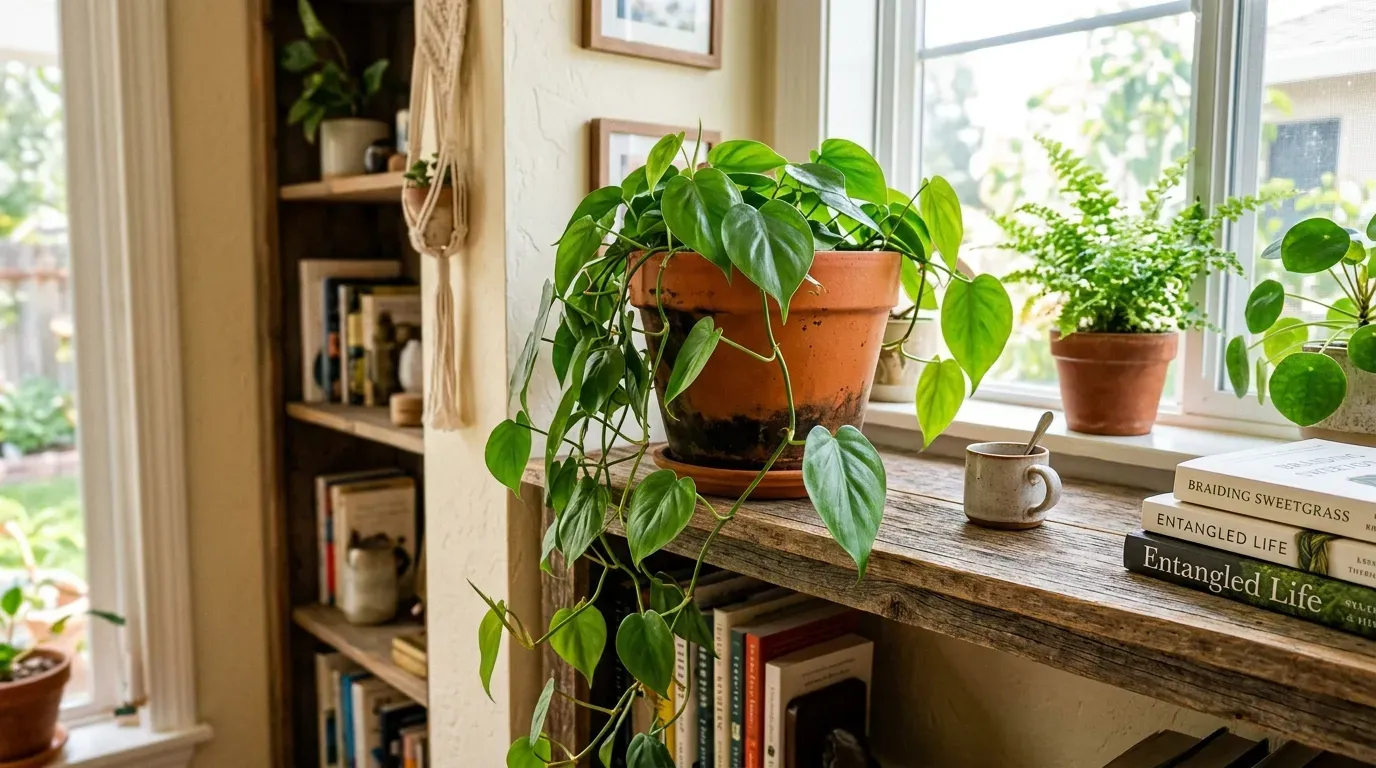
Philodendron thrives in bright, indirect light. Long stretches of direct sun scorch leaves. Low light leads to leggy stems and smaller foliage, especially on variegated types like Brasil, Birkin, and Pink Princess, which need the brighter end of filtered light to keep their pattern.
Vining types (heartleaf, Micans, Lemon Lime) can trail from a shelf or climb a moss pole. Self-heading types (Xanadu, Moonlight, Prince of Orange) stay in an upright clump and want even light from the front so they do not lean. Golden Pothos looks similar as a trailer, but it is a different genus with the same bright-indirect sweet spot.
Watering Schedule
Water when the top inch of soil feels dry. Keep moisture steady, but do not leave the plant in standing water. Soak until it drains, then empty the saucer. Water less in winter, when growth slows.
Yellow leaves often mean the mix stayed wet too long. Brown crispy edges can mean the pot went bone dry or the air is very dry. Check the soil before you add more water. A wilted philodendron in a heavy pot is not asking for another drink.
Humidity & Temperature
Prefer 65°F to 80°F. Moderate humidity helps, especially for velvet types like Micans and gloriosum. A humidifier or a pebble tray is more useful than a daily mist that never reaches the root zone.
Protect from cold drafts and heater blast. Sudden temperature swings can yellow leaves even when watering is on track.
Soil & Potting
Use a well-draining peat-based mix with perlite. Climbing types do better with chunkier mix (bark plus perlite) so roots get air. Always use drainage holes.
Climbing types do best with a moss pole or trellis. Larger leaves often follow once the plant can climb. Self-heading types need a stable, slightly snug pot so the clump does not sit in a reservoir of unused wet soil. Repot when roots circle or water rushes straight through.
Fertilizer
Feed once a month in spring and summer with a balanced liquid houseplant fertilizer. Skip winter. Variegated plants still need that monthly feed during active growth, but do not double-dose to “boost” pink or white. Light does more for pattern than extra fertilizer.
Pruning & Maintenance
Wipe leaves with a damp cloth to remove dust. Prune vining types just above a node to keep the top of the pot full. Those cuttings are new plants.
Remove yellow leaves at the base. For climbers, tie new growth loosely to the support so the stem can root into the pole.
Propagation
Take a stem cutting with at least one node and a leaf. Root in water or moist, airy mix. Keep bright, indirect light. Roots often show in a couple of weeks. Self-heading types can also be divided when the clump has more than one growing point.
Air layering helps on thick, woody climbers that you do not want to cut until roots form.
Common Problems
Yellow leaves with wet soil: Overwatering. Stretch the dry-down and check drainage.
Brown crispy edges: Low humidity or a mix that went too dry. Water thoroughly, then keep the top inch as your cue.
Sparse vines and tiny new leaves: Not enough light, or a trailer that wants a pole. Move brighter and prune to a node.
Pale, scorched patches: Direct sun. Filter the light.
Drooling or mouth irritation in pets: Calcium oxalate. Keep the plant out of reach.
Pro Tips for Long-Term Maintenance
Decide whether your Philodendron is a climber or a clumper, then match the support and the pot to that habit. A moss pole and chunky mix for vines, a snug planter and even light for self-heading types. Same watering rule either way: wait for the top inch to dry.

About the Author
Silas
The Practical Greenhouse Mentor
"Silas treats the greenhouse like a workshop of practical results. After 40 years of dirty hands, he’s learned that thriving plants are the result of honest observation and small, correct moves rather than luck. He’s the neighbor who knows exactly why your Pothos is pouting and how to fix it without the fuss."