
Monstera deliciosa: Navigating the Swiss Cheese Jungle
Master the art of growing the iconic Monstera deliciosa. Silas shares his secrets for big leaves, navigating aerial roots, and why every home needs a touch of the wild.
Monstera deliciosa
Monstera deliciosa
Care Level
Easy
Light
Bright Indirect
Water
Moderate
Humidity
High
Monstera deliciosa: The Ultimate Jungle Icon
The Quick Dirt
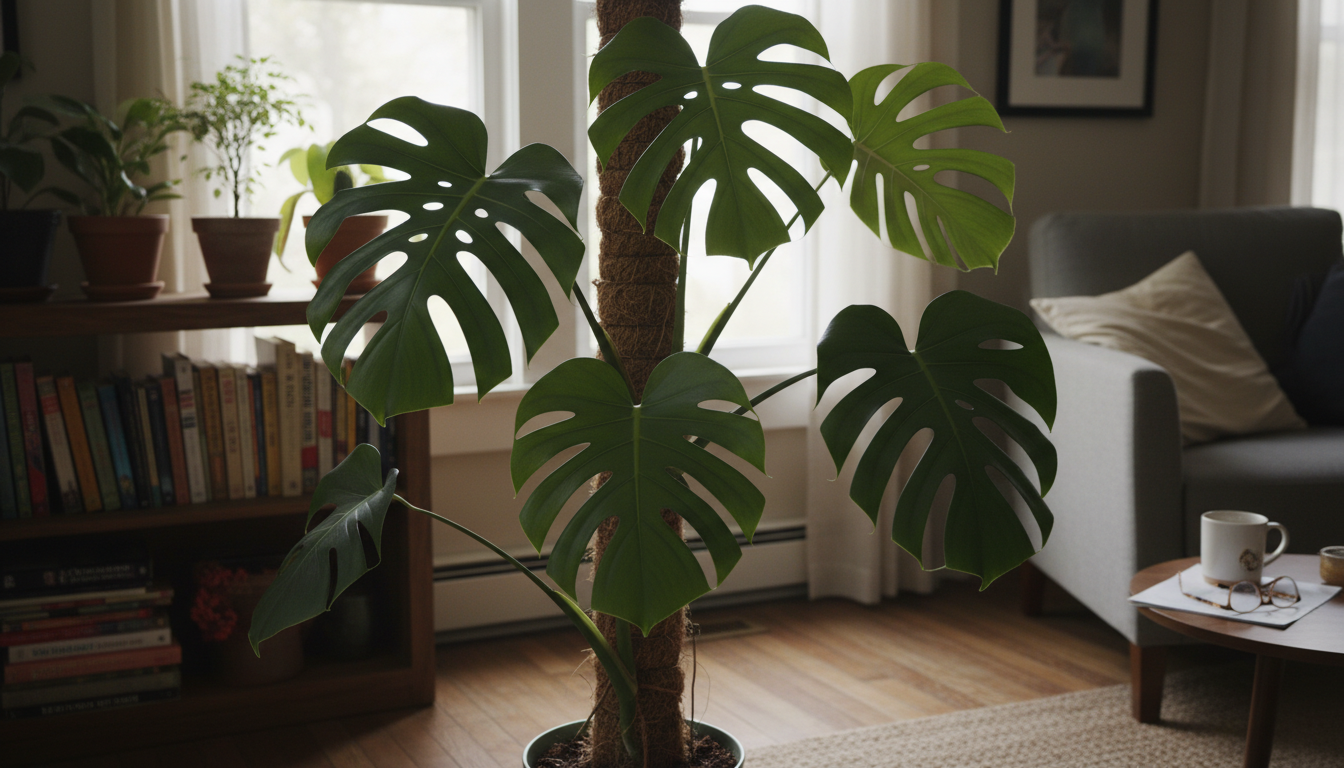
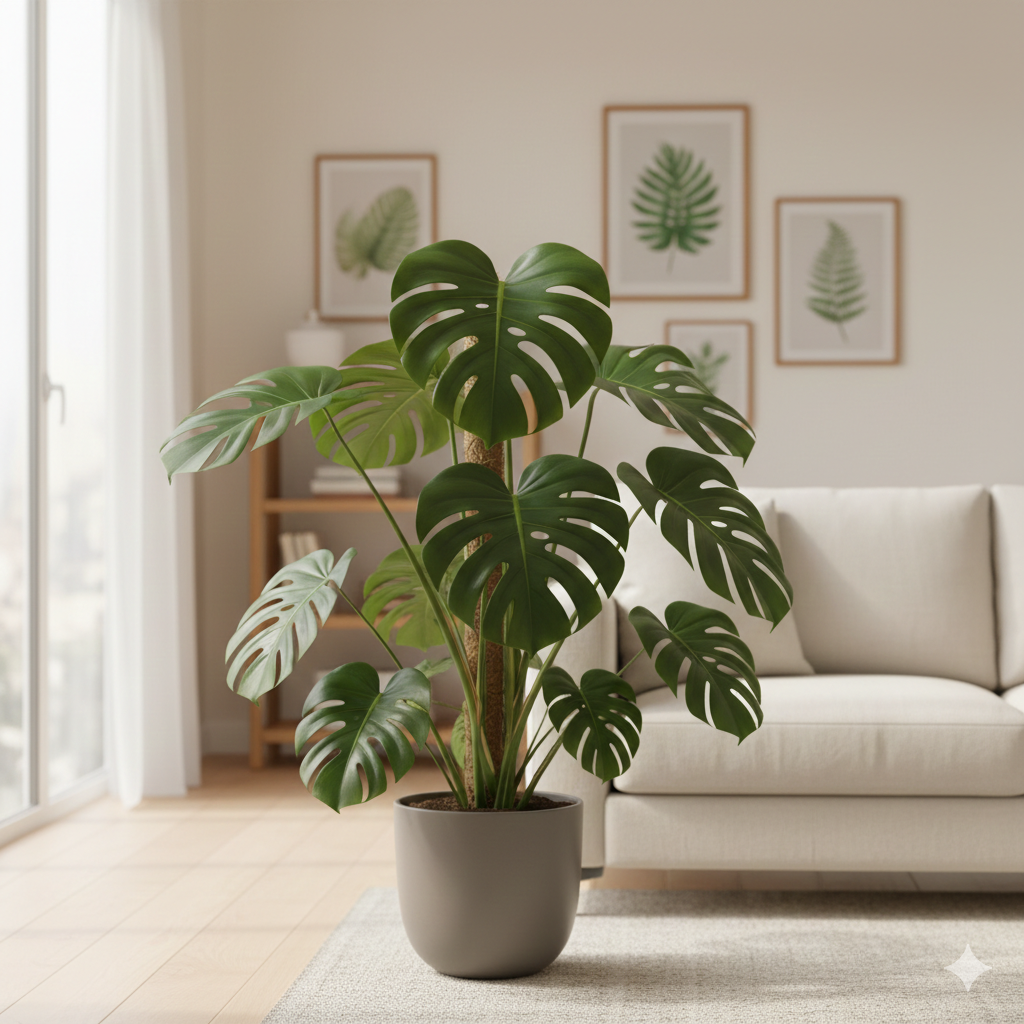
The Monstera deliciosa (Swiss Cheese Plant) is more than just a houseplant; it is a piece of living art. It asks for bright, indirect light, a chunky soil mix, and something to climb. If you give it the space to roam, it will reward you with massive, hole-filled leaves that bring the spirit of the rainforest into your living room. It is a jungle king for the modern sanctuary.
The Deep Dive
I have had a Monstera in my greenhouse for twenty-five years. It started as a small cutting, and now it spans half a wall. The secret to those big, split leaves—what we call fenestrations—is light. They want bright, filtered light. Think of the sun hitting the forest floor after being broken up by the massive trees above.
I. Light: The Search for the Canopy
If your Monstera is only putting out small, solid leaves without any holes, it is telling you it is bored. It needs more energy to feel confident enough to “split.” Listen to what the leaves are telling you—if the stems are getting long and “leggy” as they stretch toward the nearest window, they are hungry for more sun. Move it into the spotlight, but keep a sheer curtain between the leaf and the glass to avoid scorching.
II. Water: The Chunky Aroid Mix
Monsteras are tropical, but they are not swamp plants. They have thick, fleshy roots that need to breathe. I never use straight potting soil because it stays too wet for too long. Instead, I mix in plenty of orchid bark and perlite to make it “chunky.” This creates the air pockets the roots need to stay healthy.
I wait until the top two or three inches of soil are dry before I water again. Stick your finger deep into the pot—if it feels cool and damp, wait. If it feels like a dry sponge, it is time for a soak. Gardening is a practice of patience, and letting the soil dry between waterings is the best way to prevent the dreaded mushy root rot.
III. Humidity: Jungle Vibe
These plants are built for the humidity of the rainforest. Ideally, they want 60% humidity or higher. In a dry home, especially during the winter, you will notice the edges of those massive leaves becoming brown and crispy. I like to group my Monstera with other large-leaved tropicals to create a collective micro-climate. A humidifier nearby will also make a world of difference. Clean leaves can breathe and “sweat” more effectively, so keep them dust-free.
IV. Support: The Mentor Pole
In the wild, Monsteras are climbers. They use their roots to cling to the bark of towering trees. In your home, they need a mentor to show them the way up. Providing a moss pole or a cedar stake encourages the plant to grow upward rather than crawling across your floor. When a Monstera feels secure and supported, its leaves will naturally get larger and more complex. It is a beautiful relationship—you provide the foundation, and the plant provides the canopy.
V. Propagation: The Node Magic
Gardening is a practice of patience, but propagation is the shortcut to joy. To grow a new plant, you just need a “node”—the little bump on the stem where the leaf meets the stalk.
- Snip the stem just below a node, making sure you have at least one or two healthy leaves.
- Put the cutting in a jar of clean water.
- In a month, you will see those white roots appearing. It is a simple, honest way to start a new generation. Keep your hands dirty and your mind clear as you watch the magic happen.
VI. Maintenance: Aerial Roots & Dusting
Don’t be alarmed by the long, brown, noodle-like things growing out of the stems. Those are aerial roots. You can tuck them back into the soil or let them wrap around your support pole. They are just the plant’s way of looking for more stability and moisture. And remember to clean those leaves! Those massive panels are dust-magnets. Every few weeks, I take a damp cloth and gently wipe each leaf. It keeps the pores clear and ensures the plant can “eat” the sun at full capacity.
The Focus Moment
The Monstera deliciosa teaches us about evolution. It starts simple and solid, and as it matures and finds its place, it becomes more complex and open. It is a reminder that we all need a bit of support to reach our full potential. Having this jungle king in your home is an invitation to embrace growth, even when it feels a bit wild. Keep your hands dirty and your mind clear.
Want more plant tips? Follow us on Facebook!
About the Author
Silas
The Practical Greenhouse Mentor
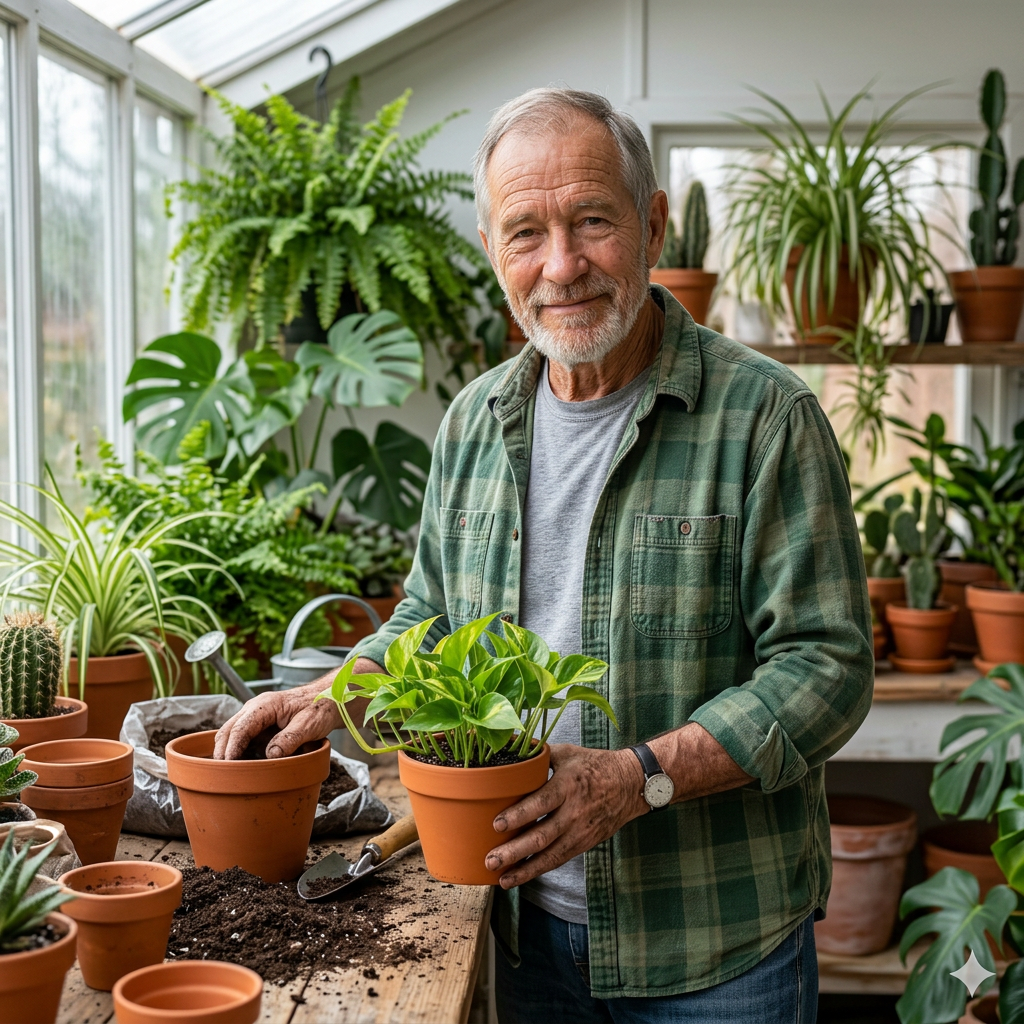
"Silas treats the greenhouse like a workshop of practical results. After 40 years of dirty hands, he’s learned that thriving plants are the result of honest observation and small, correct moves rather than luck. He’s the neighbor who knows exactly why your Pothos is pouting and how to fix it without the fuss."