
Complete Care Guide for Hoya carnosa
How to thrive with the Wax Plant: the mechanics of epiphytic roots and porcelain-like blooms.
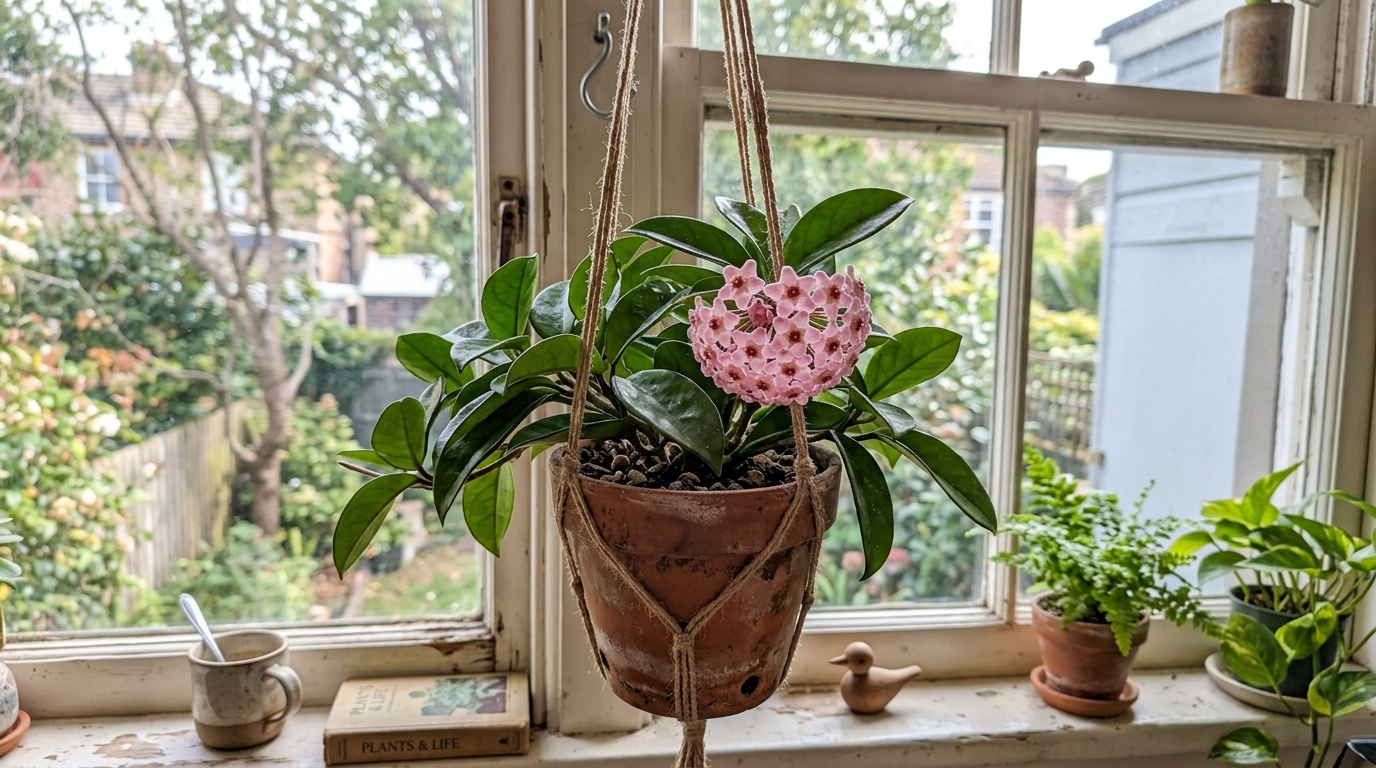
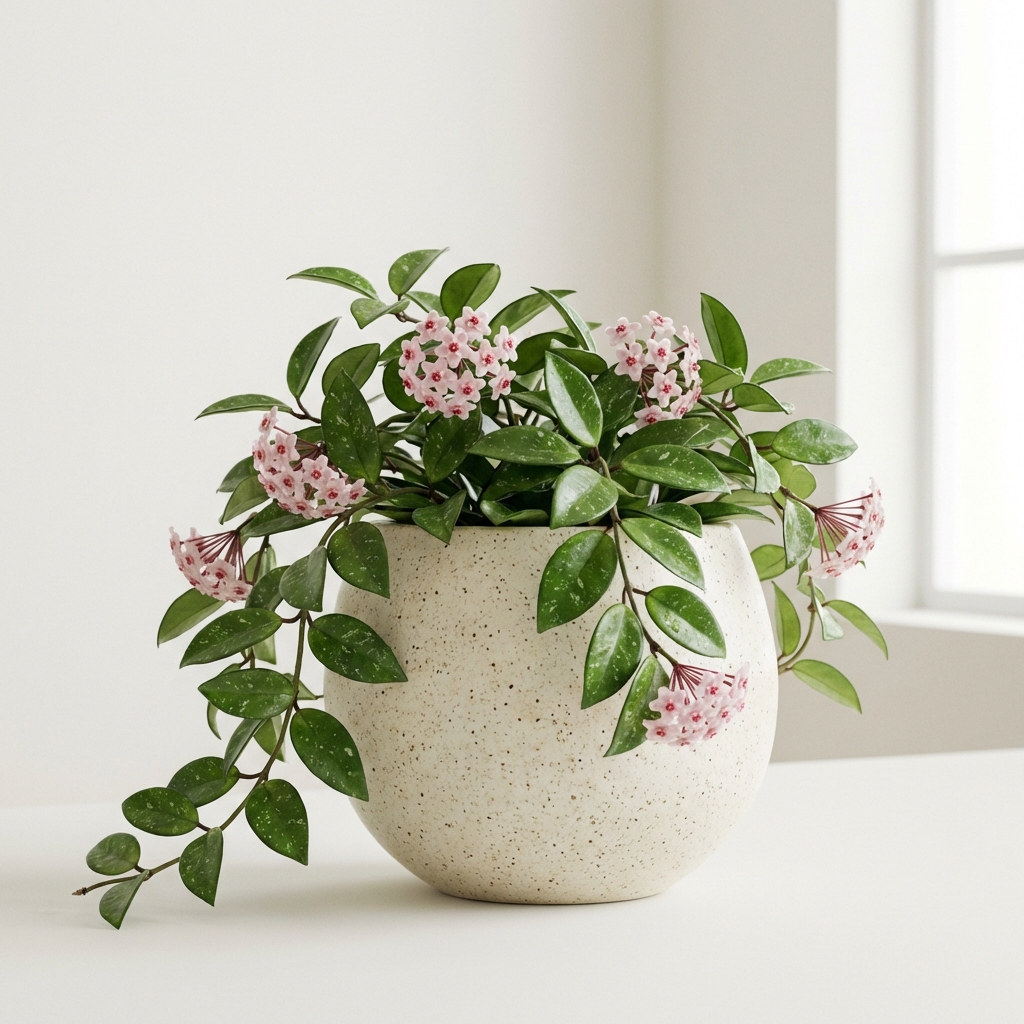
Hoya carnosa
Hoya carnosa
Care Level
Easy
Light
Bright Indirect
Water
Moderate
Humidity
Moderate
The Quick Dirt
Hoya carnosa, or the Wax Plant, is a living heirloom. It’s a low-maintenance vine that can outlive you if you get the mechanics of its epiphytic roots right. Think of it more as a succulent than a tropical foliage plant. It likes a chunky, airy mix and a good dry-out between waterings.
Light Physics: The Engine of the Bloom
Treat light as fuel for your Hoya carnosa clusters. In the wild, these vines climb tree trunks to find higher photon density. This energy powers their reproductive cycle. In your home, “bright indirect light” is the mechanical trigger for flowers, known as peduncles. A low-light corner might keep the plant alive for years, but it will never bloom. It lacks the engine power to do more than push out a few leaves.
Hoya leaves are thick and waxy for a reason. This mechanical adaptation acts as a shield against transpiration and light stress. It can handle a few hours of soft morning sun, but direct afternoon rays will bleach the chlorophyll. You’ll get ugly yellow-white scorch marks that don’t go away. Think of it as a solar panel. You want it fully illuminated, but not melting from the heat.
Identify the “light gap.” A lush, deep-green Hoya is a healthy foliage plant, but it’s often a sign of too much shade for flowering. When a Hoya hits its ideal blooming light, leaves might turn a lighter lime-green. Some varieties develop pinkish “sun-stress” pigmentation. This is a normal mechanical response to higher light. If you aren’t seeing new growth or flowers, move it closer to an East-facing window for an early-morning boost.
Water Mechanics: The Epiphytic Rhythm
Watering a Hoya is about managing a mechanical cycle of wet-to-dry. These are epiphytes. Their roots aren’t designed for soggy, saturated soil. In the wild, they get drenched by tropical rains and dry out quickly in the breeze. Recreate that dry-down cycle at home or the root system will suffocate. Overwatering is the number one cause of Hoya failure.
The plant has a built-in water storage system in its leaves. Those thick, succulent reservoirs keep the plant standing tall. As soil dries, the plant draws on leaf reserves for its metabolism. Only water when the potting medium has dried out almost entirely. If leaves feel soft or “bendy” when you squeeze them, the reserves are gone. It’s time to soak the roots.
Avoid the “sipping” method. Giving a small amount of water every few days never fully saturates the root ball. It leads to pockets of dry, dead roots. Take the pot to the sink and soak it until water flows freely from the drainage holes. This mechanical flush ensures the whole root system gets a drink and washes away salt buildup. Leave it alone until it’s dry again. It’s better to let a Hoya stay dry for an extra day than to water too early.
Substrate Engineering: Air Pockets and Anchoring
Standard, heavy potting soil is a mechanical trap for Hoya roots. Epiphytic roots need to breathe and cling to bark, not sit in dense muck. They need air pockets. Use a “chunky” mix: one part orchid bark, one part perlite, and one part high-quality potting soil. This creates large voids for maximum gas exchange. It ensures roots stay healthy and don’t rot.
The substrate acts as a mechanical anchor and moisture regulator. Bark mimics the natural habitat and gives roots a textured surface to grip. Perlite ensures the mix never compacts. Chunky materials absorb just enough moisture to keep the plant hydrated while excess liquid drains away instantly. This keeps the root system oxygenated.
Hoya carnosa likes to be crowded. These plants often bloom best when slightly root-bound. A tight pot limits vegetative root growth and triggers a mechanical shift into flowering. Don’t rush to repot. If it’s pushing out new vines, it’s happy. Only repot when roots are pushing the plant out of the container or the substrate has started to break down and lose its chunkiness.
Nutrient Logic and Flowering Maintenance
Switch to a “bloom booster” fertilizer with high phosphorus to maximize flowering. Phosphorus provides the mechanical building blocks for flower clusters. Feed your Hoya once a month during spring and summer. Stop entirely in the winter. Feeding a dormant plant wastes fertilizer and risks root burn from salt buildup.
Never prune the peduncles. These are the small, woody stalks where flowers grow. Unlike other plants, Hoya carnosa re-blooms from the exact same spot every year. If you cut it off, the plant has to spend massive energy growing a new stalk before it can produce flowers. Let old blooms fall off naturally and leave the “spur” alone.
Keep the leaves clean. Broad, waxy leaves collect dust that blocks light and clogs stomata. Wipe them down with a damp cloth every few weeks. This ensures the “solar panels” work at maximum efficiency. It also lets you inspect for mealybugs hiding in tight crevices.
Troubleshooting: Reading the Wax
Leaves are the first mechanical component to show failure. Wrinkled, thin leaves signal a thirst problem. If soil is bone-dry, soak the plant. If soil is wet and leaves are wrinkled, the root system has failed. Roots have likely rotted away and can’t transport water. Take stem cuttings and start over.
Sudden leaf drop is a mechanical stress signal. If your Hoya throws off healthy green leaves, it’s reacting to a sharp environmental change. Check for temperature drops, drafts, or the shock of a new location. Hoyas like stability. Once you find a happy spot, leave it there. Constant movement interferes with acclimation and flowering.
Pet owners, Hoya carnosa is a safe choice. It is entirely non-toxic to cats and dogs. The Wax Plant is mechanically harmless if a pet takes a nibble. Hang it in a sunny window or let it trail across a shelf without worry.
Si’s Pro-Tip: If a healthy Hoya won’t bloom, try a little “mechanical stress.” Let it stay dry for a few extra days and give it the brightest indirect light possible. Sometimes a slight environmental nudge is all it needs to shift energy from vines to porcelain flowers.
Keep your hands dirty and your plants happy.
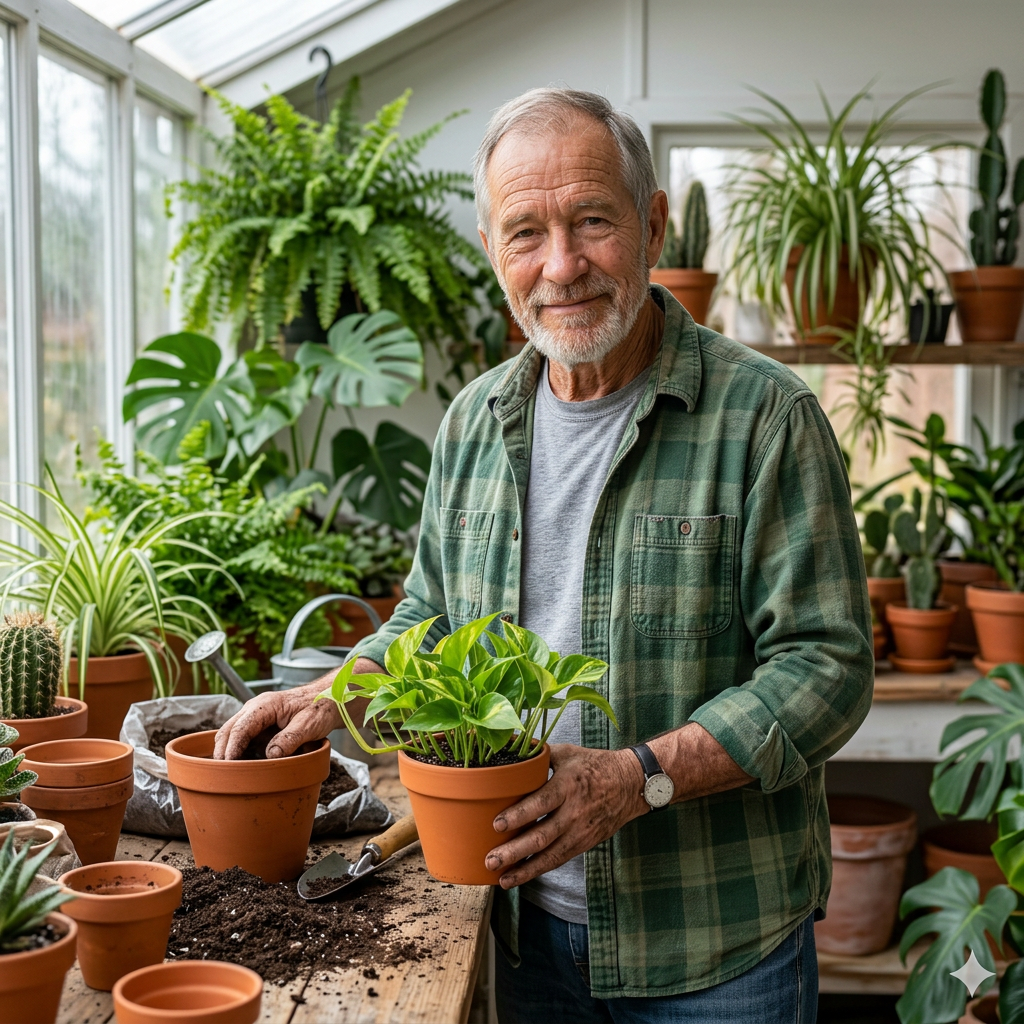
About the Author
Silas
The Practical Greenhouse Mentor
"Silas treats the greenhouse like a workshop of practical results. After 40 years of dirty hands, he’s learned that thriving plants are the result of honest observation and small, correct moves rather than luck. He’s the neighbor who knows exactly why your Pothos is pouting and how to fix it without the fuss."