
Frizzle Sizzle: Mastering the Corkscrew Curve
Learn how to grow the Albuca spiralis. Silas explains the physics of the curl, the necessity of summer dormancy, and why light is your best gardening tool.
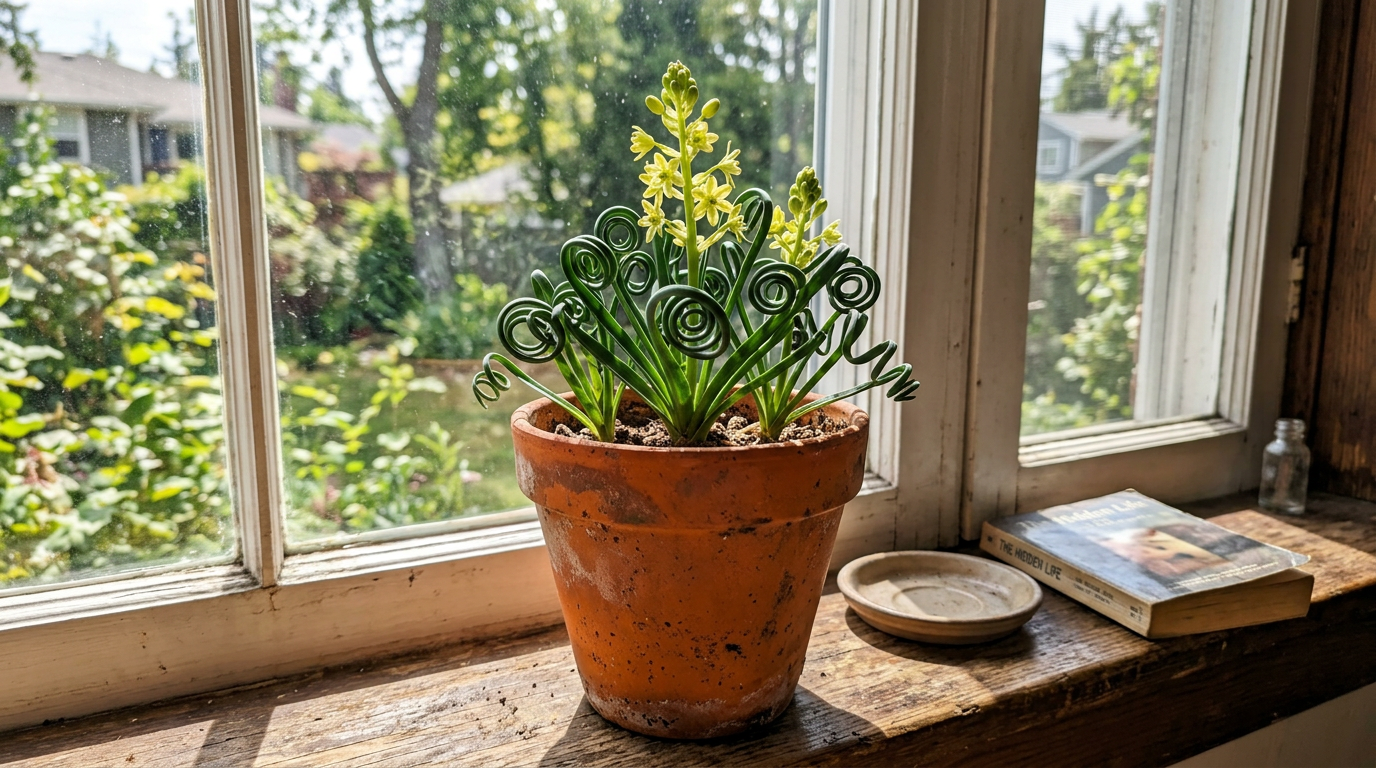
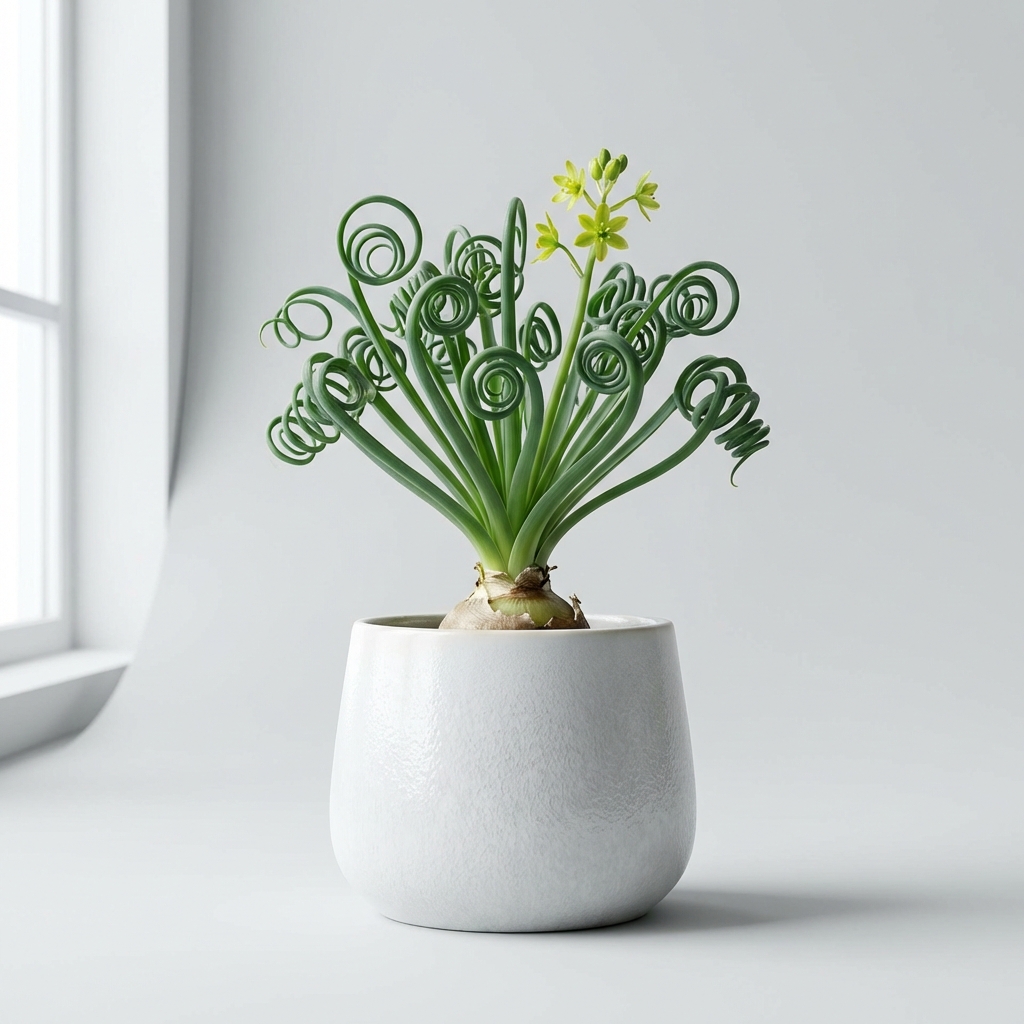
Frizzle Sizzle
Albuca spiralis
Care Level
Moderate
Light
Full Sun
Water
Moderate
Humidity
Low
Frizzle Sizzle: The Science of the Spiral
The Quick Dirt
The Albuca spiralis (Frizzle Sizzle) is a specialized bulb from South Africa. It turns light into art. It asks for full sun, very little water, and a long summer nap. If you give it the grit it needs and the light it craves, it will reward you with tight, corkscrew leaves and a vanilla-scented bloom.
The Deep Dive
I. Light Physics: The Sun is the Curler
I have seen more people get frustrated with a straight Frizzle Sizzle than almost any other plant. They buy it for the corkscrew and then watch it grow into a messy pile of straight green grass. The problem isn’t the plant. It’s the light physics. In its native South Africa, this bulb gets blasted by the sun. Those curls aren’t just for show. They are a survival mechanic to reduce surface area and keep the plant from drying out.
If you want those tight, spring-like spirals, you need photons. High-intensity light is the only thing that triggers the curling mechanism. If your leaves are growing long, limp, and straight, your plant is telling you it is starving for energy. It is stretching out its solar panels to catch every bit of light it can find.
Place your Frizzle Sizzle in your brightest window. Usually, this is south-facing. If you can’t get at least six hours of direct, unfiltered sun, you might need a strong grow light. Watch the new growth. If the tips start to coil early, you have hit the sweet spot. If they come out straight, move it closer to the glass. Without the sun, the sizzle is just a weed.
II. Hydration Mechanics: The Bulb Reservoir
Think of the Frizzle Sizzle bulb as a mechanical battery. It stores all the water and nutrients it needs to survive the dry season. Because of this reservoir, you have to be very careful with how and when you add more water. Overwatering a bulb is the fastest way to turn your plant into a mushy, rotten mess.
During the active growing season (winter and spring), I wait until the soil is almost completely dry. Don’t just look at the surface. Stick your finger at least two inches deep. If you feel any cool moisture, keep the watering can away. When you do water, do not pour it directly onto the top of the bulb. Water can get trapped in the scales and cause rot from the top down. Water the soil around the edges of the pot.
If you see the tips of the curls turning brown, that is usually your first warning. The bulb is either thirsty or the air is too dry. Do not overreact with a soak. Consistency is better than a flood.
III. Summer Dormancy: The Big Sleep
This is where most beginners give up. When the weather gets hot in late spring or summer, the leaves will start to turn brown and wither. People think they have killed it, so they toss it in the bin. Stop right there. This plant is a winter-grower. It takes a long summer nap to escape the heat.
When those leaves start to look rough, you need to listen to the plant’s rhythm. As the foliage dies back, stop watering entirely. The bulb is pulling all those nutrients back into its core for storage. Keep the pot in a cool, dry place out of direct sun. It doesn’t need to be in total darkness, but it definitely doesn’t need the intense light it craved during the winter.
Ignore it for the summer. Don’t worry about the dry soil or the dead look. Around late August or September, you will see a little green spike pushing through the grit. Move it back into the sun and resume your careful watering routine.
IV. Soil and Drainage: Gritty Success
Standard potting soil is the enemy of a Frizzle Sizzle. It holds on to water like a sponge. A bulb in a sponge is a bulb that will rot. For these plants, you need a mix that lets water run right through it. Think grit.
I recommend a 50/50 mix of standard cactus soil and coarse grit. That could be perlite, pumice, or even small aquarium gravel. The goal is to create massive air pockets so the roots can breathe. If your soil doesn’t feel gritty to the touch, you don’t have enough drainage.
Pot choice matters just as much. I always put my Frizzle Sizzles in unglazed terracotta. The clay is porous, which helps wick away excess moisture. It keeps the soil from staying wet too long. Make sure there is a drainage hole. If there is no way for the water to get out, the bulb has no chance.
V. Blooming and Beyond: The Vanilla Spike
If you have your light and water right, you will see a thick, green stalk rise up from the center of the curls in late winter or early spring. These are the flower spikes. The blooms are nodding, yellow-green bells that smell like vanilla. It is one of my favorite smells in the greenhouse.
Blooming takes an incredible amount of energy. Often, you will see the tips of the leaves start to turn brown while the flowers are out. This isn’t a sign of disease. The plant is just prioritizing reproduction over its foliage. If you want the curls to stay healthy and tight, some people actually cut the flower stalk before it blooms. I usually let them bloom because the smell is worth a few brown tips.
Once the flowers fade, the plant is ready for its summer nap. You might see small, baby bulbs starting to peek out from the mother bulb. These are your next generation. You can gently separate them when you repot in the fall, but I like to leave them for a few years to create a fuller, clumpier look.
Si’s Pro-Tip
If your Frizzle Sizzle leaves are losing their curl, give it a haircut. Snipping off the straight growth and moving it into a sunnier spot can sometimes jump-start the curling mechanism for the next set of leaves. Just be careful not to nick the bulb.
Keep your hands dirty and your plants happy.

About the Author
Silas
The Practical Greenhouse Mentor
"Silas treats the greenhouse like a workshop of practical results. After 40 years of dirty hands, he’s learned that thriving plants are the result of honest observation and small, correct moves rather than luck. He’s the neighbor who knows exactly why your Pothos is pouting and how to fix it without the fuss."