
Foxtail Fern Care
Grow Asparagus densiflorus 'Meyeri' (Foxtail Fern) with bright indirect light, a moderate dry-down, and division of its tuberous roots for dense bottle-brush plumes.


Foxtail Fern
Asparagus densiflorus 'Meyeri'
Care Level
Easy
Light
Bright Indirect
Water
Moderate
Humidity
Moderate
If your Foxtail Fern thins out or dumps needles, weak light or a watering extreme is usually behind it. Despite the name, this is not a true fern. Thick tuberous roots store water and make the plant tougher than delicate woodland ferns, as long as the mix still drains.
Plant pros weigh in on a practical baseline: bright indirect light, water when the top inch dries, and a sturdy pot that can handle expanding roots. Keep it away from pets. It is toxic if eaten.
Full plant profile: /plant/foxtail-fern/.
Quick Facts
- Difficulty: Easy
- Light: Bright Indirect
- Water: Allow the top inch of soil to dry
- Pet Safety: Toxic
Light Requirements
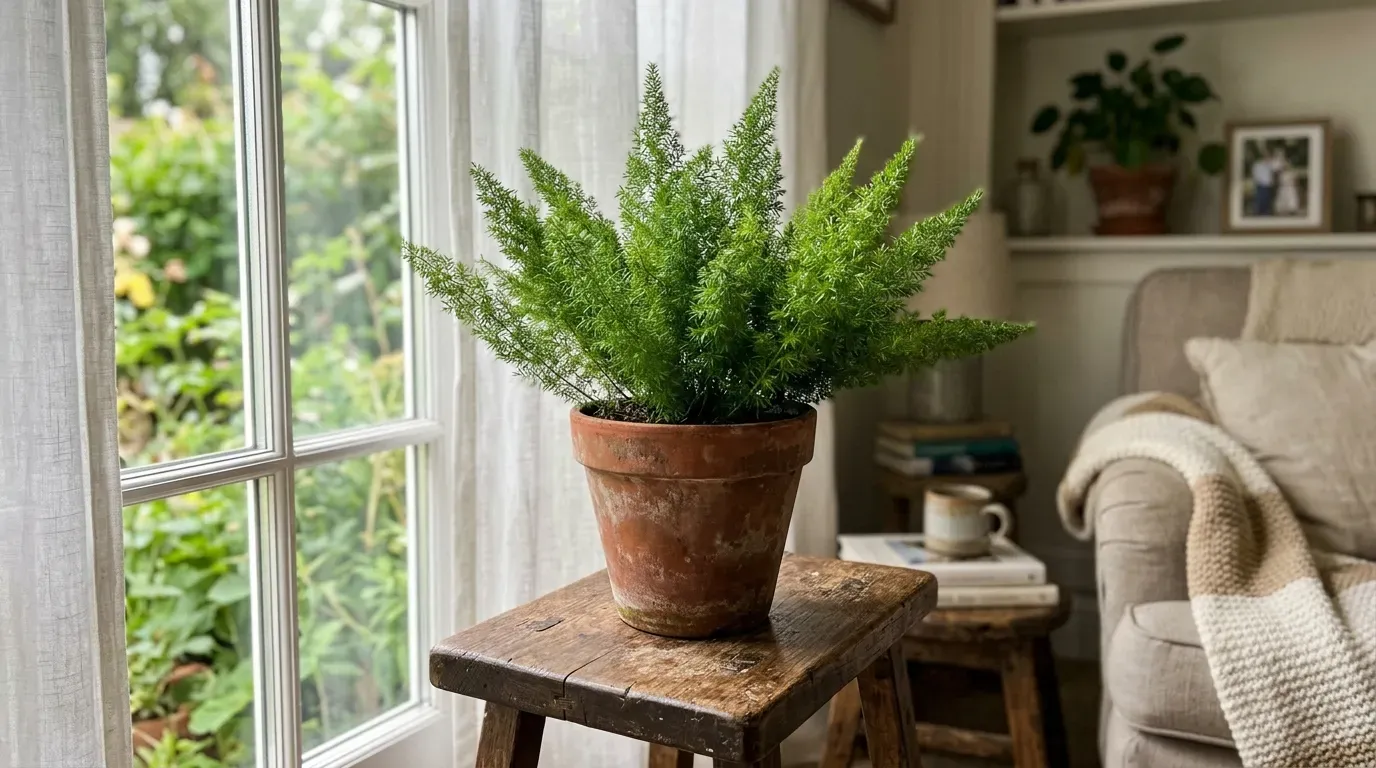
Foxtail Fern (Asparagus densiflorus ‘Meyeri’) likes bright, indirect sunlight. In a dark corner, growth thins and loses that dense bottle-brush shape.
Morning sun is fine. Hot afternoon sun bleaches needle-like foliage and turns it yellow. An east windowsill or a spot a few feet back from a west window is ideal.
Watering Schedule
Water thoroughly when the top inch of soil feels dry. Pour until water runs from the drainage holes, then empty the saucer. Tubers store water, so a missed week is forgiving. Constant sogginess is not. Waterlogged tubers rot.
Humidity & Temperature
Normal household humidity is usually enough. A pebble tray or nearby plants help in dry winter months. Keep temperatures between 65°F and 75°F. Below about 50°F, the plant may drop green needles. Protect from cold drafts and heater vents.
Soil & Potting
Use a standard potting mix that drains quickly, with a handful of coarse sand or perlite mixed in. Choose a heavy terracotta or ceramic pot with large drainage holes. Expanding roots can warp or break thin plastic pots.
Fertilizer
Feed once a month in spring and summer with a balanced liquid fertilizer diluted to half strength. Do not feed in autumn and winter. Extra fertilizer during short days can burn roots and push weak, leggy stems.
Pruning & Maintenance
Snip old yellow or brown fronds off at the base near the soil. That opens space for new plumes from the center. Wear garden gloves. Small sharp thorns hide along the stems.
Propagation
Division is the method that works. During spring repotting, lift the plant and slice the tuberous root ball into sections with healthy green stems and roots. Pot into fresh mix and water lightly while they re-anchor. Stem cuttings alone are unreliable.
Common Problems
Yellowing needles / whole fronds yellow: Too much direct sun or extreme drought. Move back from hard light and water thoroughly.
Mass needle drop: Stress from a sudden light change or severe underwatering. Keep the plant in a stable bright spot and steady the moisture.
Warped nursery pot: Normal root power. Move into a sturdier container and consider dividing in spring.
White bulbous structures in the soil: Water tubers, not pests. Leave them covered and intact.
Pro Tips for Long-Term Maintenance
When you repot your Foxtail Fern, do not panic at the small white bulbous balls in the soil. Those are water tubers. Leave them alone. A sturdy pot, bright filtered light, and a top-inch dry-down keep the plumes dense without rotting the storage system that makes this plant resilient.

About the Author
Silas
The Practical Greenhouse Mentor
"Silas treats the greenhouse like a workshop of practical results. After 40 years of dirty hands, he’s learned that thriving plants are the result of honest observation and small, correct moves rather than luck. He’s the neighbor who knows exactly why your Pothos is pouting and how to fix it without the fuss."