
Fishbone Cactus: The Rainforest Zigzag
Learn how to grow the Epiphyllum anguliger. Silas explains why this tropical epiphyte is nothing like its desert cousins and how to trigger its night blooms.
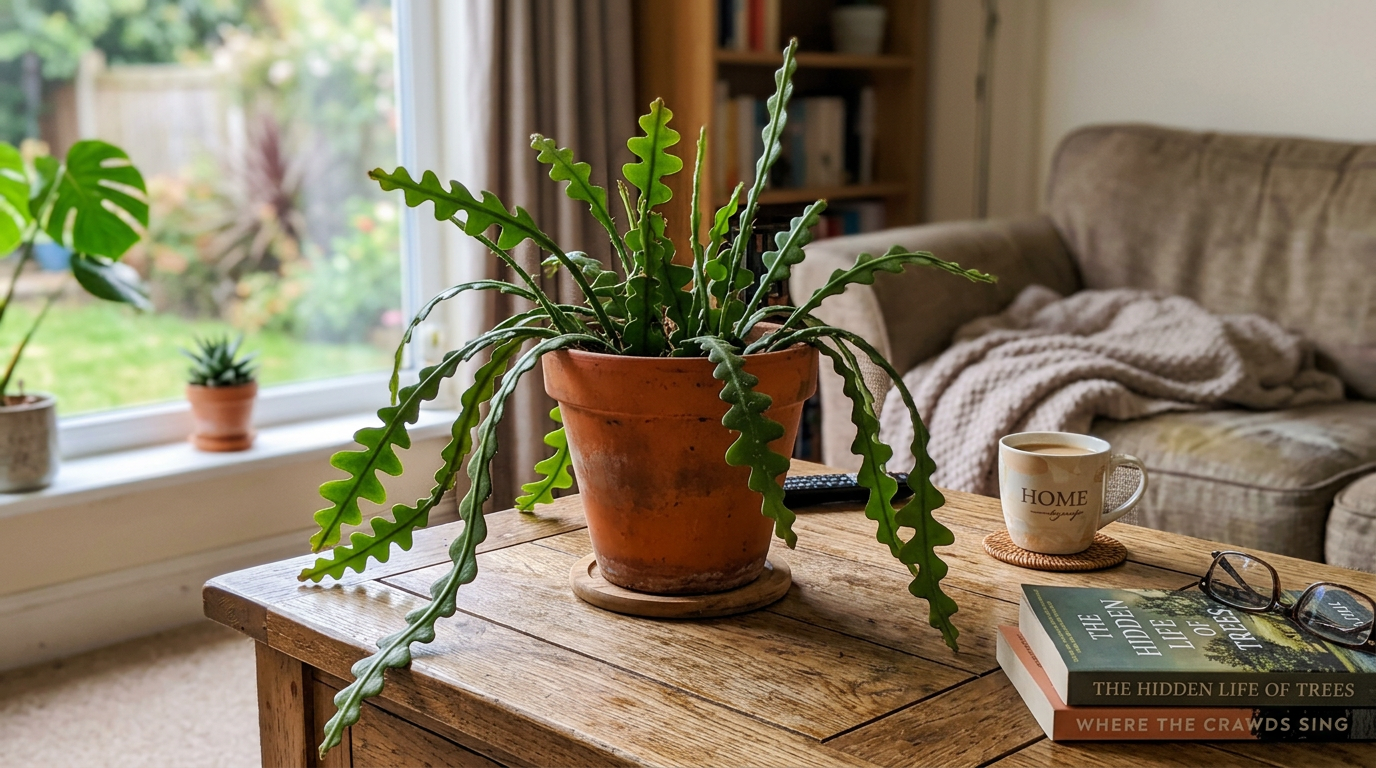
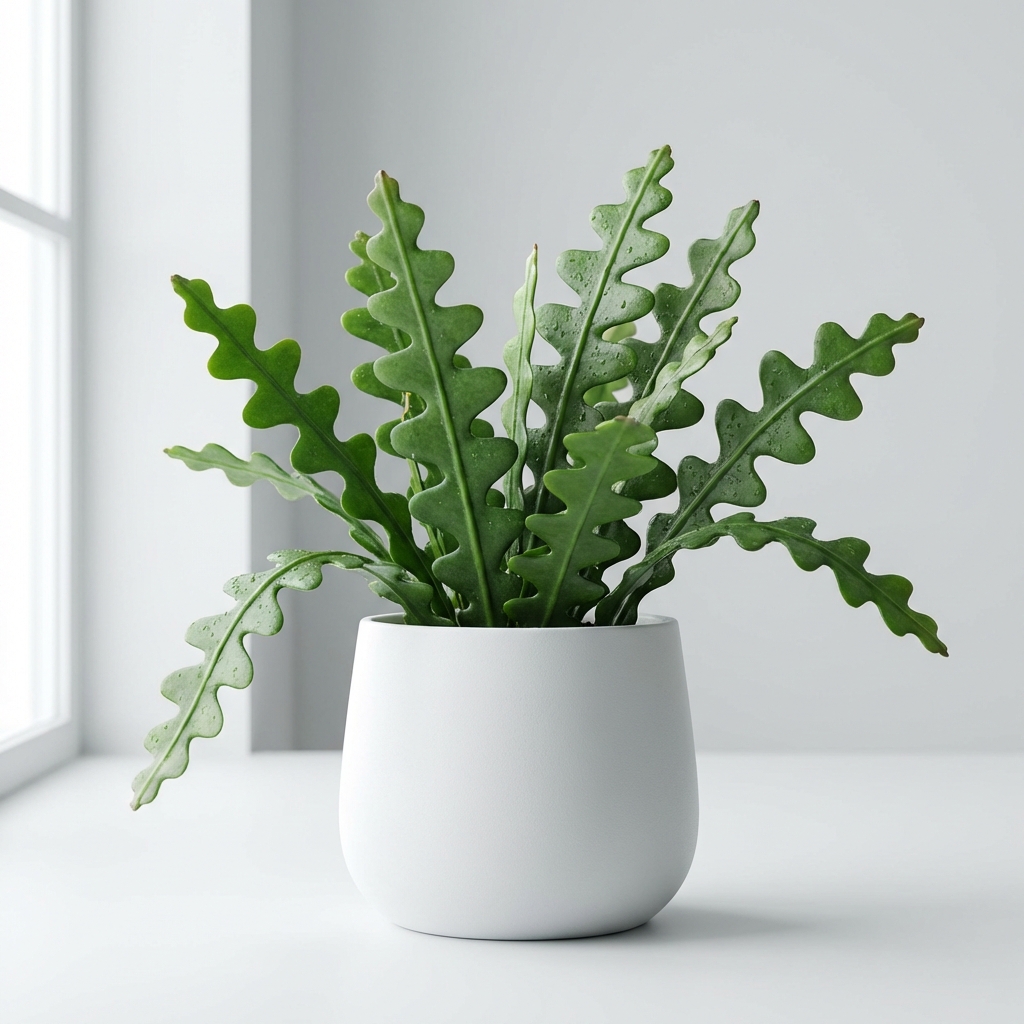
Fishbone Cactus
Epiphyllum anguliger
Care Level
Easy
Light
Bright Indirect
Water
Moderate
Humidity
Moderate
Fishbone Cactus: The Jungle’s Mechanical Masterpiece
The Quick Dirt
The Epiphyllum anguliger (Fishbone Cactus) is a tropical epiphyte. It trades desert sand for the rainforest canopy. It asks for bright, dappled light and a chunky soil mix that breathes. It needs more humidity than you would expect for a cactus. If you treat it like a jungle plant instead of a desert dweller, it will reward you with massive night blooms.
The Deep Dive
I. Tropical Ancestry: Not Your Average Cactus
If you treat the Fishbone Cactus like a desert cactus, you will kill it. Most people see the word cactus and immediately think of a dry, sandy wasteland. But the Epiphyllum anguliger is an epiphyte from the Mexican rainforest. In the wild, it doesn’t even grow in the ground. It lives in the crooks of massive trees. It stays high up in the canopy where its roots are exposed to the air and the frequent rains.
This ancestry changes everything about how the plant functions. Those flat, zigzag stems are designed to catch falling debris. They channel water toward the center of the plant. The unique shape also gives the stem incredible structural strength. It can trail several feet without snapping.
Because it comes from the jungle, it has a high demand for humidity. It doesn’t want the dry, scorched air of a desert. It wants moisture and air flow. When you look at those deeply lobed stems, don’t think cactus. Think rainforest survivor. It is a mechanical system designed for the humid heights.
II. Light Filters: The Rainforest Canopy
In the wild, this plant lives under the shade of massive trees. It never gets hit by direct, overhead sun. It gets dappled light. These are bits of sun that break through the leaves and change throughout the day. If you put your Fishbone Cactus in a southern window with no curtain, the sun will bleach those stems. They will turn a sickly yellow-white and eventually scorch.
The sweet spot is an east or north window. You want bright light, but you want it filtered. If the stems are dark, lush green, you have it right. If they are getting pale, they are hungry for more light. Do not just shove them into the sun. Increase the intensity slowly.
Think of the stems like solar panels that were built for low-intensity work. If you overload them, the circuits burn out. Give them the soft morning light or the steady, indirect light of a north window. They will grow fast and strong.
III. The “Chunky” Secret: Soil and Air
If you put an epiphyte in standard potting soil, you are essentially drowning it. That soil is designed to hold on to moisture. A Fishbone Cactus needs its roots to be surrounded by air. In their tree-top homes, their roots are often just dangling in the humid air. They stay nestled in a light layer of moss and debris.
You need a chunky mix. I make mine with a base of orchid bark, perlite, and just a bit of peat. This creates a structure that allows water to run right through while leaving big air pockets behind. When you water, it should drain out the bottom within seconds.
Don’t worry about repotting too often. These plants actually enjoy being a bit root-bound. It mimics the tight crevices they grow in in the wild. If you give them too much room, the extra soil will stay wet for too long. You will end up with root rot. Keep them in a smaller pot and let them fill it up.
IV. Hydration Logic: The Wet-Dry Pulse
Because it is a rainforest cactus, it needs more water than its desert relatives. But it doesn’t want to sit in a swamp. I follow a simple wet-dry pulse. Wait until the top two inches of the soil are completely dry. Use your finger to check. Don’t trust the surface. Then give it a deep soak.
Watch the stems. If they start to look thin or wrinkled, the plant is using up its stored moisture. That is your signal to water. If you see the base of the stems turning yellow or mushy, you have watered too much. The roots are starting to drown.
In the winter, the plant’s metabolism slows down. I cut my watering in half and keep it in a cooler room. Around 55 degrees is often perfect. This cooler resting phase is exactly what the plant needs to trigger those big blooms in the spring.
V. Night Blooming: The Jasmine Ghost
If you get your light and winter rest right, you will see something special. The Fishbone Cactus produces massive, white flowers that only open at night. They smell like jasmine. They are designed to attract moths in the dark Mexican forest.
They don’t last long. Usually they only stay open for one night. You have to keep an eye out for the big, fuzzy buds. To help the plant produce these flowers, you can use a bloom booster fertilizer in early spring. Look for something with low nitrogen and high phosphorus.
These are one of the easiest plants to propagate. Just snip off a stem. Let the cut callous over for a few days in the air. Then stick it in a small pot of your chunky mix. Give it a few weeks and it will have its own root system.
Si’s Pro-Tip
If your Fishbone Cactus is looking limp, check the humidity first. These plants breathe through their stems as much as their roots. A quick misting or a pebble tray can do more for a drooping plant than a deep watering ever could.
Keep your hands dirty and your plants happy.

About the Author
Silas
The Practical Greenhouse Mentor
"Silas treats the greenhouse like a workshop of practical results. After 40 years of dirty hands, he’s learned that thriving plants are the result of honest observation and small, correct moves rather than luck. He’s the neighbor who knows exactly why your Pothos is pouting and how to fix it without the fuss."