
Coleus Care
Keep Coleus scutellarioides colorful and bushy with bright light, steady moisture, regular pinching, and easy stem cuttings.


Coleus
Coleus scutellarioides
Care Level
Easy
Light
Bright Indirect
Water
Moderate
Humidity
High
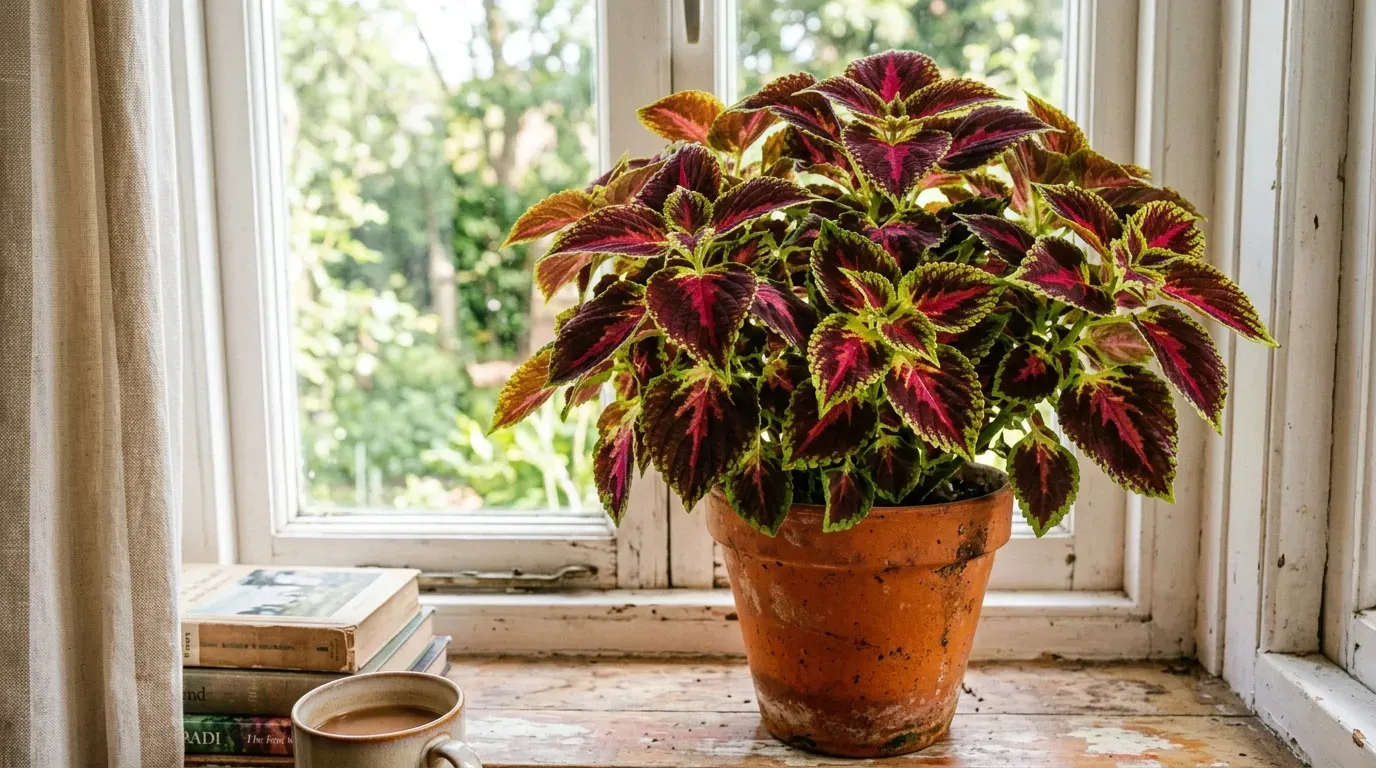
If your Coleus fades to muddy green or turns into a lanky stick, light and pinching are the first fixes. This fast foliage plant is grown for leaf color, not flowers. Bright light keeps the patterns strong. Even moisture keeps soft stems from collapsing.
Plant pros weigh in on a clear baseline: strong filtered light, steady moisture, and regular pinches above a node. Keep it away from pets. It is toxic if eaten.
Full plant profile: /plant/coleus/.
Quick Facts
- Difficulty: Easy
- Light: Bright Indirect (strong light for best color)
- Water: Keep evenly moist; water when the top of the mix just starts to dry
- Pet Safety: Toxic to cats, dogs, and horses
Light Requirements
Color is a light problem before it is a fertilizer problem. Bright, filtered light keeps burgundy, chartreuse, and pink patterns sharp. An east window is ideal. South or west light works a few feet back from the glass or behind a sheer.
Too little light fades the fancy markings and stretches the stems. Too much hard midday sun can scorch thin leaves, especially on large-leaf series like Kong. If the plant leans hard toward the window, rotate it weekly and move it closer to brighter indirect light.
Outdoors in warm months, give morning sun and afternoon shade. Bring it inside before nights cool.
Watering Schedule
Coleus likes steady moisture without a swamp. Water when the top of the mix just starts to dry. Soak until excess drains, then empty the saucer. In warm, bright rooms that may be every few days. In cooler, darker months, stretch the interval.
Soft, drooping stems with a light pot usually mean thirst. Yellow lower leaves with a heavy pot often mean overwatering. Use room-temperature water.
Humidity & Temperature
Moderate to high humidity helps. Dry winter air crisps edges on thin leaves. Group plants, use a pebble tray, or run a small humidifier if the house feels desert-dry.
Keep temperatures roughly 65°F to 75°F. Protect from cold drafts and hot vents. Coleus is not frost-hardy. Treat it as a warm-season plant indoors through winter.
Soil & Potting
Use a rich, well-draining indoor mix. A practical mix:
- Two parts quality potting mix
- One part perlite
- A handful of compost or worm castings (optional)
Always use a drainage hole. Repot in spring when roots crowd the pot. Bump only one pot size. These plants grow fast, so check yearly.
Fertilizer
Feed every two weeks in spring and summer with a balanced liquid fertilizer at the label rate or slightly diluted. Hold fertilizer in winter when growth slows under indoor light. Do not fertilize a plant that is stretching from low light. Fix the window first.
Pruning & Maintenance
Pinch or cut just above a leaf node whenever stems get long. Two new shoots usually break from that point and fill the plant out. Remove flower spikes if you see them. Blooms divert energy from the leaves you actually want.
Wipe dusty leaves so light can reach the surface. Check undersides for aphids and mealybugs while you clean. Keep the pot out of pet reach.
Propagation
Stem cuttings root easily in water or moist mix. Take a healthy tip with a few leaves, strip the lower set, and set the node in clean water or lightly moist mix. Roots often show within one to two weeks in bright, warm conditions.
Pot up when roots are a couple of inches long. Keep the new plant evenly moist while it anchors.
Common Problems
Faded color / leggy stems: Not enough light. Move closer to bright filtered light and pinch for shape.
Droop with dry mix: Underwatering. Soak thoroughly, then return to an even-moisture rhythm.
Yellow leaves / mushy stems: Overwatering or poor drainage. Let the mix dry further and check the pot hole.
Scorched patches: Too much direct afternoon sun. Pull back from the glass.
Aphids or mealybugs: Rinse, treat with insecticidal soap as directed, and isolate if needed.
Pet exposure: Toxic if eaten. Place it high or in a closed room.
Pro Tips for Long-Term Maintenance
If your Coleus gets tall and bare at the base, take cuttings from the best tips and restart a fresh pot rather than nursing the old stick forever. This plant rewards restarting more than nostalgia, and bright light plus regular pinches keep the next pot dense and colorful.

About the Author
Silas
The Practical Greenhouse Mentor
"Silas treats the greenhouse like a workshop of practical results. After 40 years of dirty hands, he’s learned that thriving plants are the result of honest observation and small, correct moves rather than luck. He’s the neighbor who knows exactly why your Pothos is pouting and how to fix it without the fuss."