
Bromeliads: The Jungle's Hidden Reservoirs
Discover the unique world of Bromeliads. Silas explains their unusual watering needs, their striking lifecycle, and why they are the perfect roommates for the patient gardener.
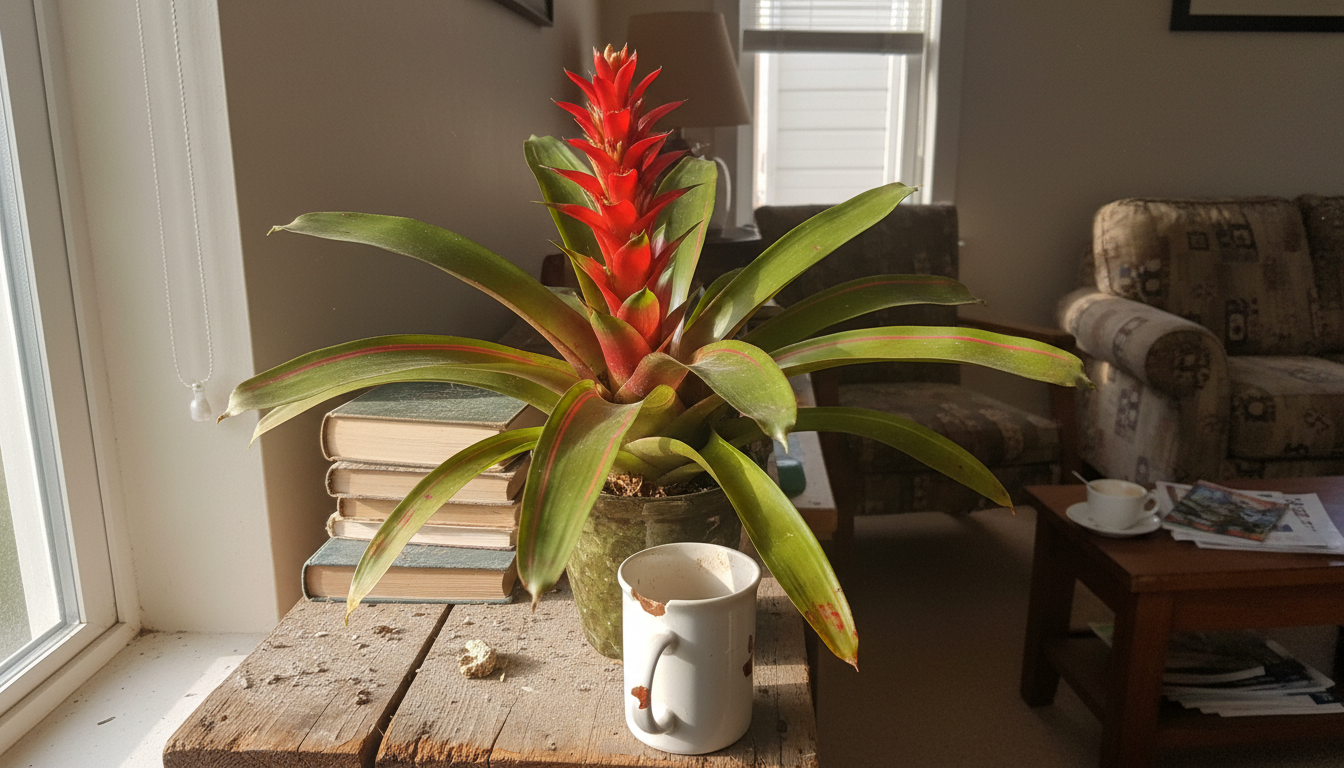
Bromeliads: Exotic Elegance Simplified
The Quick Dirt
The Bromeliaceae (Bromeliad) is a structural wonder that grows on trees and rocks in the wild. They need bright, filtered light and a very specific watering method involving a central cup. They only bloom once in their lifetime, but they leave behind pups to carry on their legacy. They are the perfect roommates for the patient gardener who values character over constant growth.
The Deep Dive
I have always found Bromeliads to be fascinating pieces of living architecture. Most are epiphytes, which means they do not need soil to survive. They cling to trees and rocks, drinking in the humidity of the jungle. When you bring one home, you have to remember that they are not built like your typical houseplant.
I. The Central Cup: Nature’s Reservoir
Unlike most houseplants, many Bromeliads have a central reservoir formed by their leaves. This is their “tank,” and in the jungle, it is how they catch the rain. I keep that central cup filled with fresh water at all times.
Listen to what the water is telling you—if it looks murky or smells, it is stagnant. Every week, I tip the plant over slightly to dump the old water and refill it with fresh. It stops bacteria from settling in and keeps the plant breathing. They are sensitive to chemicals, so I use rainwater or distilled water. While you keep the cup full, the soil should stay only barely moist. If you overwater the soil, those small roots will rot faster than you can say tropical.
II. Light: Bright but Filtered
In the wild, Bromeliads live under the dappled light of the jungle canopy. They want that same “filtered” feeling in your home. Bright, indirect light is perfect. A spot near a window with a sheer curtain is where they shine best.
If you see brown, scorched patches on the leaves, the plant is getting too much direct sun. If the foliage becomes a dull, dark green and the plant fails to produce pups or flower, it is starving for more light. The color of the leaves is a direct reflection of the energy they are receiving.
III. The Lifecycle: One Bloom, Many Pups
Gardening is a practice of patience, and the Bromeliad is the ultimate teacher of this lesson. It is important to understand that most Bromeliads only bloom once in their lifetime. That vibrant flower spike can last for three to six months, but once it eventually fades and turns brown, the mother plant will slowly begin to decline.
Do not let this discourage you—it is just her way of making room for the next generation. As the mother plant declines, she will put all her remaining energy into producing pups or offsets at her base. It is a beautiful, selfless cycle to witness.
IV. Managing Pups: The Next Generation
Once the mother plant has finished her show, you will see those tiny green pups emerging.
- Wait: Let the pups grow until they are about 1/3 to 1/2 the size of the mother plant.
- Separate: Use a clean, sharp knife to cut the pup away from the mother, ideally with some roots attached.
- Pot Up: Plant the pup in a well-draining Bromeliad or orchid mix. Keep your hands dirty and your mind clear as you start the cycle all over again.
V. Soil & Feeding
Because many Bromeliads are epiphytes, they don’t grow in traditional potting soil. They need a mix that is loose and airy. I use a blend of orchid bark, peat moss, and perlite. Good airflow is vital; avoid stuffing Bromeliads into tight corners.
They are light feeders. I use a balanced liquid fertilizer diluted to 1/4 strength. Instead of pouring it into the soil, I spray it directly onto the leaves and into the central cup once a month during the growing season.
VI. Troubleshooting
If you see brown leaf tips, it is often caused by dry air or salt buildup from tap water. Increase the humidity or switch your water source. If the base of the plant turns black and soggy, you have crown rot from overwatering the soil or keeping the cup too dirty. Unfortunately, rot is often fatal, so prevention is the best mentor here.
The Focus Moment
The Bromeliad is a plant that understands the value of a legacy. It puts everything it has into one spectacular show and then spends the rest of its life nurturing its offspring. It is a reminder that even when things seem to be ending, there is always new growth waiting at the base if you have provided the right environment. It is a lesson in endings and new beginnings. Keep your hands dirty and your mind clear.
Want more plant tips? Follow us on Facebook!
About the Author
Silas
The Practical Greenhouse Mentor
"Silas treats the greenhouse like a workshop of practical results. After 40 years of dirty hands, he’s learned that thriving plants are the result of honest observation and small, correct moves rather than luck. He’s the neighbor who knows exactly why your Pothos is pouting and how to fix it without the fuss."