Complete Care Guide for Areca Palm
Master the Golden Cane Palm: the mechanics of humidity and pure water for a lush indoor jungle.
Areca Palm
Dypsis lutescens
Care Level
Moderate
Light
Bright Indirect
Water
Moderate
Humidity
High
The Quick Dirt
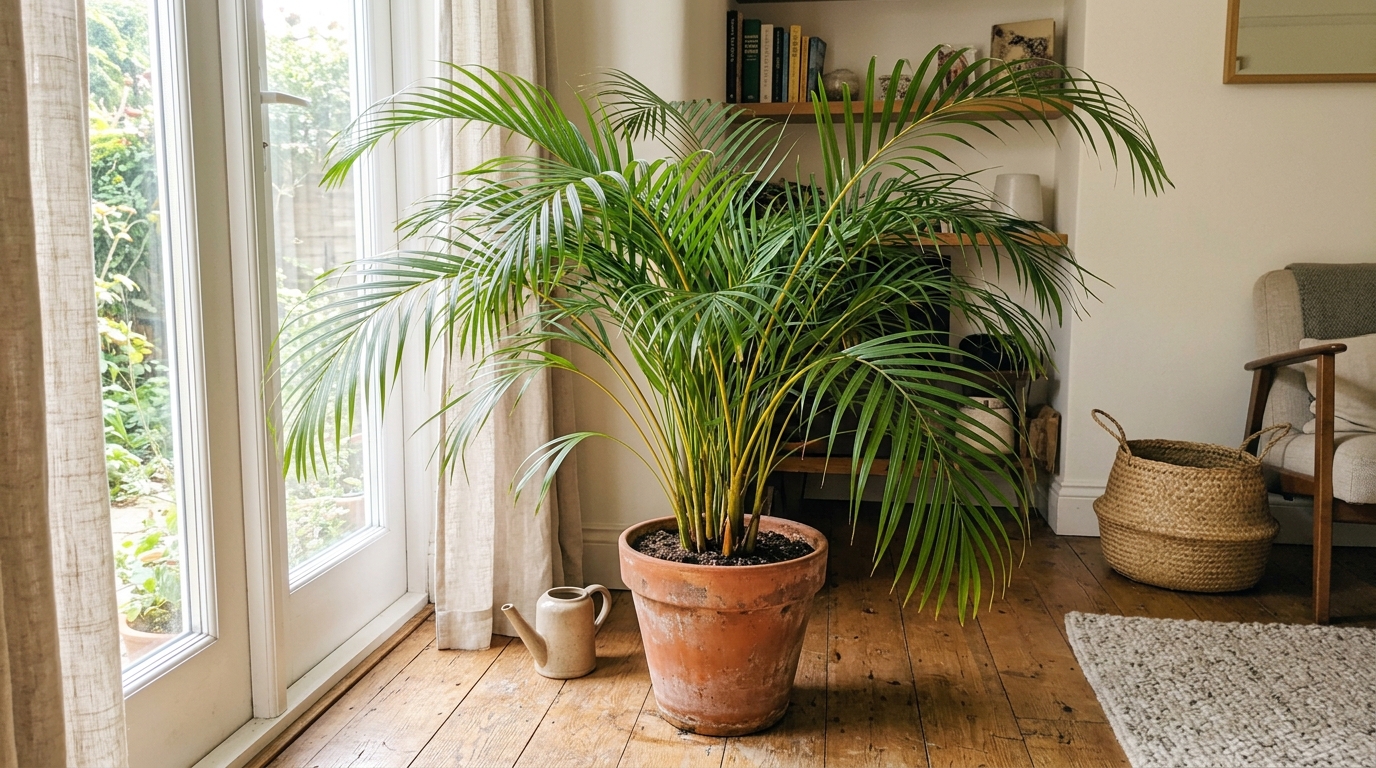
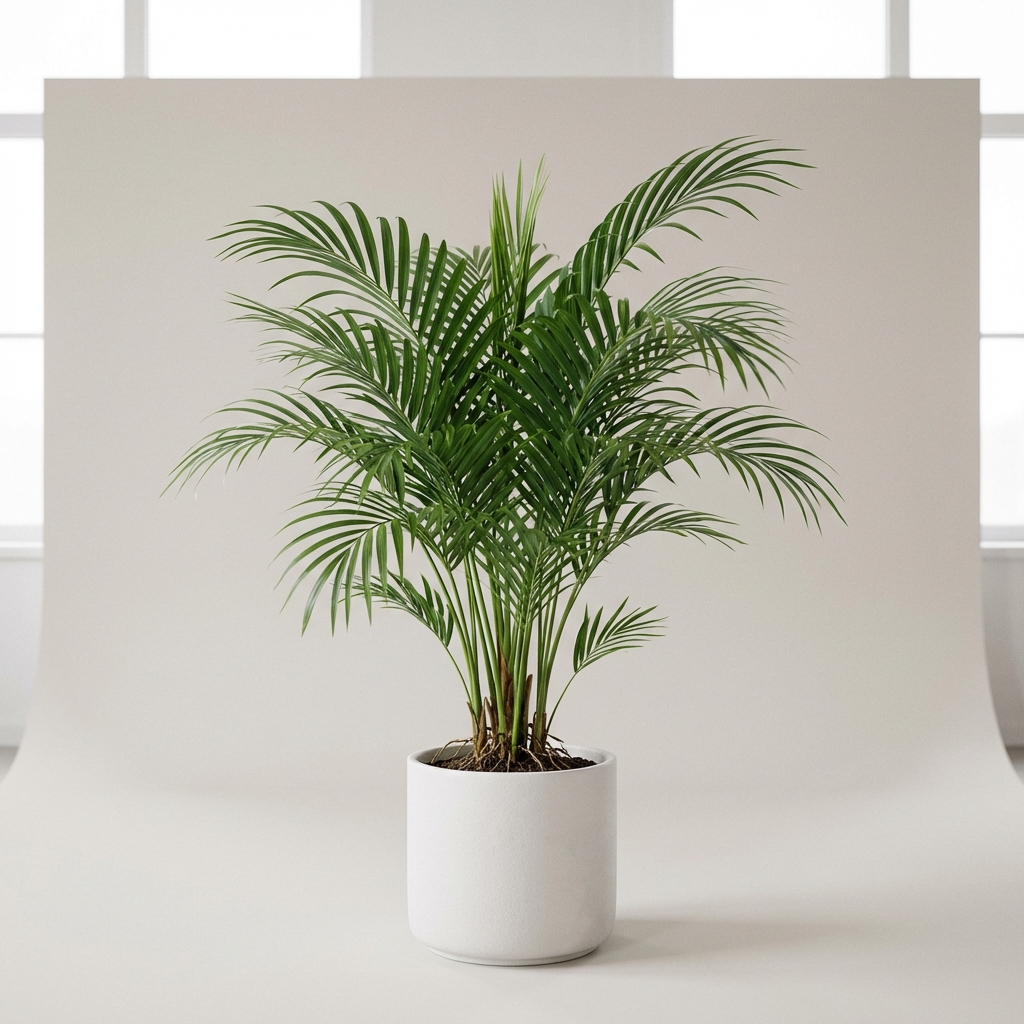
The Areca Palm, or Butterfly Palm, is a classic for a reason. It turns any room into a tropical sanctuary. But it’s a bit of a diva. You must get the water quality and humidity right. Avoid those dreaded brown tips by mastering the mechanics of its environment.
Light Physics: The Golden Cane Filter
Find the “sweet spot” in your room to light an Areca palm correctly. In the wild, this palm grows in dappled light under a tropical canopy. Those feathery fronds are designed for diffusion. They cannot handle direct UV bombardment. Place your Areca where sun hits the leaves directly and you’ll bleach the chlorophyll. Those “golden” canes will look like burnt yellow. The fronds will turn crispy and pale.
Light intensity dictates the mechanical structure of the plant. A palm in high, indirect light grows compact and bushy. More canes emerge from the base because the plant has plenty of energy. It doesn’t need to stretch for photons. In a low-light corner, it becomes leggy and sparse. The plant shifts mechanical energy toward vertical growth to find a gap in the canopy.
Balance your photon intake. Aim for a bright room but keep the palm a few feet back from the glass. You want light bright enough to cast a soft shadow. It shouldn’t feel hot on your skin. Use a sheer curtain for south-facing windows to filter direct photons. Create a mechanical shield for the fronds. Keep the light present but gentle.
Water Mechanics: The Fluoride Filter
Areca palms are sensitive to water quality. Tap water contains chlorine and fluoride. These chemicals are literal poison to many palms. They travel through the vascular system and build up at the frond tips. The tissue simply dies. This is “brown tip” syndrome. Prevent this mechanical failure with distilled water, rainwater, or a high-quality filter.
Consistency is key for watering. Areca palms like to stay “evenly moist.” Don’t let them go bone-dry or sit submerged. Fine roots rely on steady moisture to keep fronds turgid. In a peat-based system, the peat acts like a sponge. It holds water while allowing air to circulate. If the root ball dries out completely, peat becomes hydrophobic and repels water. Your palm will suffer a mechanical collapse.
Check your drainage speed. If water doesn’t drain instantly, it sits at the bottom and suffocates the roots. This leads to fungal rot. The entire cane will turn yellow and die. Water must pass through the soil and out the bottom quickly. This keeps roots hydrated and oxygenated for healthy respiration. Clear your drainage holes regularly.
Atmospheric Humidity: The Jungle Lung
Think of the Areca palm as a living humidifier. Its feathery fronds have huge surface area. They lose water through transpiration much faster than succulents. In a jungle, the air is saturated. In a typical home—especially with the heater running—the air is bone-dry. Dry air acts like a mechanical vacuum. It sucks moisture out of fronds faster than roots can replace it. Manage your humidity to keep the palm from turning into crispy straw.
Misting is a waste of time. It only raises humidity for a few minutes. Group your plants together instead. This creates a small, humid microclimate as plants release their own moisture. Use a pebble tray—a shallow dish with stones and water—beneath the pot. As water evaporates, it rises into the foliage. For a large Areca, a dedicated humidifier is the only mechanical way to maintain 50% humidity.
Watch out for draft stress. Heating vents and AC units are the enemy. They create dry, moving air that strips away the plant’s moisture shield. This leads to dehydration and mechanical shock. Fronds will droop and yellow. Place your palm in stable air. Stay far away from forced-air systems. If you feel a breeze, your palm is losing too much water.
Soil Engineering and Root Sensitivity
The substrate is the mechanical foundation. Areca palms prefer a slightly acidic environment. A peat-based potting mix is the standard. Peat has a lower pH and mimics tropical understory soils. It holds moisture without becoming heavy. If soil pH becomes too alkaline, the plant can’t absorb micronutrients. This causes a mechanical failure of photosynthesis. You’ll lose that vibrant “golden” glow.
Areca palms have sensitive roots. They hate being disturbed. Respect this mechanical constraint. Unlike other plants, the Areca prefers being slightly root-bound. Moving the plant causes micro-tears in the roots. This leads to shock and stunted growth. Repot only every 2-3 years. Be extremely gentle. Don’t shake off old soil. Move the whole root ball into a slightly larger pot and fill the gaps.
Keep nutrient loading consistent but cautious. Use a slow-release palm fertilizer during spring and summer. This provides nitrogen and potassium for those massive fronds. Over-fertilizing causes salt buildup. This interferes with the roots’ ability to take up water. It’s a mechanical bottleneck that leads to brown tips. Stop fertilizing in autumn and winter when metabolism slows down. Support the plant’s natural rhythm.
Troubleshooting: Reading the Fronds
Read your Areca palm’s fronds to prevent total mechanical failure. Brown tips are the most common signal. Dry, brittle tips mean you need to audit humidity and water quality. Check your filter and humidifier. If fronds yellow but tips are fine, you might be overwatering or lacking light. A yellowing cane that feels soft at the base means root rot. The mechanical link between roots and leaves is severed.
Older, lower fronds often turn yellow or brown and die. Don’t panic. This is natural maturity. As the palm pushes new canes from the center, it sheds old, inefficient solar panels. This is a normal mechanical process. Snip off the dead frond at the base with clean shears. Just ensure you don’t see sudden, mass yellowing of all fronds at once.
Areca palms are safe for pets. The “Butterfly Palm” is non-toxic to cats and dogs. This is a great mechanical alternative to the dangerous Sago Palm. If your pet chews the fronds, you’ll have a ragged plant, but not a medical emergency.
Si’s Pro-Tip: Trim off those brown tips to restore the plant’s look. The mechanical trick is to follow the natural shape of the leaflet. Leave a tiny sliver of brown tissue behind. If you cut into the green part, you’ll create a new wound. It will just turn brown again anyway.
Keep your hands dirty and your plants happy.

About the Author
Silas
The Practical Greenhouse Mentor
"Silas treats the greenhouse like a workshop of practical results. After 40 years of dirty hands, he’s learned that thriving plants are the result of honest observation and small, correct moves rather than luck. He’s the neighbor who knows exactly why your Pothos is pouting and how to fix it without the fuss."