
Aglaonema pictum 'Tricolor': The Art of the Camouflage
Master the care of the stunning 'Camo Plant'. Silas shares why this rare Sumatran beauty is worth the wait and how to keep its unique patterns from fading.
Aglaonema
Aglaonema spp.
Care Level
Easy
Light
Low
Water
Moderate
Humidity
Moderate
Aglaonema pictum ‘Tricolor’: The Ultimate Camouflage
The Quick Dirt
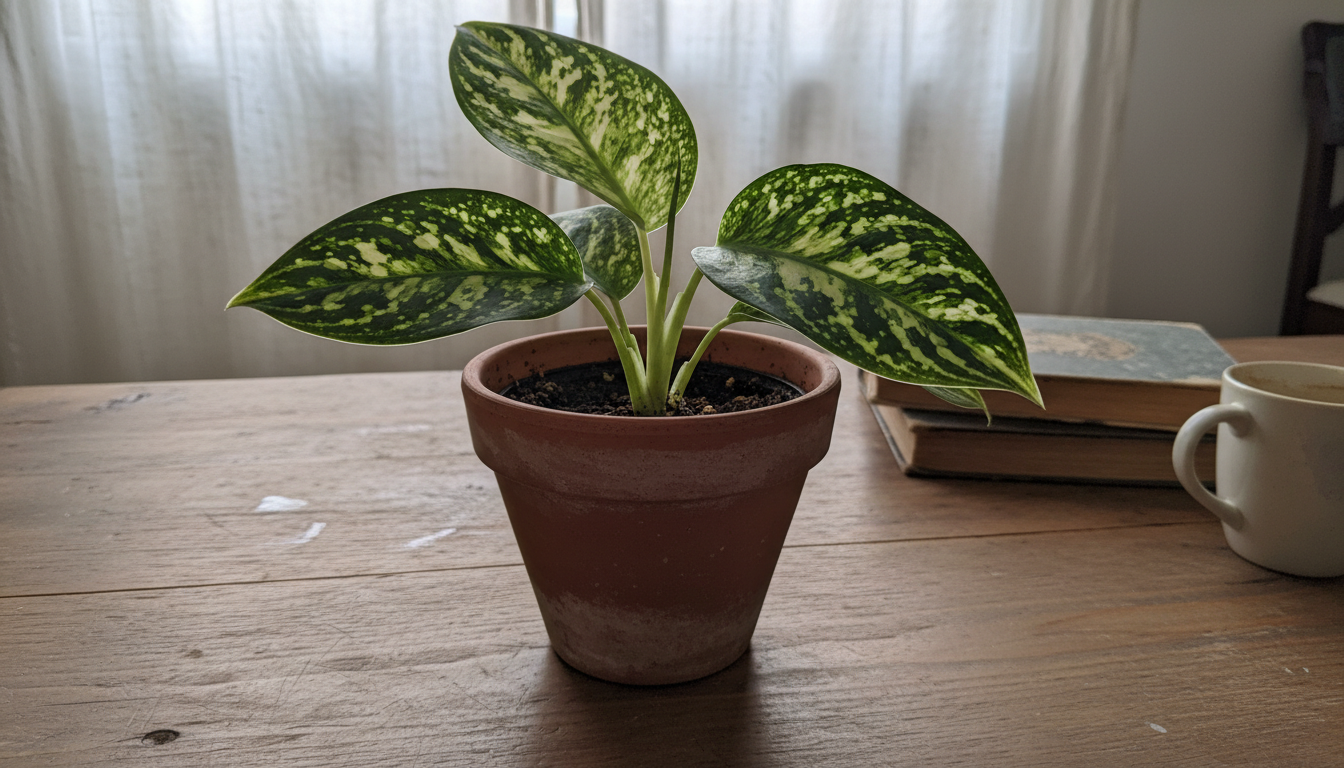
The Aglaonema pictum ‘Tricolor’, often called the Camouflage Plant, is a rare find that looks more like a painting than a living thing. It requires bright, filtered light to maintain its high-contrast patterns and a gardener who understands the need for steady humidity. It is a slow-growing plant that rewards the patient mentor with a stunning, three-toned mosaic of green.
The Deep Dive
Every now and then, nature produces something so specific it feels like a secret. The ‘Tricolor’ is one of those secrets. Originally from the tropical forests of Sumatra, it features a mix of deep forest green, bright lime, and a muted mint that looks exactly like military camouflage. I have seen many plants in my time, but this one still stops me in my tracks every morning.
I. Light: Maintaining the Masterpiece
The most important thing to know about the ‘Tricolor’ is that its pattern is light-dependent. It needs bright, indirect light to produce those distinct shades of mint, lime, and forest green. Think of the light that filters through a sheer curtain in a south or west-facing window. It wants to see the sky, but it doesn’t want to feel the heat.
In low light, the plant will start to struggle. The new leaves will come in smaller, and that beautiful high-contrast mosaic will begin to fade into a muddy, solid green. It is the plant’s way of saying it is struggling to eat. You have to listen to what the leaves are telling you. Never let it see direct afternoon sun. The leaves are thin and delicate. They will scorch and bleach in a single hour of harsh rays.
II. Water: The Goldilocks Standard
Unlike the more common Aglaonemas that can handle a bit of neglect, the ‘Tricolor’ is a bit of a goldilocks. It wants its soil to be just right. It prefers to stay consistently moist, but it will not tolerate being soggy. I wait until the top inch of soil feels dry to the touch before I even reach for the watering can.
These plants are also remarkably sensitive to the minerals in our tap water. If you see the very tips of those beautiful leaves turning brown despite high humidity, the plant is likely reacting to fluoride or chlorine. I only use rainwater or distilled water for mine. It is a small extra step, but gardening is a practice of patience, and a rare plant like this deserves that extra level of attention.
III. Humidity: Tropical Comfort
This is a true child of the Sumatran jungle. If you want it to look its best, you need to mimic that heavy, tropical air. Ideally, it wants 60% humidity or higher. If your home is dry, especially during the winter when the heater is running, the leaf edges will quickly become brown and crispy.
I don’t recommend misting these. It doesn’t do much for the air, and it can leave spots on the foliage. Instead, I keep mine near a dedicated humidifier or group it with a cluster of ferns to create a shared pocket of moisture. It is about creating an environment where the plant can breathe without losing its own water.
IV. Soil: The Airy Anchor
Because the ‘Tricolor’ is a slow grower, its roots are not as aggressive as other aroids. They need a mix that is very airy. I use one part high-quality potting soil, one part orchid bark, and one part perlite. You want a mix where, when you water, the liquid runs out of the bottom within seconds. Those air pockets in the soil are where the roots do their best work. If the soil is too heavy, the water will sit, and the roots will rot before you even notice a problem at the top.
V. Maintenance: Stability and Cleaning
The ‘Tricolor’ is a plant that values stability. It hates being moved. Once you find a spot where the light is right and the humidity is steady, leave it there. Sudden changes in its environment, even just moving it to a different room, can cause it to drop its most beautiful leaves in protest.
Those camouflage leaves are also dust magnets. Every few weeks, I take a soft, damp cloth and gently wipe each one. It keeps the patterns sharp and ensures the plant can photosynthesize at full capacity. Keep your hands dirty and your mind clear as you do this—it is a great time to check the undersides of the leaves for any signs of spider mites, which love dry, dusty plants.
The Focus Moment
The Aglaonema pictum ‘Tricolor’ is a lesson in nuance. It teaches us that some of the most beautiful things in the world are built slowly, layer by layer. It isn’t a plant for the gardener who wants instant results. It is for the one who finds peace in the details and the long, slow unfurling of a new leaf. Having one in your home is a quiet invitation to slow down and appreciate the complexity of the natural world.
Want more plant tips? Follow us on Facebook!

About the Author
Silas
The Practical Greenhouse Mentor
"Silas treats the greenhouse like a workshop of practical results. After 40 years of dirty hands, he’s learned that thriving plants are the result of honest observation and small, correct moves rather than luck. He’s the neighbor who knows exactly why your Pothos is pouting and how to fix it without the fuss."