
The Big Sleep: Adjusting for Winter Shifts
Shorter days and dry heaters can spell trouble for houseplants. Silas explains how to transition your jungle for the cold months and respect the rhythm of dormancy.
The Big Sleep: Adjusting for Winter Shifts
The Quick Dirt
Your plants don’t have a calendar, but they can feel the shift in the light and the chill in the air. As the days get shorter, your indoor jungle enters a state of semi-dormancy. If you keep up your summer routine of heavy watering and feeding, you’re going to run into trouble. Winter is a season for slowing down and paying closer attention.
The Deep Dive
I’ve always found winter to be a quiet, reflective time in the greenhouse. The plants aren’t racing to produce new leaves; they are resting. Respecting that “big sleep” is one of the most important lessons a gardener can learn. Gardening is a practice of patience, and winter is the ultimate test of that patience.
1. Light: The Idling Engine
In the winter, the sun is lower and weaker. Even if a room looks bright to you, your plant might be receiving half the energy it did in July.
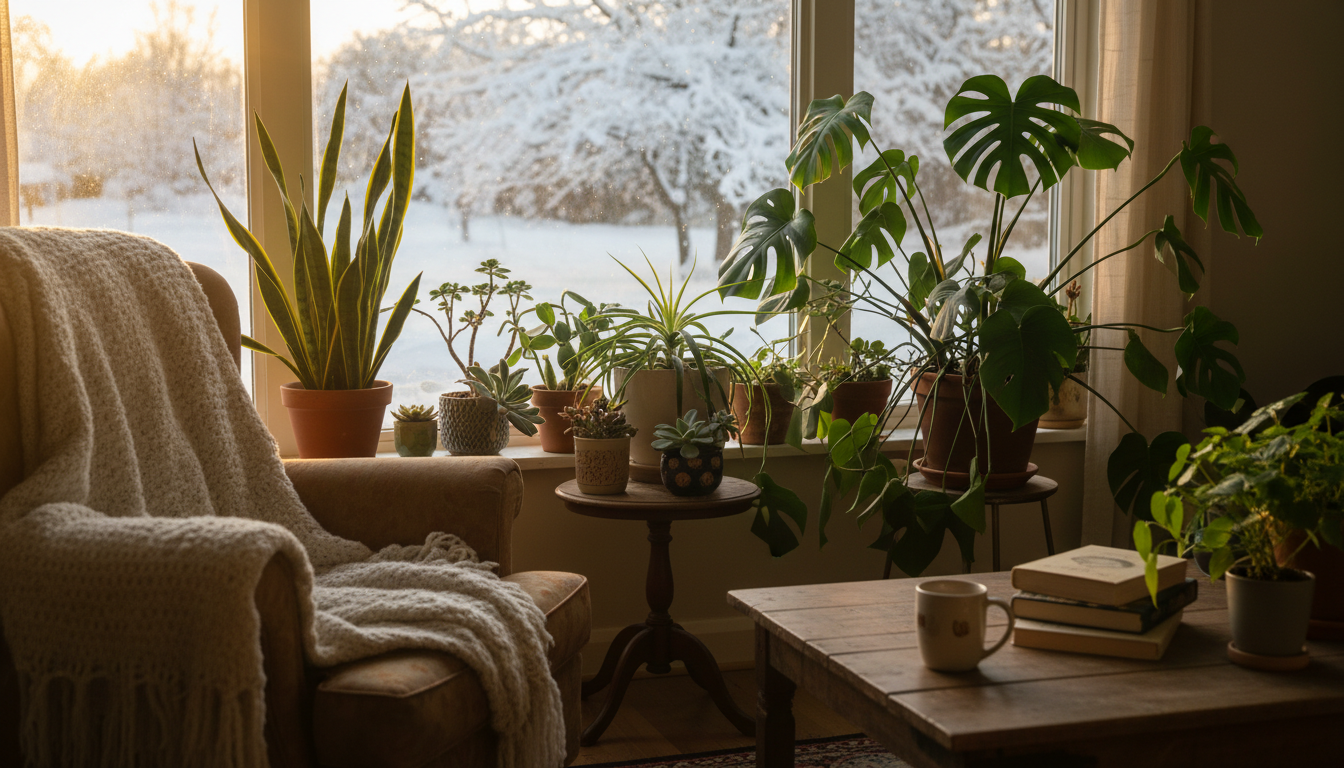
- The Fix: I move my plants as close to the glass as possible. A plant that was happy five feet away in the summer might need to be right on the windowsill now.
- The Clean: Dust on the leaves acts like a filter, blocking what little light is left. Give them a good wipe with a damp cloth once a month to ensure they can “eat” every bit of sun they find.
2. The Great Watering Slowdown
Because there is less light, the plant is doing less work. Its “engine” is idling, which means it isn’t drinking as much.
- The Golden Rule: Always check the soil. In the winter, it might take twice as long for a pot to dry out. Overwatering in the cold is the fastest way to trigger root rot.
- No Fuel: Stop fertilizing. The plant doesn’t need the extra nutrients when it isn’t actively growing. Wait until you see the first flush of spring growth before you reach for the food.
3. Heaters and Drafts: The Tropical Enemy
Our heating systems are essentially “thirsty air” machines. They blow dry, hot air that can turn a leaf crispy in a matter of days.
- Mind the Vents: Make sure no plant is in the direct line of a heater vent.
- Watch the Windows: While you want the light, older windows can be drafty. If you feel a cold breeze, move your sensitive friends—like the Fiddle Leaf Fig—a few inches back to avoid a cold shock.
The Focus Moment
Winter reminds us that rest is a vital part of growth. A plant that is allowed to go dormant and settle in will come out much stronger in the spring. It’s a time for us to slow down, too—to enjoy the quiet green without the rush of constant maintenance. Keep your hands dirty and your mind clear, and trust that the spring is already waiting in the roots.
Want more plant tips? Follow us on Facebook!

About the Author
Silas
The Practical Greenhouse Mentor
"Silas treats the greenhouse like a workshop of practical results. After 40 years of dirty hands, he’s learned that thriving plants are the result of honest observation and small, correct moves rather than luck. He’s the neighbor who knows exactly why your Pothos is pouting and how to fix it without the fuss."