Beyond the Plastic: A Guide to Sustainable Potting
Tending to plants should be as green as it looks. Silas shares his secrets for eco-friendly potting, from ditching peat moss to upcycling everyday items.
Beyond the Plastic: A Guide to Sustainable Potting
The Quick Dirt
We garden because we love nature, but the traditional plant industry can be surprisingly hard on the environment. From single-use plastics to the over-harvesting of sensitive bogs, our hobby has a footprint. It’s time to look at how we pot our plants and make choices that are as sustainable as they are beautiful.
The Deep Dive
I’ve always felt that gardening is a practice of patience, but it’s also a practice of respect. We shouldn’t be destroying one ecosystem to build another in our living rooms. Over the years, I’ve moved away from the “standard” ways of potting and found that the earth—and my plants—prefer the alternatives anyway.
1. The Peat Problem
Most store-bought potting soils are built on a foundation of peat moss. These mosses are harvested from ancient bogs that act as massive carbon sinks. When we dig them up, we release that carbon and destroy a habitat that takes centuries to form.
- The Silas Alternative: Coconut Coir. It’s made from the husks of coconuts, which are a byproduct of the food industry. It holds water better than peat, lasts longer, and is completely renewable. I haven’t used peat in my greenhouse for a decade, and my ferns have never been happier.
2. Leaving the Plastic Behind
Those black plastic nursery pots are convenient, but they often end up in the landfill.
- Rice Hull Pots: I love these. They are made from the shells of rice grains, they are biodegradable, and they allow the roots to breathe much better than plastic.
- Upcycling: Before you buy something new, look in your cupboards. I’ve turned old ceramic bowls, wooden crates, and even large tin cans into beautiful homes for my plants. Just remember the golden rule: you must add a drainage hole. A drill and a masonry bit will open up a world of sustainable options for you.
3. Organic Feeding
Synthetic fertilizers can lead to a buildup of salts in the soil that eventually “burns” the roots.
- The Secret: I prefer Worm Castings or Compost Tea. It’s “liquid gold” for your plants. It doesn’t just feed the plant; it feeds the soil, keeping the microorganisms alive and well. Listen to what the soil is telling you—if it’s rich and dark, the plant will take care of itself.
The Focus Moment
Sustainability isn’t about being perfect; it’s about making mindful choices where we can. When you switch to a peat-free soil or an upcycled pot, you’re honoring the very nature your plants represent. It’s a way to close the loop and ensure your indoor jungle is truly green. Keep your hands dirty and your mind clear.
Want more sustainable gardening tips? Follow us on Facebook!
About the Author
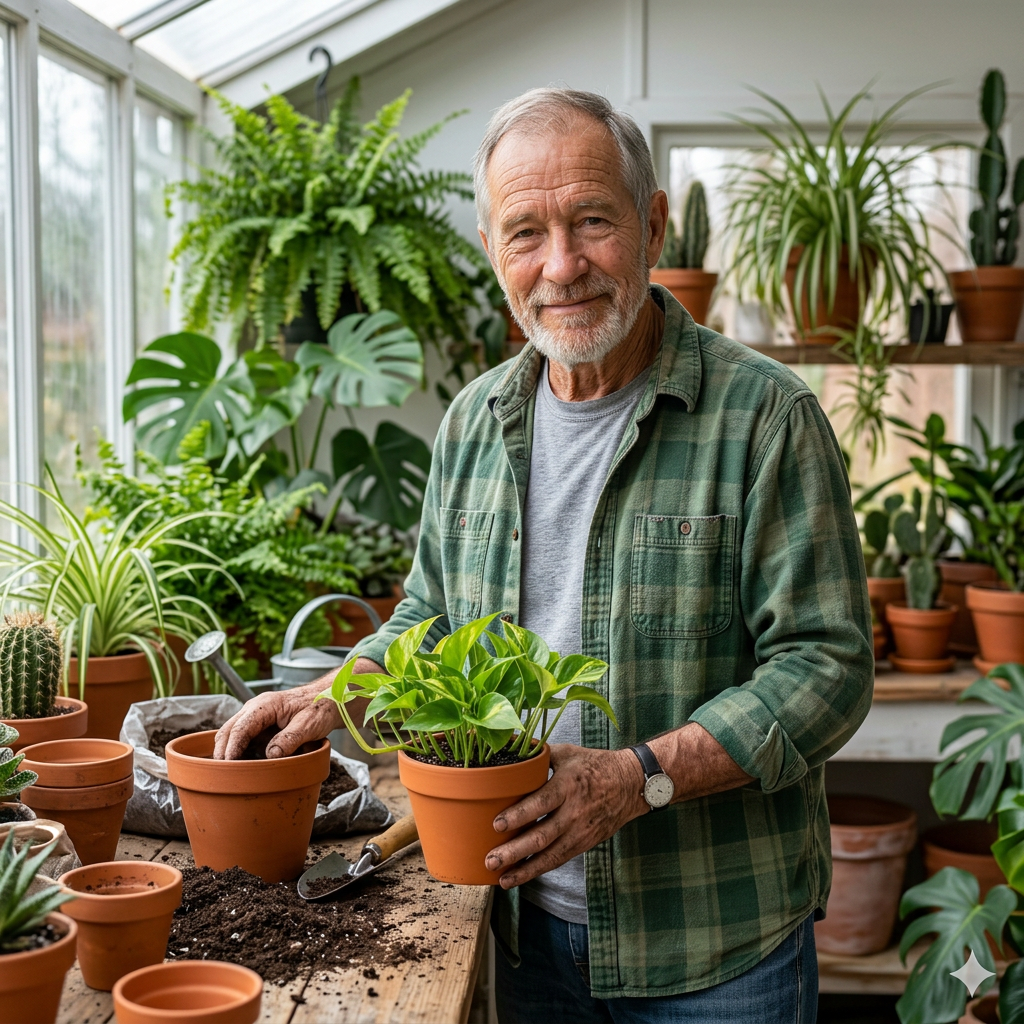
Silas
The Practical Greenhouse Mentor
"Silas treats the greenhouse like a workshop of practical results. After 40 years of dirty hands, he’s learned that thriving plants are the result of honest observation and small, correct moves rather than luck. He’s the neighbor who knows exactly why your Pothos is pouting and how to fix it without the fuss."