
Stop Moving Your Plants: The Cost of the Shuffle
Why your plants hate being rearranged for aesthetics and how stability leads to growth.
The Quick Dirt
Plants are stationary organisms by design. They spend their energy building a mechanical system to thrive in a specific spot. When you move them every week to redecorate, you are forcing them to spend energy they do not have on a constant rebuilding job.
1. Photon Trapping
A leaf is a piece of biological machinery designed for one job: catching photons. Once a plant is placed in a spot, it begins a slow, mechanical process. It orients its leaves to maximize that light capture. It is not just leaning toward the window. The plant is physically adjusting the cells in the petiole, which is the leaf stem. It locks the leaf into a precise angle. In the greenhouse, we call this locking in the canopy. Depending on the plant, this process can take anywhere from two weeks to two months of perfectly stable light.
When you move that plant to a different shelf, you effectively destroy all that mechanical work. If you rotate it because you think it looks lopsided, the same thing happens. The plant now finds itself in a new light environment. Its leaves are angled for a source that no longer exists. Now, instead of building new roots or pushing out fresh leaves, it must spend its energy elsewhere. It has to physically re-orient its existing canopy toward the new light source. It is like a solar farm where the panels are constantly pointed at the ground instead of the sun. It is a massive waste of energy.
I have seen people who rotate their plants every time they water. They think they are being helpful. All they are actually doing is keeping the plant in a state of permanent architectural flux. The plant never gets to reach its peak efficiency. Its engine is always being rebuilt. If you want a plant to grow fast and strong, you have to let it find its sweet spot and stay there. Once those leaves are locked in, they can trap photons with maximum efficiency. All that extra energy goes toward growth. Stability is not just a preference for the plant. It is a mechanical requirement for success.
2. Acclimation Stress
Every corner of your house is its own little microclimate. One shelf might be 72 degrees with 50% humidity. Another shelf five feet away might be 68 degrees with 40% humidity because of a nearby vent. When you move a plant, it has to adjust its internal cellular pressure and transpiration rate to survive. This is not a feeling. It is a massive mechanical shift in how the plant processes water and gas.
When a plant is moved into a new microclimate, its transpiration rate shifts immediately. This is the rate at which the plant breathes out water. If the new spot is drier or warmer, the plant has to quickly adjust its stomata to prevent excessive water loss. This change in pressure ripples through the entire mechanical system. It goes from the tips of the leaves down to the root hairs. For the first 48 to 72 hours in a new spot, the plant is effectively in recovery mode. It is working overtime just to maintain its internal balance and keep its cells from collapsing.
If you keep moving the plant every few days, it never gets out of this recovery phase. It is like trying to run a factory while the power keeps cutting in and out. The plant spends all its metabolic capital on these emergency adjustments. It leaves nothing left for the actual business of growing. This is why you will see plants that look stagnant for months even though you are doing everything right. You are giving them the right water and the right light, but you are robbing them of stability. Stop the shuffle. Let the plant settle its internal pressure. Growth happens in the quiet moments between moves.
3. Microclimate Consistency
The best plants I have ever seen are almost always the ones that have not moved in years. They look like they belong on a magazine cover. There is a mechanical beauty in a plant that has grown into its space. Over time, a stable plant will adjust every part of its structure to its specific corner. It adjusts to the airflow, light levels, and humidity. It dials in its systems until it is running at peak efficiency. The leaves become sized and spaced perfectly for the light available. The root system develops a rhythm that matches your watering schedule in that specific spot.
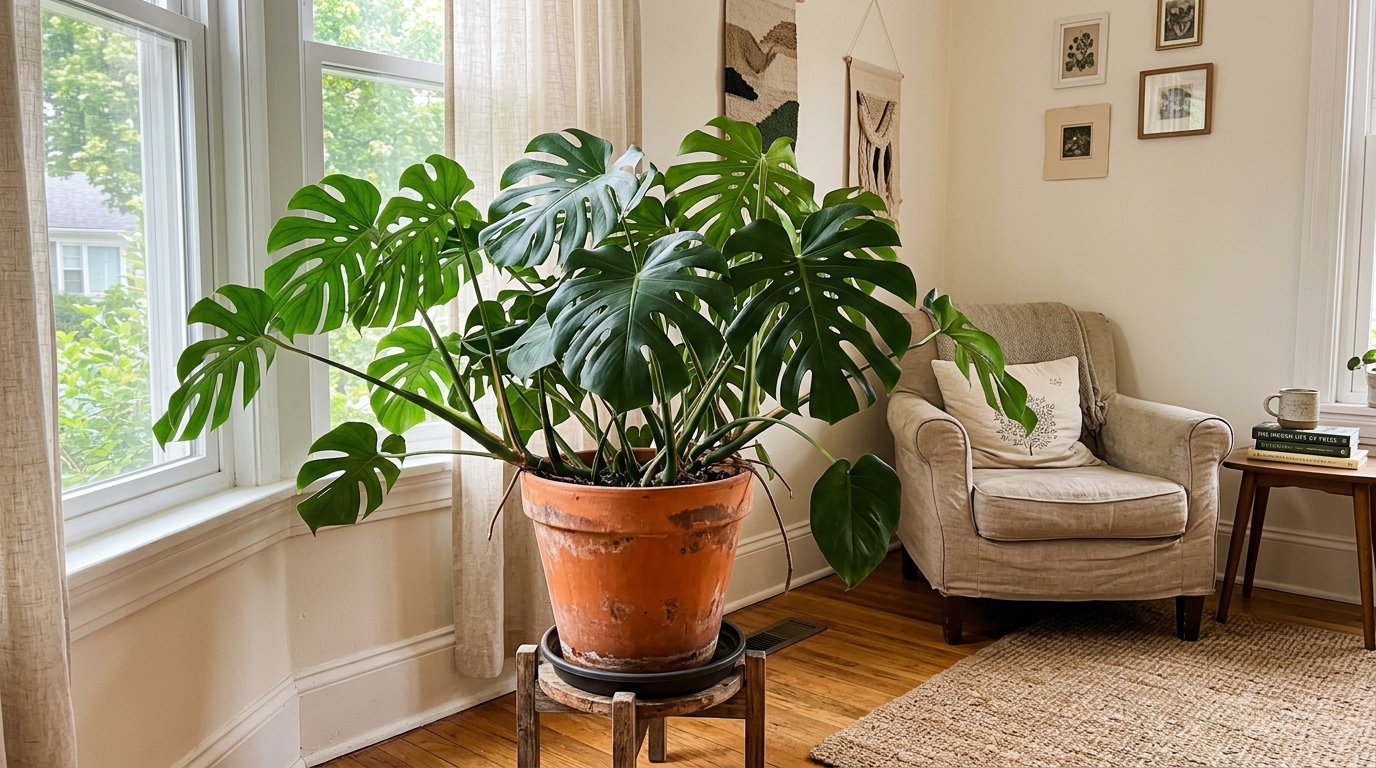
Think of it like an old engine that has been tuned for a specific altitude. It might run okay elsewhere, but in its home environment, it is flawless. When you provide microclimate consistency, you allow the plant to stop reacting and start building. This is how you get those massive, healthy Monsteras. It is how you get Hoyas that suddenly bloom after years of sitting still. They finally reached a point where their mechanical overhead was so low that all their energy could go into growth.
Finding that sweet spot is the real work of indoor gardening. It takes observation. You have to watch the leaves for signs of too much sun or too little air. Once you find it, your job is to be the guardian of that stability. Do not let a redecorating itch ruin three years of acclimation. If a plant is thriving, leave it alone. The highest value you can provide is to keep the environment exactly the same day after day. In a world that is always changing, your plants are looking for the one thing that stays the same. Give them that, and they will show you what they are really capable of.
Si’s Pro-Tip
If you absolutely must rotate your plant to keep it from growing lopsided, do it in small increments. Move it about a quarter turn every time you water. It is a slow enough change that the plant can adjust without hitting the panic button.
Keep your hands dirty and your plants happy.
About the Author
Silas
The Practical Greenhouse Mentor
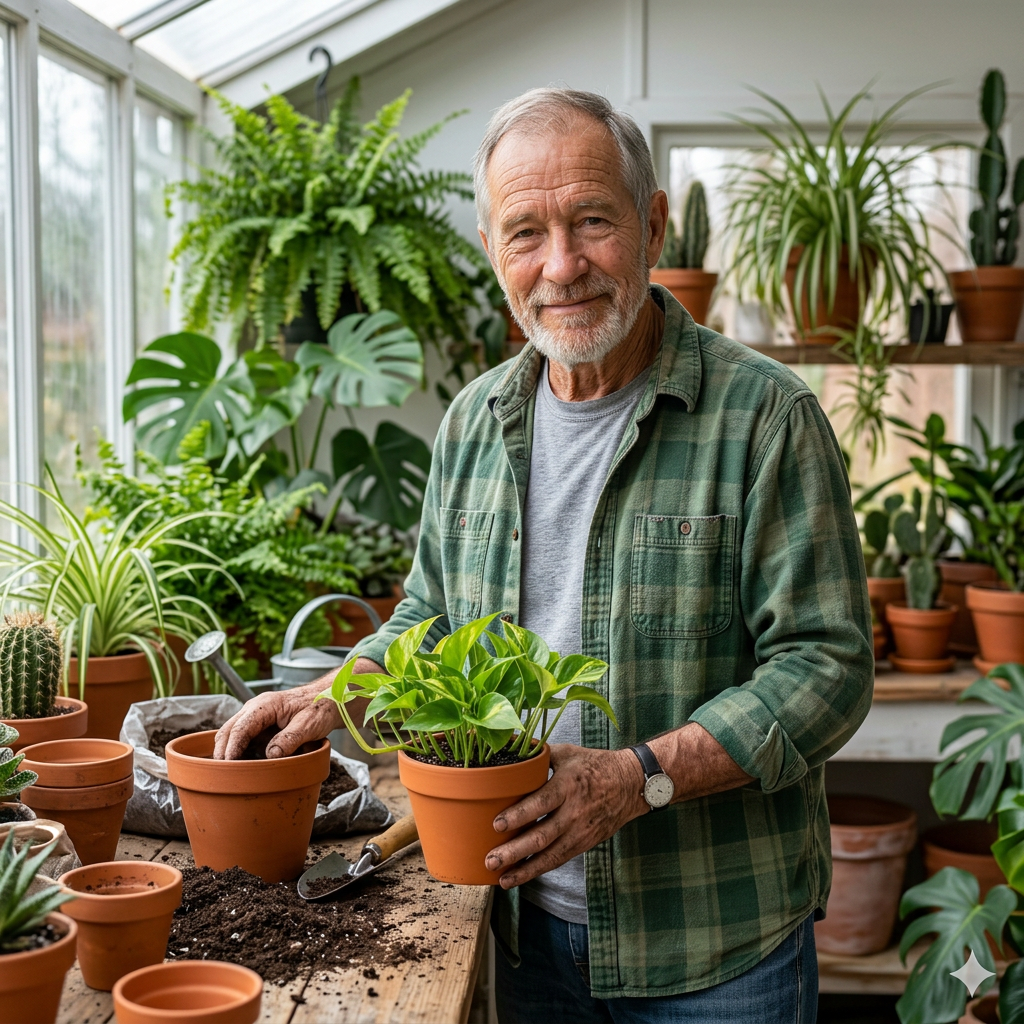
"Silas treats the greenhouse like a workshop of practical results. After 40 years of dirty hands, he’s learned that thriving plants are the result of honest observation and small, correct moves rather than luck. He’s the neighbor who knows exactly why your Pothos is pouting and how to fix it without the fuss."