
Repotting is Surgery, Not a Makeover: Timing and Root Health
Why repotting is a major mechanical event and how to tell if your plant actually needs the space.
The Quick Dirt
Repotting is not a makeover for your shelf aesthetics. It is surgery for your plant’s internal system. Most people do it too often and at the wrong time of year. If you want to repot without killing the plant, understand the mechanical pressure of the roots.
1. Mechanical Pressure
Most people think roots are just passive straws sitting in the dirt. But they are actually powerful mechanical explorers. As a root grows, it exerts physical pressure on the soil around it. It pushes through the medium to find water and air. In a healthy pot, there is a balance between the root mass and the soil. There are plenty of air pockets that allow for gas exchange. But when a plant stays in the same container for too long, those roots start to win the battle for space.
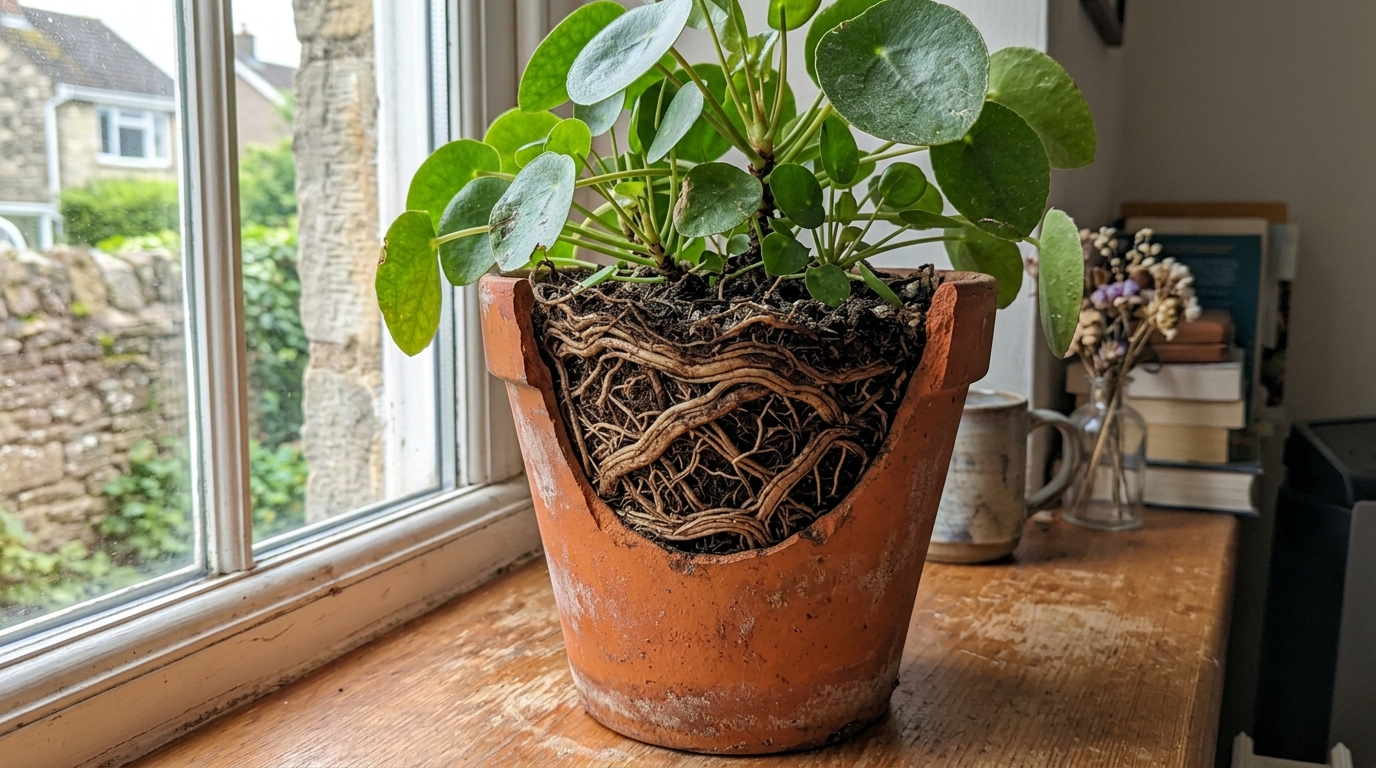
When a plant becomes root-bound, the roots have physically displaced almost all the soil. They begin to circle the inside of the pot. They follow the hard boundary of the container because they have nowhere else to go. This creates a mechanical blockade. The roots become so dense that they compress the remaining soil into a solid, impenetrable brick. This is where the system fails. Because there are no more air pockets, the roots cannot breathe. Because the mass is so tight, water cannot even soak into the center of the root ball. It just runs down the inside of the pot and out the bottom. This leaves the core of the plant bone-dry.
You will know you have reached this stage when you see roots crawling out of the drainage holes. You might see them pushing up through the surface of the soil. The pot might even start to bulge or crack from the internal pressure. This is the only time you must repot. If you pull a plant out and you still see plenty of loose soil falling away, it is not root-bound. Putting a plant in a bigger pot before it has filled its current one is just inviting root rot. Wait until the roots have built a solid mechanical structure that holds the shape of the pot by itself. That is the signal that the engine needs more room to run.
2. Energy Reserves
Timing is everything in a mechanical system. You have to repot when the plant has the metabolic horsepower to handle the trauma. That means only repotting during the active growth season. This is usually from late spring through late summer. During this time, the plant is photosynthesizing at full capacity. It is building up a massive reserve of sugars and energy. When you pull a plant out of its pot, you are inevitably going to snap thousands of microscopic root hairs. These hairs are the primary pumps for water intake.
If you repot in the spring, the plant can immediately divert its energy reserves into repairing that damage. It pushes out new roots into the fresh soil. It is like a construction crew working with a full budget and good weather. But if you repot in the dead of winter, the plant is in a sleepy dormant state. It simply does not have the energy to do the work. The root system stays damaged and non-functional for weeks or months.
This is where the real danger of root rot comes in. You have put a dormant plant into a fresh pot of soil. You have likely watered it to settle it in. But because the root hairs are damaged and the plant’s metabolism is slowed down, it is not drinking. That water just sits in the soil. It becomes stagnant and deprived of oxygen. The damaged roots start to decay in the soggy mess. By the time spring rolls around, you have a dead plant. Do not let your itchy redecorating fingers kill a plant during its rest period. Wait for the first sign of new leaves. That is the mechanical signal that the engine is primed and ready for surgery.
3. The Two-Inch Rule
The most common mistake I see is people jumping from a 4-inch pot to a 10-inch pot. They want the plant to grow into it. That is a death sentence. All that extra soil holds a massive amount of water. The tiny root system cannot possibly drink it all. This leads to wet feet. The soil stays soggy and stagnant, depriving the roots of oxygen. Always move up by just two inches in diameter. This gives the roots enough room to expand without overwhelming the system. It keeps the water-to-air ratio in balance.
Si’s Pro-Tip
When you are repotting a plant that is really root-bound, do not just shove it into the new pot. You need to gently score the roots. Take a clean knife or your fingers and pull some of those circling roots outward. This tells the plant to stop going in circles and start moving into the fresh soil.
Keep your hands dirty and your plants happy.

About the Author
Silas
The Practical Greenhouse Mentor
"Silas treats the greenhouse like a workshop of practical results. After 40 years of dirty hands, he’s learned that thriving plants are the result of honest observation and small, correct moves rather than luck. He’s the neighbor who knows exactly why your Pothos is pouting and how to fix it without the fuss."