
Is Your Herb Garden Perennial? (Sage, Rosemary, Oregano)
Stop buying new herbs every spring. Silas explains which herbs are permanent workers in your garden and how to winterize them for years of growth.
Is Your Herb Garden Perennial? (Sage, Rosemary, Oregano)
The Quick Dirt
If you buy new Sage, Rosemary, and Oregano plants every spring, you are wasting resources. These herbs are perennials. They are built to survive the winter and come back stronger every year. To build a permanent herb factory, you just need to understand the mechanics of winterization and pruning.
The Deep Dive
I. The Herb Factory: Seasonal vs. Permanent Workers
I like to think of a kitchen garden as a factory. You have two types of workers in this system. Annuals, like Basil and Cilantro, are one-season workers. They work hard, go to seed, and then their mechanical system shuts down when the first frost hits.
Perennials are your permanent staff. They are designed to survive the winter by pulling their energy down into their roots. They close up shop until the spring. People often get confused because many perennials disappear from the surface in the winter. They think the plant has died, so they dig it up.
The mechanical goal of a good herb garden is to establish as many perennials as possible. These plants get larger and more efficient every year. Once they are established, they require less water and provide more leaves. If you get the system right, you will never have to buy another Rosemary or Sage plant.
II. The Perennial All-Stars: Sage, Rosemary, and Oregano
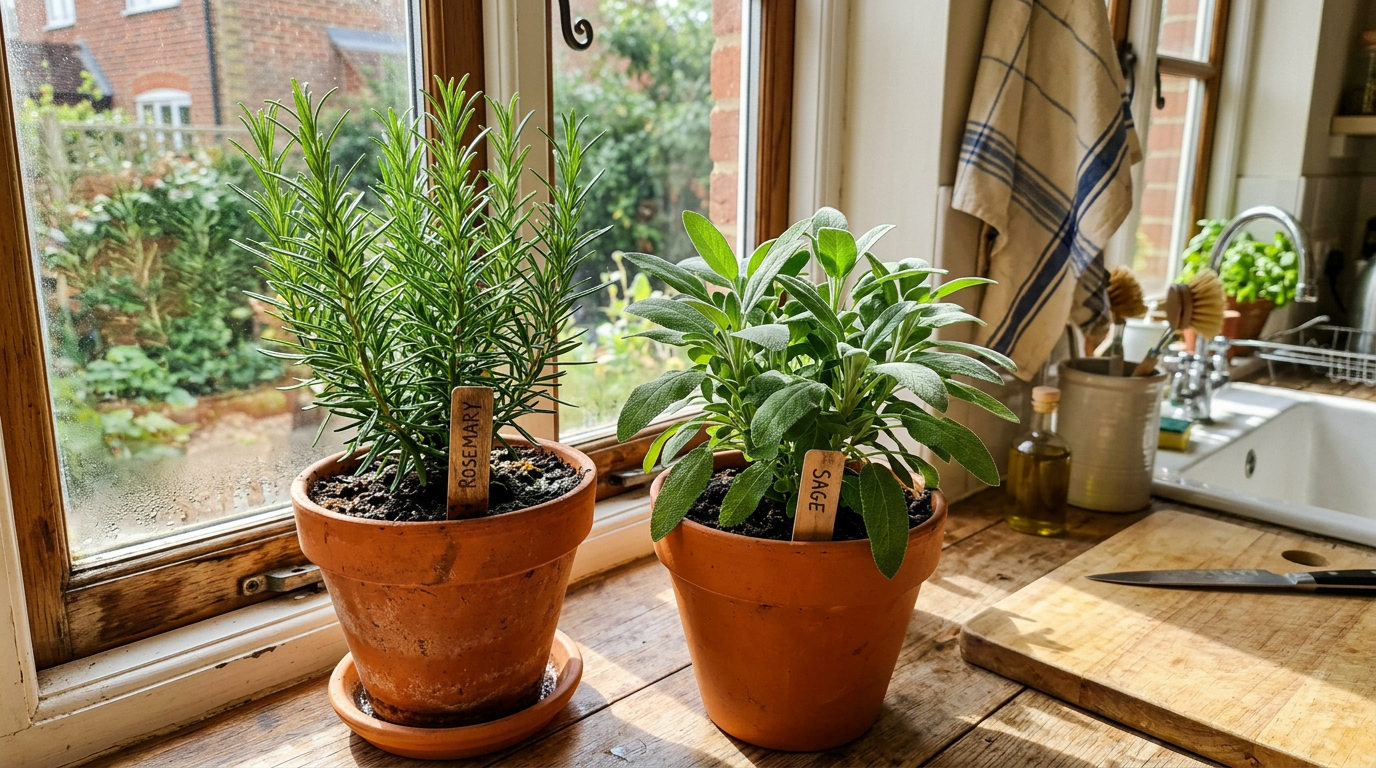
These three are the heavy hitters of any permanent herb garden. Sage is a woody survivor. As it grows, the base of the stems will turn into real wood. This provides the mechanical structure the plant needs to withstand winter snow and summer heat.
Rosemary is a Mediterranean engine. It loves heat, sun, and perfectly drained soil. In many climates, it can grow into a massive, woody shrub that lives for twenty years or more. If you keep its feet dry and give it enough photons, it will work for you year-round.
Oregano is a creeping ground-cover. It spreads by pushing out runners along the surface of the soil. Every node that touches the dirt can grow a new set of roots. This mechanical spreading makes Oregano one of the most resilient herbs. Even if part of the plant is damaged, the rest of the network keeps growing.
III. The Winterization Protocol: Protecting the Engine
The biggest threat to a perennial herb isn’t the cold itself. It is the freeze-thaw cycle. When the ground freezes and thaws repeatedly, it can mechanically heave the roots out of the soil. This exposes them to the dry, killing air.
To protect your permanent staff, you need to provide some insulation. A thick layer of organic mulch, like straw or shredded leaves, acts as a mechanical buffer. It keeps the soil temperature consistent and prevents the roots from being pushed around.
In very cold climates, you might need to bring some herbs indoors for the winter. But for Sage and Oregano, a good mulching is usually all the protection the engine needs to survive until spring.
IV. Pruning for Longevity: The Rejuvenation Cut
As perennial herbs age, they have a mechanical tendency to get too woody. While wood provides structure, it does not produce leaves. If you let a Sage or Rosemary plant grow without pruning, you will end up with a large, bare skeleton. You will have very few fresh leaves for your kitchen.
To keep the leaves efficient, you need to perform a rejuvenation cut in the early spring. Just as the new growth starts to peek through, cut the plant back by about one-third. This redirects the energy away from the old stems and into fresh, high-yielding green growth.
When you harvest your herbs, always cut just above a set of leaves. This mechanical trigger tells the plant to branch out from that point. This creates a fuller, bushier plant.
V. Propagation: Building the Next Generation
Once you have an established perennial herb garden, you can multiply your staff for free. Oregano and Thyme are easily multiplied through root-ball surgery. Simply dig up a clump, cut it in half with a clean spade, and replant both pieces.
For woody herbs like Rosemary and Sage, stem cuttings are the most efficient mechanical choice. Snip a healthy, non-flowering stem. Remove the lower leaves and let the cut callous for a day. Stick it in some gritty soil and keep it moist. It will grow its own roots in a few weeks.
Starting from seed is often the least efficient way to grow these herbs. It takes too much time and the success rate is lower. Stick to the mechanical shortcuts of division and cuttings. You will have a permanent herb factory in no time.
Si’s Pro-Tip
If your Rosemary is looking a bit yellow, check the drainage. Most people overwater their herbs thinking they need a drink. In reality, Mediterranean herbs like Rosemary prefer to stay a bit dry. If the soil is soggy, the roots cannot breathe, and the plant will eventually fail.
Keep your hands dirty and your plants happy.

About the Author
Silas
The Practical Greenhouse Mentor
"Silas treats the greenhouse like a workshop of practical results. After 40 years of dirty hands, he’s learned that thriving plants are the result of honest observation and small, correct moves rather than luck. He’s the neighbor who knows exactly why your Pothos is pouting and how to fix it without the fuss."