
The Palm Problem: Why Your Areca is Turning Brown
Stop the brown tips on your Areca and Butterfly palms. Silas explains why your water is clogging the plant's mechanical systems and how to flush the soil.
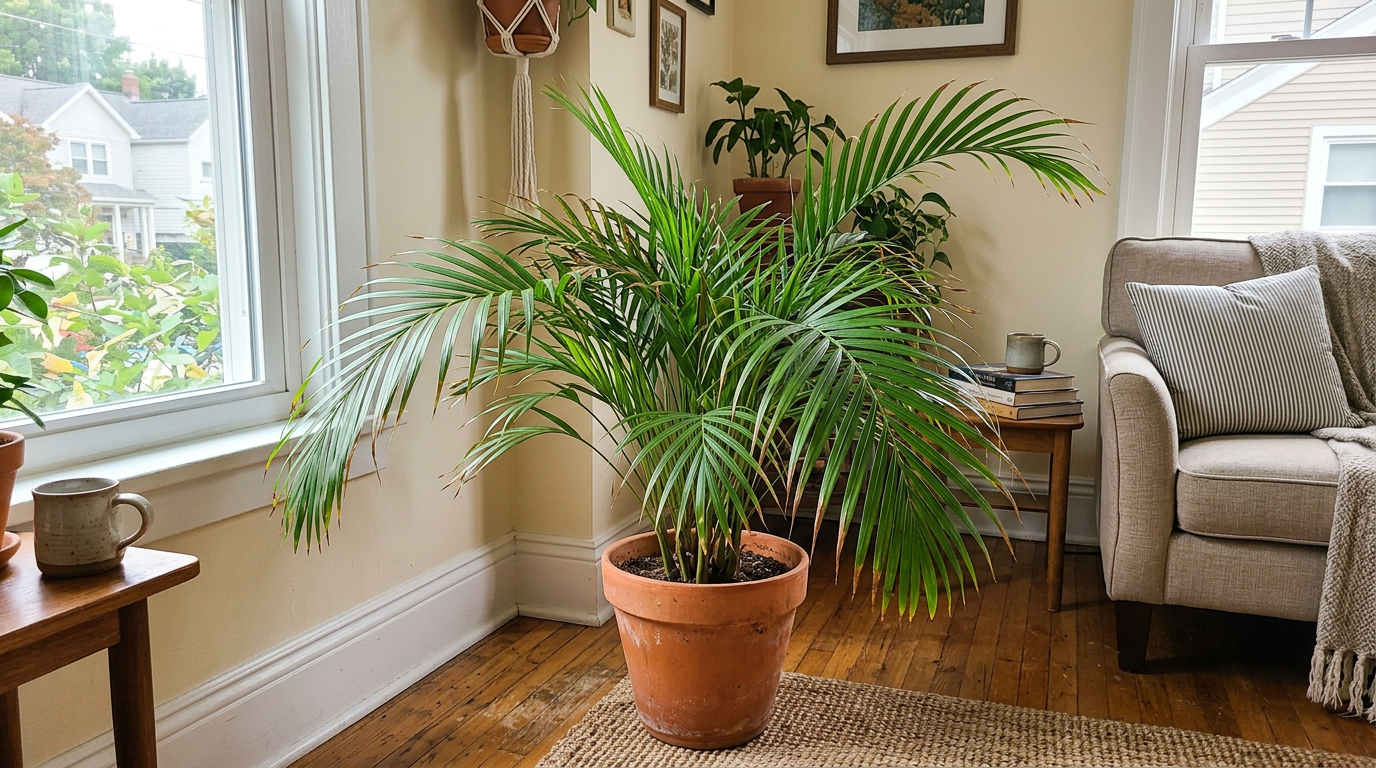
The Palm Problem: Why Your Areca is Turning Brown
The Quick Dirt
Brown tips on a palm are a mechanical failure. Your palm is acting as a biological filter. It traps salts and minerals from your tap water until they clog the pipes at the ends of the fronds. To fix it, stop misting and start flushing the soil with distilled water or rain water.
The Deep Dive
I. The Tropical Filter: How Palms Breathe
I see many people get upset when the tips of their Areca or Butterfly palms turn brown and crispy. They think they have failed. But the truth is, the plant is doing exactly what it was designed to do. It is acting as a biological filter.
In a palm frond, the pipes that transport water run from the roots to the tips of the leaves. In the tropics, that water is usually clean rain water. In our homes, it is tap water full of fluoride, chlorine, and salts. As the plant breathes through its fronds, the water evaporates. The minerals stay behind. Over time, those minerals build up and clog the pipes at the ends of the leaves.
When the tip of a palm frond turns brown, it is because the plant can no longer get water to that area. It is a mechanical blockade. The best way to prevent this is to stop giving the filter so much work to do. Switch to distilled water or collect some rain water. If you keep the input clean, the output stays green.
II. Humidity vs. Misting: The Transpiration Trap
Most people’s first instinct when they see brown tips is to grab a spray bottle. In my forty years in the greenhouse, I have never seen misting solve a single palm problem. It is a ten-minute fix for a twenty-four hour mechanical requirement.
Transpiration is the process where a plant pulls water from its roots and evaporates it from its leaves. In a dry home with the furnace running, the air is thirsty. it pulls water out of those palm fronds faster than the roots can provide it. Misting the leaves doesn’t stop this process. It just adds a tiny bit of water to the surface that evaporates in minutes.
If you want to stop the transpiration trap, you need to increase the humidity around the plant consistently. A pebble tray or a humidifier provides a constant pressure of moisture in the air. This slows down the rate at which the plant loses water. This keeps the pipes full and prevents the tips from drying out.
III. Soil Flushing: Cleaning the Biological Engine
Over time, minerals and salts will build up in the soil of your palm pot. You will see it as a white, crusty layer on the surface of the dirt. This is a slow poison for your plant’s engine. The roots cannot absorb water properly when they are surrounded by salt.
Every few months, you need to perform a deep flush. Take your palm to the sink or the bathtub. Pour enough distilled or rain water through the pot so that it runs out the bottom for several minutes. This physically washes away the mineral buildup and resets the soil chemistry.
Think of it like an oil change for your plant. You are clearing out the old, dirty system and replacing it with fresh, clean nutrients. It is one of the most effective mechanical fixes for a palm that is struggling.
IV. Light and Location: Avoiding the Scorch
Many people think that because palms grow in the tropics, they need full, direct sun all day. In a house, that is almost never true. The glass of our windows intensifies the sun’s rays. A palm that is shoved up against a south-facing window will eventually scorch.
The heat from the glass will dry out the fronds even faster. This makes the brown tips worse. You want bright, indirect light. Think of the rainforest canopy. These are bits of sun breaking through the leaves, but never hitting the plant directly for hours on end.
An east or north window is usually perfect for an Areca or Butterfly palm. It provides enough light to power the photosynthesis without the high heat of the afternoon sun. If your palm is getting too much light, you will see the fronds start to turn a pale, washed-out yellow.
V. Maintenance: Pruning the Brown
Eventually, you might still end up with a few brown tips. Most people’s first instinct is to cut them off. That is fine, as long as you follow the mechanical rule. Never cut into the green part of the leaf.
A palm leaf is a living part of the plant’s transport system. If you cut into the green part, you are essentially bleeding the plant. You are opening up a fresh wound that will just brown even further as the plant tries to heal.
Instead, only trim the dead, brown parts. Leave a tiny sliver of brown at the edge to protect the green tissue. And do not forget to keep those fronds clean. Dust is a physical barrier that prevents the plant from breathing. Use a damp, soft cloth to gently wipe your palm fronds down every few months. It keeps the engine running smooth.
Si’s Pro-Tip
If your palm is looking really rough, check the drainage first. If the soil is staying wet for too long, the roots will start to rot. The plant will eventually die from the inside out. Always use a pot with a drainage hole. Never let your palm sit in a puddle.
Keep your hands dirty and your plants happy.
About the Author
Silas
The Practical Greenhouse Mentor
"Silas treats the greenhouse like a workshop of practical results. After 40 years of dirty hands, he’s learned that thriving plants are the result of honest observation and small, correct moves rather than luck. He’s the neighbor who knows exactly why your Pothos is pouting and how to fix it without the fuss."