
The Drainage Myth: Why Rocks at the Bottom Don't Work
Stop putting gravel in your pots. Silas explains the physics of the perched water table and why rocks at the bottom actually make your soil wetter.
The Drainage Myth: Why Rocks at the Bottom Don’t Work
The Quick Dirt
If your gardening manual told you to put a layer of rocks at the bottom of a pot for drainage, it was teaching you bad physics. Adding gravel to a pot doesn’t help water leave. It actually traps it higher in the soil, closer to your plant’s roots. To fix your drainage, you need a hole in the pot and grit in the soil.
The Deep Dive
I. The Gravel Fallacy: Why Your Potting Manual is Wrong
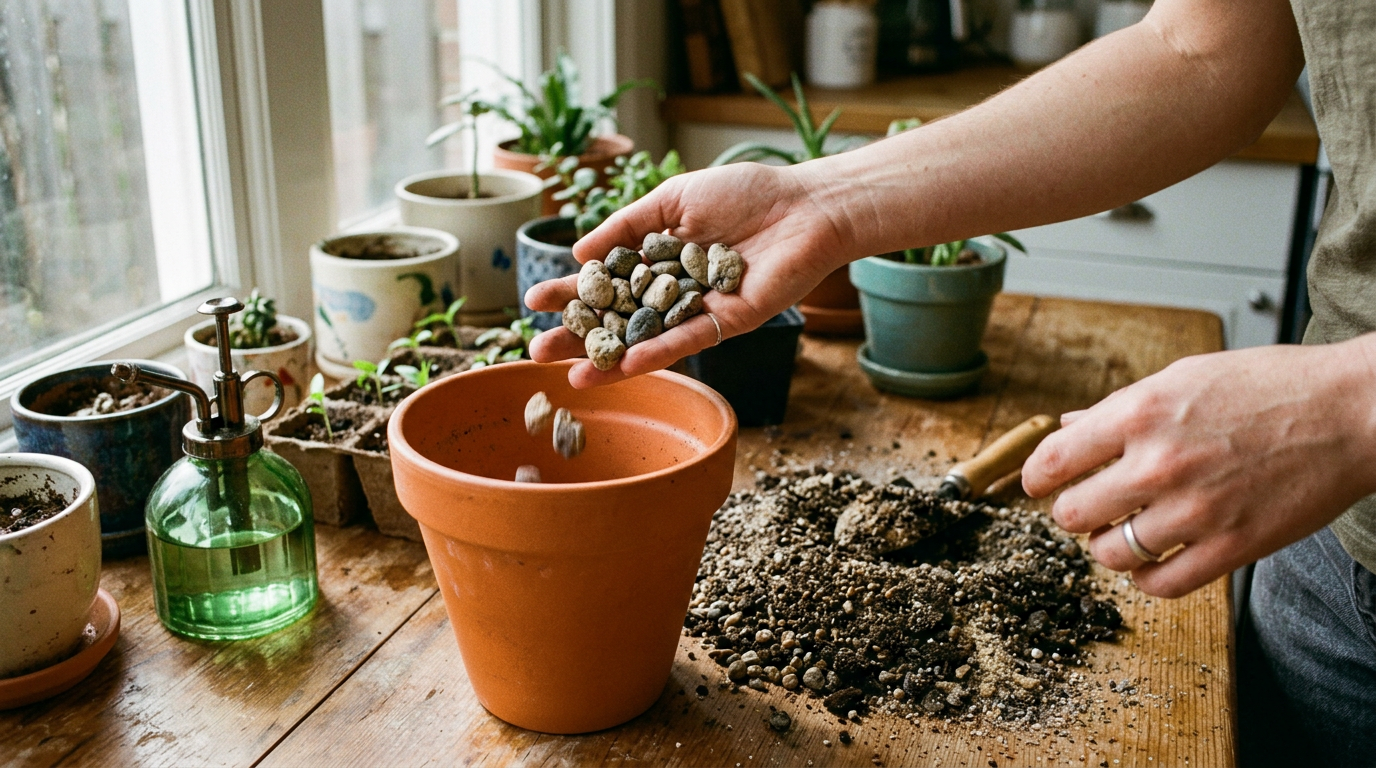
For as long as I have been in the greenhouse, I have heard the same advice. People say to always put a layer of gravel or broken pottery shards at the bottom of a pot. They think it helps with drainage. It sounds logical. You are creating a space for the extra water to go.
But from a mechanical perspective, this is a total fallacy. Your pot is a closed system. Adding a layer of rocks at the bottom does not magically make the water leave the container. It just takes up space that should be filled with soil.
The assumption is that water will easily move from the fine-textured soil at the top into the coarse-textured rocks at the bottom. But the physics of water movement in soil does not work that way. We call this capillary action. Water would much rather stay in the fine-textured soil than move into the large gaps between the rocks.
II. The Physics of the Perched Water Table
To understand why rocks at the bottom backfire, you need to understand the perched water table. In any container of soil, there is always a layer at the very bottom that stays completely saturated with water. Gravity pulls the water down, but the capillary action of the soil pulls it back up. This creates a mush zone.
When you add a layer of gravel to the bottom, you are not moving the bottom of the container. You are moving the bottom of the soil. This means the perched water table is now sitting higher up in the pot. It is right where your plant’s roots are likely to be.
Mechanically, you have made the soil shallower and moved the water closer to the roots. Instead of creating better drainage, you have forced your plant to sit in a swamp. If you want to keep the roots out of the mush zone, you do not need rocks. You need a taller pot or more efficient soil.
III. Gas Exchange: Why Roots Need Air Pockets
People often think roots only need water and food. That is wrong. Roots are living organs that need to breathe. They need a constant exchange of gases. They take in oxygen and release carbon dioxide. When soil stays saturated for too long, those air pockets are filled with water.
When you suffocate the roots, the engine of the plant shuts down. The roots stop functioning and begin to rot. You will see it as yellowing leaves or wilting despite wet soil. You might notice a foul smell from the dirt. This is a mechanical failure caused by lack of drainage.
If you want healthy roots, you need a soil structure that maintains air pockets even after a deep watering. You do not get those air pockets from a layer of gravel at the bottom. You get them from mixing grit into the soil itself.
IV. The Real Fix: Drainage Holes and Gritty Mixes
If you want to solve the drainage problem, you need to focus on two things. First is the hole at the bottom of the pot. Second is the texture of the soil. The drainage hole is the most important part of any container. It allows the excess water to leave the system entirely. This prevents the perched water table from rising too high.
If you have a beautiful pot without a hole, do not just put rocks in the bottom. Use a diamond-tipped drill bit to add one. Or use it as a cache pot. Put your plant in a plastic nursery pot with holes inside the decorative one.
Next, focus on your soil mix. For most plants, standard potting soil is too fine. I always mix in grit. Use perlite, coarse sand, or orchid bark. This creates a mechanical structure that allows water to flow through the pot quickly. It leaves behind those essential air pockets. Terracotta is another great mechanical tool. The porous clay wicks excess moisture out through the sides of the pot.
V. Potting Technique: Building a High-Performance Foundation
When you are ready to pot your plant, skip the rocks. Instead, use a small piece of mesh or a coffee filter over the drainage hole. This prevents the soil from washing out while still allowing the water to drain freely.
Fill the bottom of the pot with your gritty soil mix. There is no need for layers of different materials. Layers actually slow down the movement of water. You want a consistent mechanical structure from top to bottom.
Finally, follow the First Water protocol. After potting, give the plant a deep soak until water flows freely from the bottom. This helps settle the soil. It ensures there are no large air gaps that could dry out the roots too fast. After that first soak, let the soil dry out to the appropriate level for your specific plant before watering again.
Si’s Pro-Tip
If you are worried about a pot being too heavy, use an upturned plastic pot at the very bottom. It takes up space without creating a perched water table. Just make sure you have a clear drainage path for the water to leave the system.
Keep your hands dirty and your plants happy.
About the Author
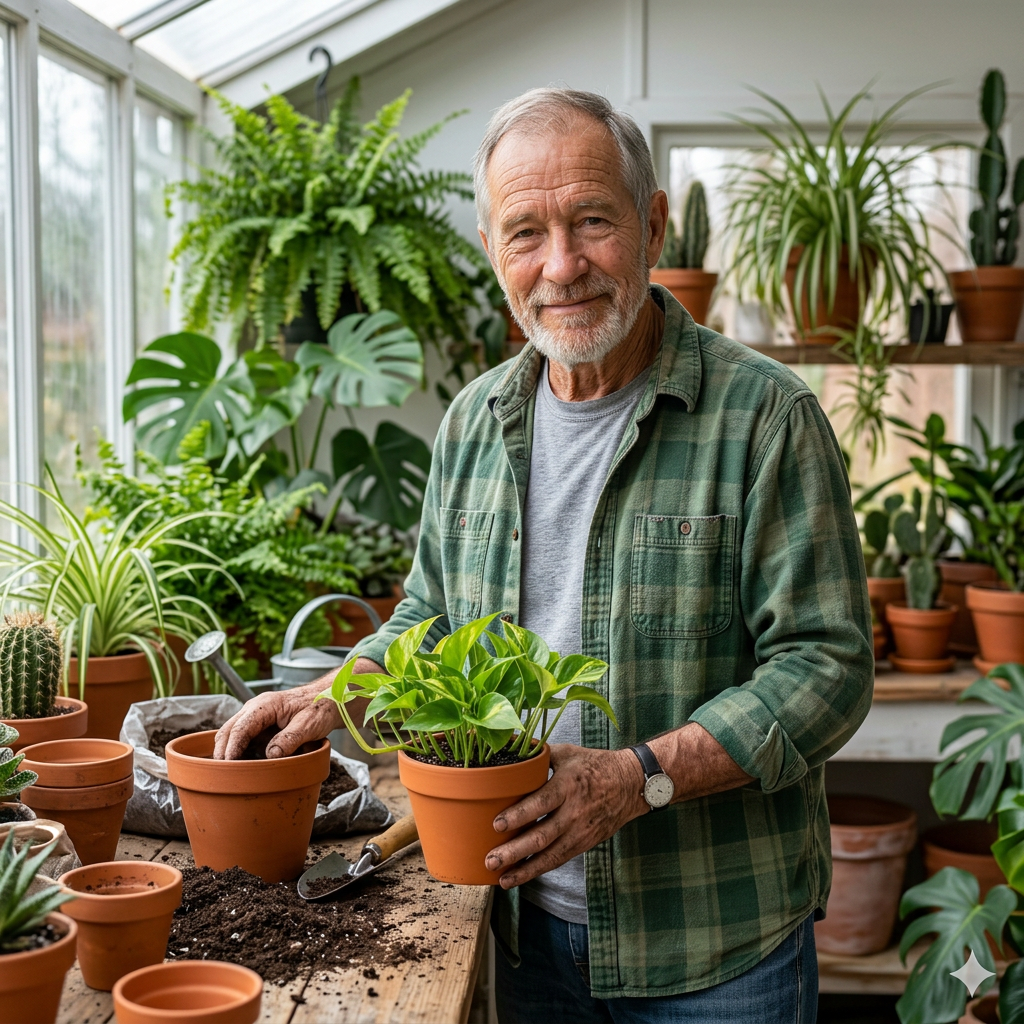
Silas
The Practical Greenhouse Mentor
"Silas treats the greenhouse like a workshop of practical results. After 40 years of dirty hands, he’s learned that thriving plants are the result of honest observation and small, correct moves rather than luck. He’s the neighbor who knows exactly why your Pothos is pouting and how to fix it without the fuss."