
The Anatomy of a Wilt
A drooping leaf is a signal, not a command to water. Learn the mechanical difference between a thirsty plant and one that is suffering from systemic failure.
The Quick Dirt
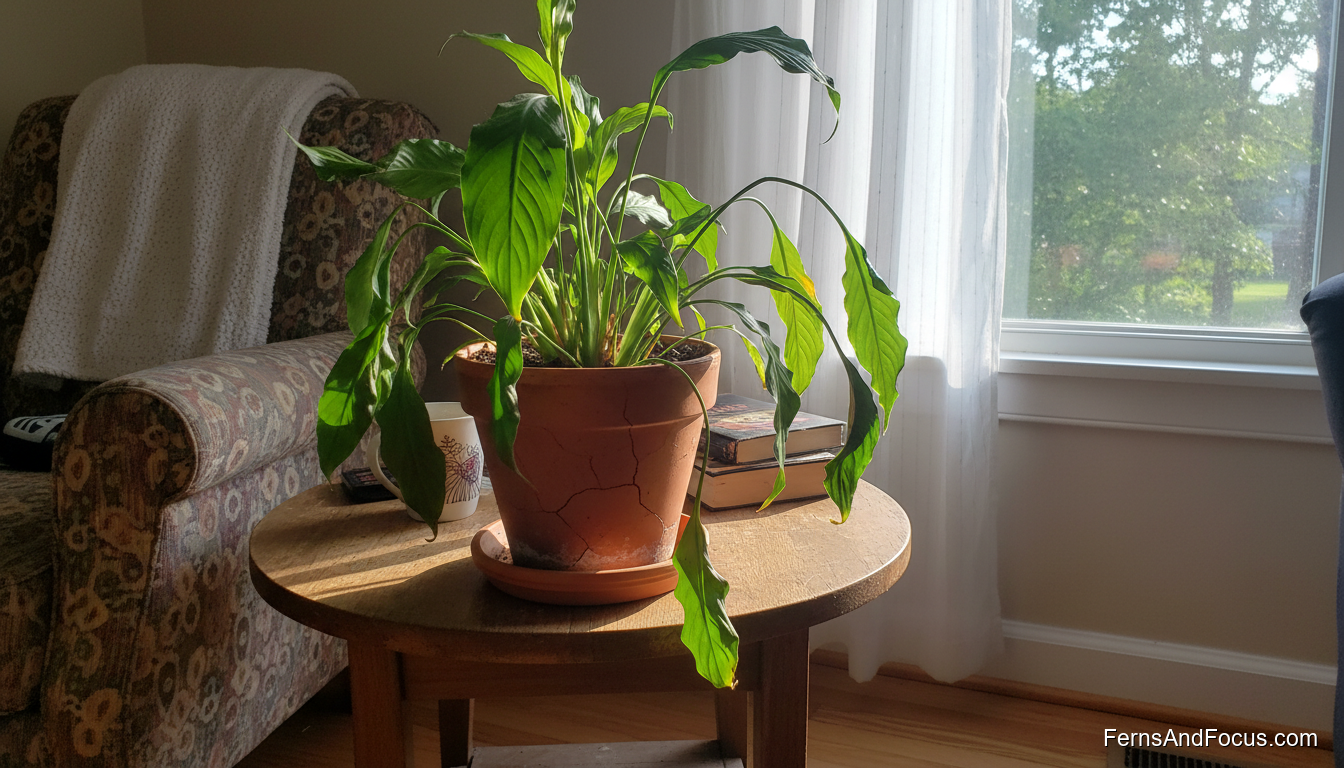
When people see a drooping leaf, their first instinct is to reach for the watering can. That is often the worst thing you can do. A wilt is a drop in internal pressure, and you need to diagnose the cause—thirst, rot, or shock—before you try to fix it. This guide is about reading the logic of the collapse.
The Physics of Turgor Pressure
To understand why a plant collapses, you have to understand how it stands up in the first place. Most houseplants don’t have a woody skeleton like an oak tree. Instead, they use water as a structural element. Inside every plant cell is a large central vacuole—a storage tank for water. When that tank is full, it pushes against the cell wall, creating what we call turgor pressure.
Think of a leaf as an inflatable mattress. When it’s pumped full of air (or in this case, water), it’s rigid and can support weight. When you lose that pressure, the mattress becomes limp and shapeless. In the greenhouse, we say the plant is under high internal pressure. A wilt is simply a drop in that internal pressure. The mechanical structure of the plant is failing because the “air” has left the mattress. Your job as a mentor is to figure out why the pump stopped working or why the tank is empty.
Thirst: The Low-Reservoir Signal
The simplest cause of a wilt is thirst. This is a “low-reservoir” problem. The plant is still healthy, and the roots are still working, but there is no water left in the soil to pump up into the leaves. This is a “soft” wilt. The leaves will feel thin and pliable, like a piece of soft fabric. If the thirst is extreme, they may start to feel “crispy” at the edges as the plant sacrifices the tips to save the core.
The recovery mechanics for a thirsty plant are usually straightforward. Once you provide water, the roots quickly pull it up through the xylem, refilling the vacuoles and restoring turgor pressure. In many species, like the Peace Lily (Spathiphyllum), you can almost watch the plant stand back up over the course of an hour. This is a mechanical success. If the plant doesn’t stand up after a thorough soak, you are not dealing with thirst—you are dealing with a much more serious systemic failure.
Root Rot: The Mechanical Pump Failure
The most dangerous wilt is the one that happens while the soil is still wet. This is a “mechanical pump failure.” In this scenario, the reservoir is full, but the pump (the root system) has broken down. Root rot is caused by a lack of oxygen in the soil. When the roots sit in stagnant, waterlogged dirt, they cannot breathe. The cells in the roots begin to die and decompose, turning into a black, slimy mess.
Once the roots are dead, they can no longer transport water to the rest of the plant. The leaves begin to wilt because they are literally dying of thirst in a sea of water. This is why adding more water to a wilting plant with damp soil is a fatal mistake—you’re just drowning the few healthy roots that remain. A rot-induced wilt is often “permanent.” Even if you water it, the plant won’t stand back up because the connection between the soil and the leaves has been severed. This is a systemic collapse, and it requires immediate surgical intervention—repotting and trimming the rot—if the plant is to have any chance of survival.
Environmental Shock: The System Short-Circuit
Sometimes, a plant wilts even when the soil is perfect and the roots are healthy. This is “environmental shock.” It happens when there is a sudden, drastic shift in the plant’s surroundings—a blast of cold air from a door, a move to a much brighter room, or a sudden drop in humidity. This is a “short-circuit” in the plant’s sensory system.
When a plant experiences shock, it may wilt as a defense mechanism to reduce its surface area and prevent further water loss. It’s an emergency shutdown. Differentiating shock from thirst or rot can be tricky, but look for recent changes. Did you move the pot? Did the weather turn cold overnight? Unlike thirst, a shocked plant needs time and stability, not water. It needs to be placed back in its preferred environment and left alone to recalibrate its systems. Providing more water to a shocked plant often just adds a “drowning” stressor to an already overloaded system.
The Root Zone Audit: Diagnostic Techniques
To find the truth, you have to go deep. The surface of the soil lies to you—it evaporates first and may feel bone-dry while the root ball is still a swamp. To perform a “Root Zone Audit,” use the finger probe. Stick your finger two or three inches into the soil. If it’s dry and gritty at that depth, you have a thirsty plant. If it’s cool and clumpy, you have a reservoir that is still full.
Another reliable tool is the “lift test.” A pot full of wet soil is heavy; a pot full of dry soil is surprisingly light. Get to know the “weight of health” for your favorite plants. If you’re still unsure, you may need to gently lift the plant out of its pot to inspect the roots. Healthy roots are firm and usually white or light tan. Rotting roots are black, slimy, and will easily pull away from the plant. This audit is the only way to move from guessing to knowing. In the greenhouse, observation is the highest form of care.
Si’s Pro-Tip
If your plant is wilting and the soil is wet, don’t just wait for it to dry out. The stagnant water is actively killing the remaining roots. Gently lift the plant out of the pot and set the root ball on a stack of old newspapers or a thick towel. The paper will wick away the excess moisture through capillary action much faster than evaporation ever could. It’s a quick mechanical fix that can buy your plant the oxygen it needs to survive.
Keep your hands dirty and your plants happy.

About the Author
Silas
The Practical Greenhouse Mentor
"Silas treats the greenhouse like a workshop of practical results. After 40 years of dirty hands, he’s learned that thriving plants are the result of honest observation and small, correct moves rather than luck. He’s the neighbor who knows exactly why your Pothos is pouting and how to fix it without the fuss."