
Turtle Vine Care
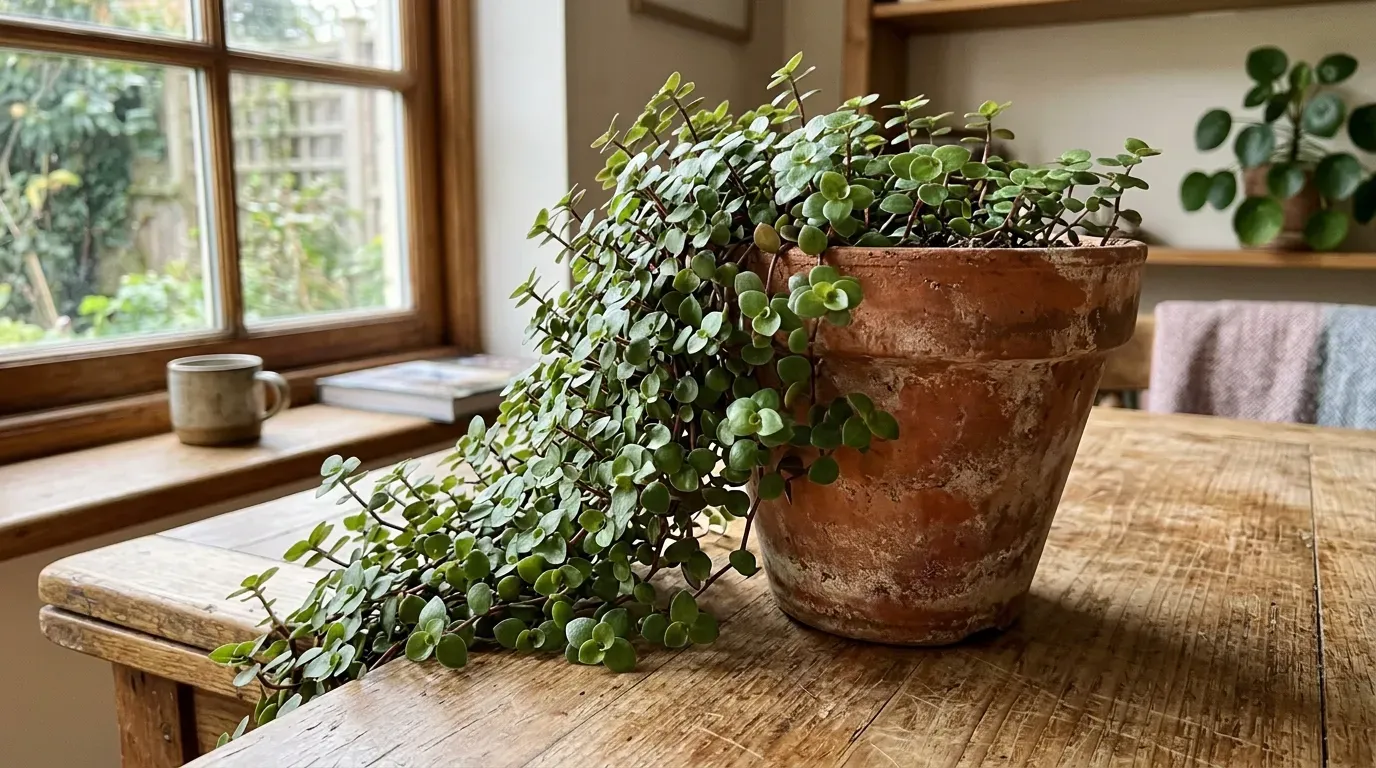
Grow Callisia repens (Turtle Vine) with bright indirect light, a dry-down between waterings, and regular pinching so the trailing mound stays dense.


Turtle Vine
Callisia repens
Care Level
Easy
Light
Bright Indirect
Water
Moderate
Humidity
Moderate
If your Turtle Vine goes leggy, loses purple undersides, or turns mushy at the soil line, light and overwatering are the usual fixes. Those tiny fleshy leaves store water. The plant prefers a dry pause more than constant moisture, even though it looks like a soft foliage trailer.
Plant pros weigh in on a clear baseline: bright indirect light, water when the top inch dries, and pinch often to keep the top of the pot full. Keep it away from pets. Sap can irritate skin, and the plant is toxic if chewed.
Full plant profile: /plant/turtle-vine/.
Quick Facts
- Difficulty: Easy
- Light: Bright Indirect
- Water: Allow the top inch of soil to dry
- Pet Safety: Toxic
Light Requirements
Turtle Vine (Callisia repens) thrives in bright, indirect light. In its native Central and South American habitat, it grows along forest floors and rocks in dappled sun.
Plenty of light keeps leaves dense and purple undersides strong. In a dim corner, stems stretch thin and color fades. Some direct morning sun helps. Harsh afternoon sun burns leaves and fades them toward dull gray-green. An east or west window is ideal.
Watering Schedule
Treat this as a succulent trailer. Allow the top inch of soil to dry before you water again. Soak thoroughly until water drains, then empty the saucer.
During winter, water less often. Slightly wrinkled leaves or a light pot are useful cues. Constant wet soil leads to root rot and translucent, mushy stems at the base.
Humidity & Temperature
Moderate humidity is enough for most homes. A pebble tray or plant grouping helps in dry winter air. Keep temperatures between 60°F and 80°F. Below about 50°F, growth stalls and foliage can take cold damage. Protect from drafts, AC vents, and radiators.
Soil & Potting
Use a fast-draining mix. A practical blend is two parts potting soil, one part peat moss, and one part perlite or coarse sand. Always use drainage holes. A hanging basket or shallow container suits the shallow roots better than a deep pot of unused wet mix.
Fertilizer
Feed once a month in spring and summer with a balanced liquid fertilizer diluted to half strength. Skip autumn and winter. Too much fertilizer can make stems thin and weak.
Pruning & Maintenance
Pinch growing tips regularly so the plant branches at the base and stays bushy on top. Snip dead or dying stems as they appear. Stems are fragile and break easily when you move the pot. That is normal for this plant.
Propagation
Take 2-3 inch stem cuttings, strip the lower inch of leaves, and poke bare nodes into moist mix or water. Roots often form within days. For a full pot quickly, plant many cuttings together in one container.
Broken pieces can go right back into the top of the mother pot. Push a bare node into the soil and it will root alongside the existing vines.
Common Problems
Mushy translucent stems at the soil line: Root rot from overwatering. Cut healthy green tips and restart them. Discard the failed root system.
Leggy pale growth: Not enough light. Move to a brighter window.
Shriveled leaves: Mix is dry. Give a deep soak, then return to the top-inch dry-down.
Skin or pet irritation: Sap can irritate. Keep the plant out of reach and wash hands after pruning.
Pro Tips for Long-Term Maintenance
When stems on your Turtle Vine snap while you move the pot, poke the broken pieces back into the top of the mix. Bare nodes root quickly and refill bare spots. Pair that habit with bright filtered light and a dry-down between soaks, and the mound stays thick without buying new plants.

About the Author
Silas
The Practical Greenhouse Mentor
"Silas treats the greenhouse like a workshop of practical results. After 40 years of dirty hands, he’s learned that thriving plants are the result of honest observation and small, correct moves rather than luck. He’s the neighbor who knows exactly why your Pothos is pouting and how to fix it without the fuss."