
Tiger Fern Care
Keep Nephrolepis exaltata 'Tiger Fern' striped and full with bright indirect light, consistently moist soil, and humidity high enough to protect variegated fronds.


Tiger Fern
Nephrolepis exaltata 'Tiger Fern'
Care Level
Moderate
Light
Bright Indirect
Water
High
Humidity
High
If your Tiger Fern stripes fade or fronds crisp at the tips, light and humidity are the first places to look. This variegated Boston Fern relative needs bright filtered light to keep the chartreuse banding, and it hates a dry root ball even more than solid green ferns do.
Plant pros weigh in on a clear baseline: bright indirect light, consistently moist soil that still drains, and humidity around 50% or higher. Move it once, then leave it. Variegated ferns drop needles when the room keeps changing.
Full plant profile: /plant/tiger-fern/.
Quick Facts
- Difficulty: Moderate
- Light: Bright Indirect
- Water: Keep the soil consistently moist
- Pet Safety: Safe
Light Requirements
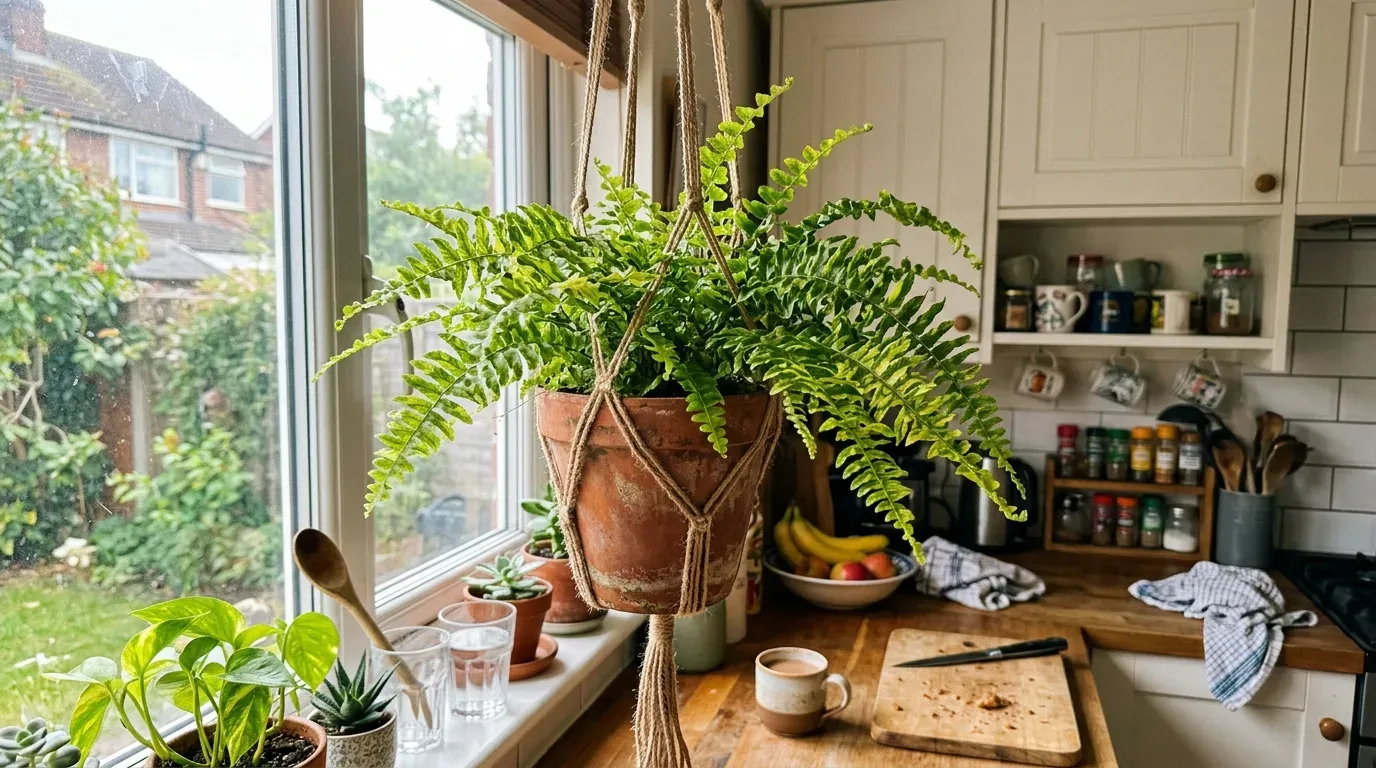
Tiger Fern (Nephrolepis exaltata ‘Tiger Fern’) needs bright, indirect sunlight to keep its chartreuse-yellow stripes. Without enough light, banding fades toward solid green.
Direct sun is the enemy. Variegation makes the fronds more sun-sensitive than standard green ferns. Hot afternoon rays scorch and brown the foliage. Place it near an east window or a few feet back from south or west light behind a sheer curtain.
Watering Schedule
Like other Boston ferns, this plant is a moisture lover. If the root ball dries out completely, fronds crisp and drop fast.
Keep the soil consistently moist. Water as soon as the surface feels slightly dry. Soak thoroughly, and make sure the pot drains so roots never sit in stagnant water. Water slightly less in winter when growth slows, but never let the mix go bone dry.
Humidity & Temperature
Aim for humidity of about 50% or higher. Dry air crisps tips and curls fronds. Use a humidifier, plant grouping, pebble tray, or a steamy bathroom with a window.
Maintain stable temperatures between 65°F and 75°F. Protect from cold drafts and heaters that dry the air.
Soil & Potting
Use a peat-based mix with about one-third perlite or coarse sand so the pot holds moisture and still breathes. Always use drainage holes. A hanging basket or pedestal stand suits the arching fronds.
Repot every two years or when the root clump fills the pot, moving up only one pot size.
Fertilizer
Feed once a month in spring and summer with a balanced liquid fertilizer diluted to half strength or even quarter strength. Roots are sensitive to salt buildup. Do not fertilize in autumn and winter.
Pruning & Maintenance
Prune old, yellowing, or browning fronds near the soil line to stimulate new growth from the center. Rotate the plant weekly for even light. If foliage collects dust, rinse gently under a cool shower. Do not wipe delicate leaflets hard.
Propagation
Divide the root ball during repotting, or pot up plantlets that form along runners (stolons). Slice the root ball into sections with healthy fronds and roots, or cut rooted plantlets free once they have their own roots and pot them individually.
Common Problems
Crispy tips / needle drop: Low humidity or a dried-out root ball. Raise humidity and keep the surface from going bone dry.
Yellow leaves: Often overwatering or poor drainage. Let the surface dry slightly between waterings and confirm the pot hole is open.
Faded stripes: Not enough light. Move to brighter filtered light.
Drop after a move: Common on variegated ferns. Place the plant, keep moisture steady, and give it a few weeks before moving it again.
Pro Tips for Long-Term Maintenance
Variegated plants like the Tiger Fern are more sensitive to lighting changes than solid green ones. If you move yours, expect a few fronds to drop while it adjusts. Put it in the right bright, humid spot once, keep the soil consistently damp, and resist reshuffling the room every week.

About the Author
Silas
The Practical Greenhouse Mentor
"Silas treats the greenhouse like a workshop of practical results. After 40 years of dirty hands, he’s learned that thriving plants are the result of honest observation and small, correct moves rather than luck. He’s the neighbor who knows exactly why your Pothos is pouting and how to fix it without the fuss."