
Strawberry Begonia Care
Grow Saxifraga stolonifera (Strawberry Begonia) with bright indirect light, even moisture, and hanging space so silver-veined leaves and red runners stay full.


Strawberry Begonia
Saxifraga stolonifera
Care Level
Easy
Light
Bright Indirect
Water
Moderate
Humidity
Moderate
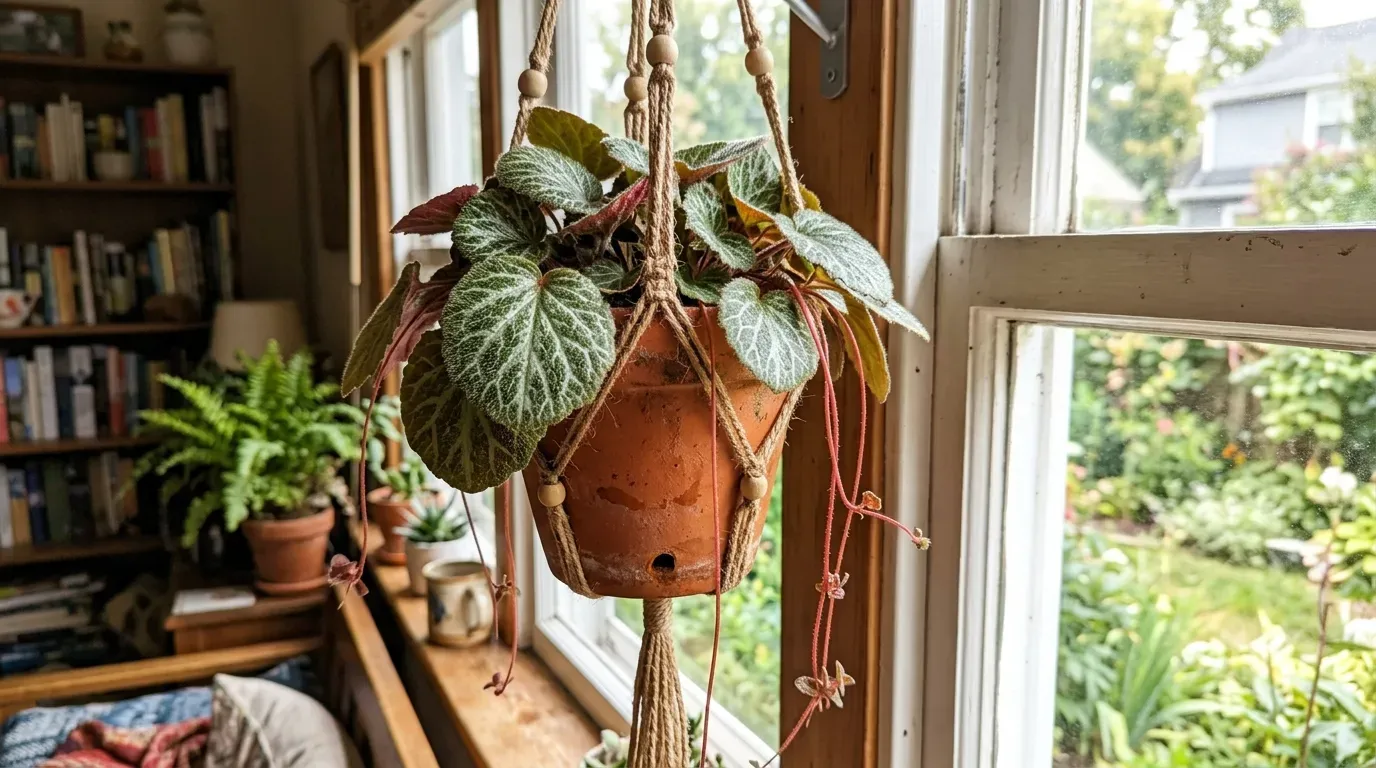
If your Strawberry Begonia scorches, browns at the edges, or loses its maroon undersides, light and dry air are the usual fixes. The name is a mash-up. It is neither a strawberry nor a begonia. It is a tough saxifrage with fuzzy olive leaves, silver veins, and red runners that carry tiny plantlets.
Plant pros weigh in on a clear baseline: bright indirect light, keep the mix evenly moist without sogginess, and skip harsh sun on those hairy leaves. This plant is considered non-toxic to cats and dogs.
Full plant profile: /plant/strawberry-begonia/.
Quick Facts
- Difficulty: Easy
- Light: Bright Indirect
- Water: Keep evenly moist; water when the surface feels dry
- Pet Safety: Safe
Light Requirements
Strawberry Begonia (Saxifraga stolonifera) thrives in bright, indirect light. Skip harsh direct sun that scorches the fuzzy leaves. An east window or a hanging spot a few feet back from brighter glass is a strong fit. Cooler rooms often suit it better than a hot south sill.
In weak light, runners get sparse and silver veining fades. Variegated types such as Tricolor need the brighter end of filtered light to keep their creamy margins.
Watering Schedule
Keep the soil evenly moist without letting it turn soggy. Water when the surface feels dry. Soak until it drains, then empty the saucer. Avoid soaking the foliage if you can. Wet, crowded leaves stay damp and can rot.
In winter, let the surface dry a little more between drinks, but do not treat this like a succulent. A crispy, thin leaf usually means the mix went too far.
Humidity & Temperature
Moderate humidity is enough in many homes. In very dry rooms, brown edges show up fast. Use a pebble tray or a humidifier rather than misting the hairy leaves every day.
Prefer cooler indoor temperatures over a blast of heat. Protect from drafts and from temps that swing hard next to winter glass.
Soil & Potting
Use a humus-rich, well-draining potting mix. A little perlite keeps the mix from staying swampy. Always use drainage holes.
A hanging basket or a high shelf suits the runners. Plantlets cascade 2 to 3 feet when the mother plant is happy. A shallow, wide pot also works if you pin plantlets back into the same mix for a fuller mound.
Fertilizer
Feed monthly in spring and summer with a balanced liquid houseplant fertilizer diluted to half strength. Skip autumn and winter. Heavy feeding makes weak, floppy growth that still needs that even moisture.
Pruning & Maintenance
Snip spent leaves at the base. You can trim runners if the cascade gets longer than you want, or pin plantlets into soil to thicken the pot. Dust is less of an issue than on smooth tropical leaves, but check the undersides for pests.
Do not pile wet foliage in the crown. Good airflow around the hanging basket matters.
Propagation
This plant wants to make more of itself. Pin a plantlet into moist mix while it is still attached, wait for roots, then snip the runner. You can also snip plantlets and root them in water or moist compost. Division of a crowded mother plant works in spring.
Common Problems
Brown leaf edges: Dry air or a mix that dried too far. Raise humidity and keep moisture more even.
Soft, yellow leaves: Overwatering. Confirm drainage holes and let the surface dry before the next soak.
Scorched patches: Too much direct sun. Move to filtered light.
Sparse runners: Not enough light. Move brighter, then keep moisture steady so new plantlets can form.
Pro Tips for Long-Term Maintenance
Hang your Strawberry Begonia where you can see the maroon undersides, then pin a few plantlets back into the same pot instead of letting every runner dangle. That habit keeps the crown full while you still get a cascade.

About the Author
Silas
The Practical Greenhouse Mentor
"Silas treats the greenhouse like a workshop of practical results. After 40 years of dirty hands, he’s learned that thriving plants are the result of honest observation and small, correct moves rather than luck. He’s the neighbor who knows exactly why your Pothos is pouting and how to fix it without the fuss."