
Oregano Care
Grow oregano with full sun, lean well-drained soil, and a dry-down between waterings. Harvest before flower for the strongest kitchen flavor.


Oregano
Origanum vulgare
Care Level
Easy
Light
Full Sun
Water
Low
Humidity
Low
If your oregano tastes bland and looks floppy, it is usually asking for more sun and less water, not a richer pot. Plant pros agree Mediterranean herbs thrive in lean, fast-draining soil with a real dry-down between drinks.
Oregano (Origanum vulgare) is a tough perennial herb. Give it full sun, gritty soil with drainage holes, and water only after the top inch dries. Pinch often for bushy growth, and harvest leaves just before flower for the best flavor. Note: it can upset pets if they eat a lot of it.
Full plant profile: /plant/oregano.
Quick Facts
- Difficulty: Easy
- Light: Full Sun
- Water: Water when the top inch of soil is dry
- Pet Safety: Can cause stomach upset in cats and dogs if eaten in quantity
Light Requirements
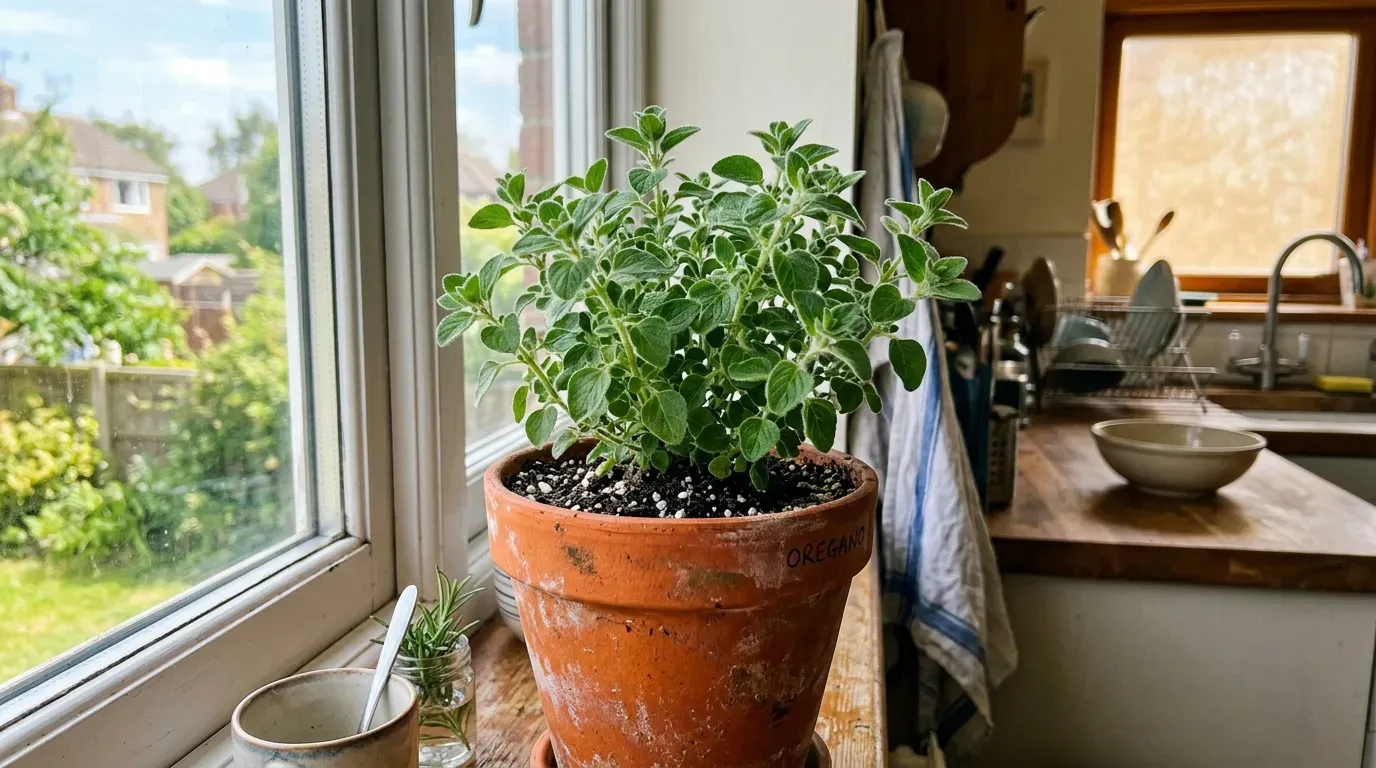
Oregano wants sun. Outdoors, aim for six to eight hours of direct light. Indoors, a south-facing windowsill is the usual winner. Weak light makes floppy stems and bland leaves.
If stems stretch and leaf color fades, move closer to the brightest window before you add fertilizer. A grow light helps in dark kitchens.
Watering Schedule
Once established, oregano prefers a dry-down. Water thoroughly when the top inch feels dry, then empty the saucer. Soggy soil is the fastest way to lose the plant to root rot.
New transplants need steadier moisture for a couple of weeks while roots settle. After that, err on the dry side. In winter, stretch the gap further.
Wilt that recovers after a soak usually means thirst. Soft yellow leaves in wet soil mean you overdid it.
Humidity & Temperature
Low humidity is fine. Oregano is built for Mediterranean air, not a misted tropical shelf.
Keep it warm in active growth. Outdoors it is a perennial in many climates; mulch helps in cold winters. Indoors, keep it off cold drafts and away from blasting heat vents that dry the pot unevenly.
Soil & Potting
Use a lean, well-drained mix. A practical container blend:
- Two parts potting mix
- One part coarse sand or grit
- One part perlite
Neutral to slightly alkaline soil suits it. Always use a drainage hole. Terra cotta helps Mediterranean herbs dry between drinks.
Repot when the plant is root-bound or the mix stays wet too long, usually every couple of years in spring. Prefer a snug pot over a deep, always-damp one.
Fertilizer
Feed monthly in spring and summer with a balanced liquid fertilizer at half strength. Heavy feeding makes soft, less flavorful growth. Hold fertilizer in winter.
If the plant is already in rich garden soil outdoors, you may need little or no extra feed.
Pruning & Maintenance
Pinch stem tips regularly to keep the plant bushy. Cut just above a leaf pair so it branches. For kitchen harvest, take stems before the plant flowers; flavor is strongest then.
In early spring, cut woody overgrown plants back by about one-third to push fresh leafy growth. Do not shear into completely bare old wood with no green buds.
Outdoors, a mulch layer in cold climates buffers freeze-thaw heave around the roots.
Propagation
Divide clumps in spring: dig, split with a clean spade, and replant both halves. Stem cuttings also root well. Take a non-flowering tip, strip lower leaves, and stick it in gritty moist mix under bright light.
Seed works but is slower. Division and cuttings are the faster path for an established plant.
Common Problems
Root rot / collapse: Overwatering or dense soil. Repot into grit, trim soft roots, water less.
Leggy bland growth: Not enough sun. Move to full light and pinch tips.
Woody sparse center: Needs a spring rejuvenation cut and more frequent harvest pinches.
Powdery mildew: Crowding and poor air flow. Thin stems and water the soil, not the foliage, late in the day.
Pet stomach upset: Keep harvest baskets and pots out of reach of curious dogs and cats.
Pro Tips for Long-Term Maintenance
Flavor follows a little productive stress. Slightly lean soil, hard sun, and a real dry-down between waterings usually beat a constantly wet, heavily fertilized pot for kitchen oregano.

About the Author
Silas
The Practical Greenhouse Mentor
"Silas treats the greenhouse like a workshop of practical results. After 40 years of dirty hands, he’s learned that thriving plants are the result of honest observation and small, correct moves rather than luck. He’s the neighbor who knows exactly why your Pothos is pouting and how to fix it without the fuss."