
Oak Leaf Ivy Care
Grow Oak Leaf Ivy (Cissus rhombifolia 'Ellen Danica') with bright indirect light, steady moisture without soggy feet, and regular pinching for a full trailing canopy.


Oak Leaf Ivy
Cissus rhombifolia 'Ellen Danica'
Care Level
Easy
Light
Bright Indirect
Water
Moderate
Humidity
Moderate
If your Oak Leaf Ivy looks long and thin instead of full, you are usually missing light or tip pinches, not a fancy fertilizer. Plant pros say this trailing vine thrives when the mix stays lightly moist with real drainage, and when you pinch regularly so side shoots fill the basket.
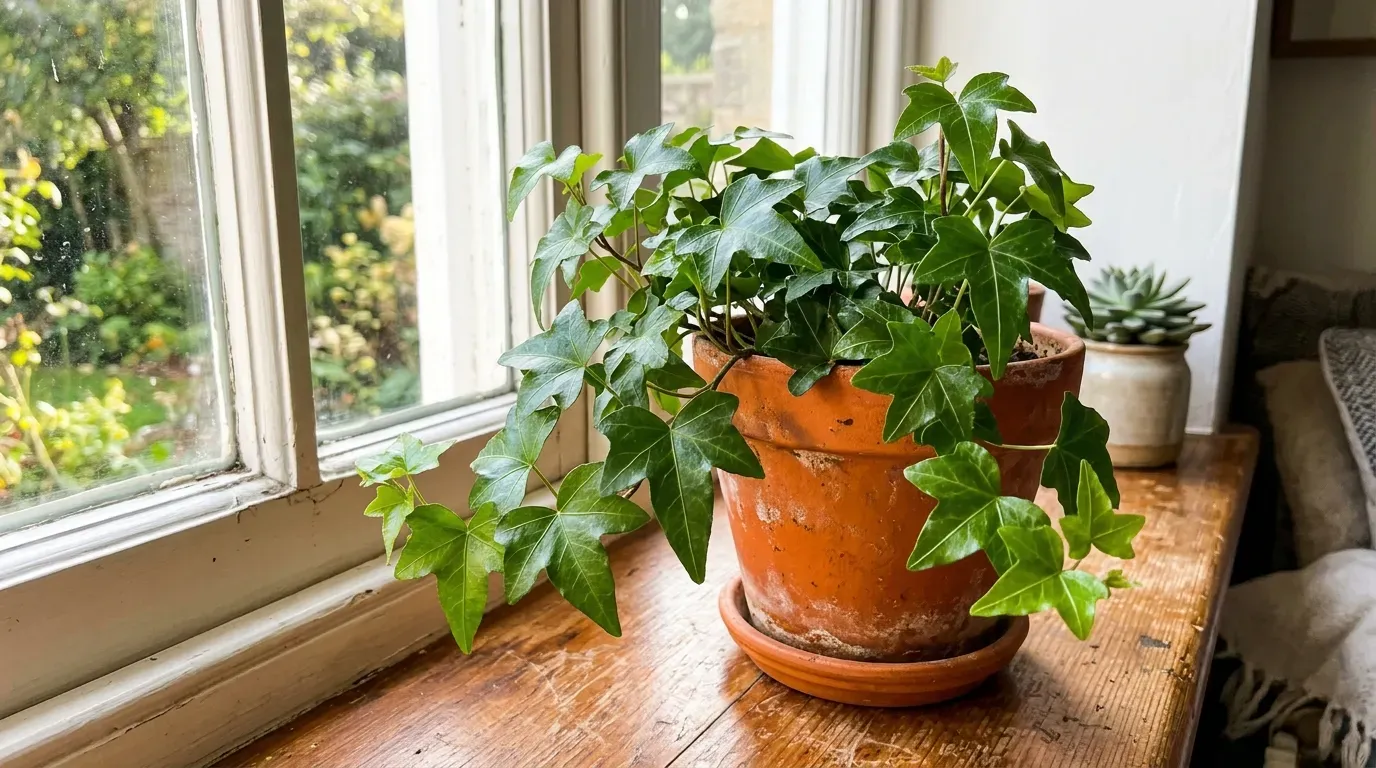
Oak Leaf Ivy (Cissus rhombifolia ‘Ellen Danica’) is a fast trailing vine with deeply lobed, glossy leaves that look like miniature oak foliage. Give it bright indirect light, keep the top inch of mix from staying bone dry or swampy, and pinch tips so it fills out. It is generally pet-safe.
Full plant profile: /plant/oak-leaf-ivy.
Quick Facts
- Difficulty: Easy
- Light: Bright Indirect (tolerates Medium)
- Water: Water when the top inch of mix feels dry
- Pet Safety: Non-toxic to cats and dogs
Light Requirements
Bright, filtered light keeps leaves dense and glossy. An east window is ideal. South or west light works a few feet back from the glass or behind a sheer. Medium light is survivable, but growth slows and internodes stretch.
Hard afternoon sun can crisp leaf edges. If vines look sparse and pale, move closer to brighter light before you fertilize.
Rotate hanging baskets every week or two so one side does not go bald.
Watering Schedule
Water thoroughly when the top inch of mix feels dry. Oak Leaf Ivy likes consistent moisture, but it fails fast in a saucer of standing water. Empty runoff every time.
In active growth, that often means a soak every several days in a warm, bright room. In winter, stretch the gap and let the top dry a bit more.
Yellow, soft leaves usually mean too much water or a dense mix. Crispy tips with dry soil mean you waited too long. Aim for a light, airy mix so the roots get both water and oxygen.
Humidity & Temperature
Average home humidity is fine. Higher humidity helps in dry winter heat. Group plants or use a humidifier if leaves look dull and edges crisp while the mix is still moist.
Keep temperatures roughly 65°F to 80°F. Protect from cold drafts and hot heating vents. Growth slows in cool rooms; that is normal, not a crisis.
Soil & Potting
Use a well-draining mix with air pockets. A practical blend:
- Two parts potting mix
- One part perlite or pumice
- One part orchid bark or coarse coco chip
Always use a drainage hole. Terra cotta helps excess moisture leave the pot. Repot in spring when roots circle the pot or water runs straight through without wetting the core, usually every one to two years.
After repotting, water lightly and give the plant a week of stable light before a heavy soak if roots were disturbed.
Fertilizer
Feed every two to four weeks in spring and summer with a balanced water-soluble fertilizer (such as 20-20-20) at half to full label strength, depending on how aggressively the vine is growing. In winter, cut back to every six to eight weeks or pause until new growth returns.
Do not fertilize a plant sitting in soggy mix or one that just got a hard prune into bare stems. Fix light and water first.
Pruning & Maintenance
Pinch growing tips regularly. That cut pushes side shoots and keeps a hanging basket full instead of stringy. Trim long runners back to a leaf node when you want a denser canopy.
Wipe dusty leaves with a damp cloth so light can reach the surface. Watch for spider mites in dry rooms, especially on the undersides of leaves.
Train vines up a trellis if you want a vertical screen, or let them trail. Either habit works; the vine is vigorous either way.
Propagation
Stem tip cuttings root easily. Take a healthy tip with a few leaves, remove the lowest leaf, and place the node in water or moist mix. Keep it in bright indirect light. Pot up when roots are a couple of inches long.
Water-rooted cuttings transplant fine if you keep the new mix lightly moist for the first week while the roots adjust to soil.
Common Problems
Leggy vines: Not enough light or no pinching. Move brighter and tip-prune.
Yellow soft leaves: Overwatering or poor drainage. Improve the mix and empty the saucer.
Brown crispy edges: Direct sun, dry air, or underwatering. Check light and moisture together.
Spider mites: Fine webbing and stippled leaves. Rinse foliage, raise humidity slightly, and treat if needed.
Sudden leaf drop after a move: Draft shock or a big light change. Stabilize the spot and resume a steady water rhythm.
Pro Tips for Long-Term Maintenance
Treat pinching like scheduled maintenance, not a rescue prune. A few tip cuts every couple of weeks build a thick canopy faster than one hard chop after the vine has already gone long and bare.

About the Author
Silas
The Practical Greenhouse Mentor
"Silas treats the greenhouse like a workshop of practical results. After 40 years of dirty hands, he’s learned that thriving plants are the result of honest observation and small, correct moves rather than luck. He’s the neighbor who knows exactly why your Pothos is pouting and how to fix it without the fuss."