
Janet Craig Dracaena Care
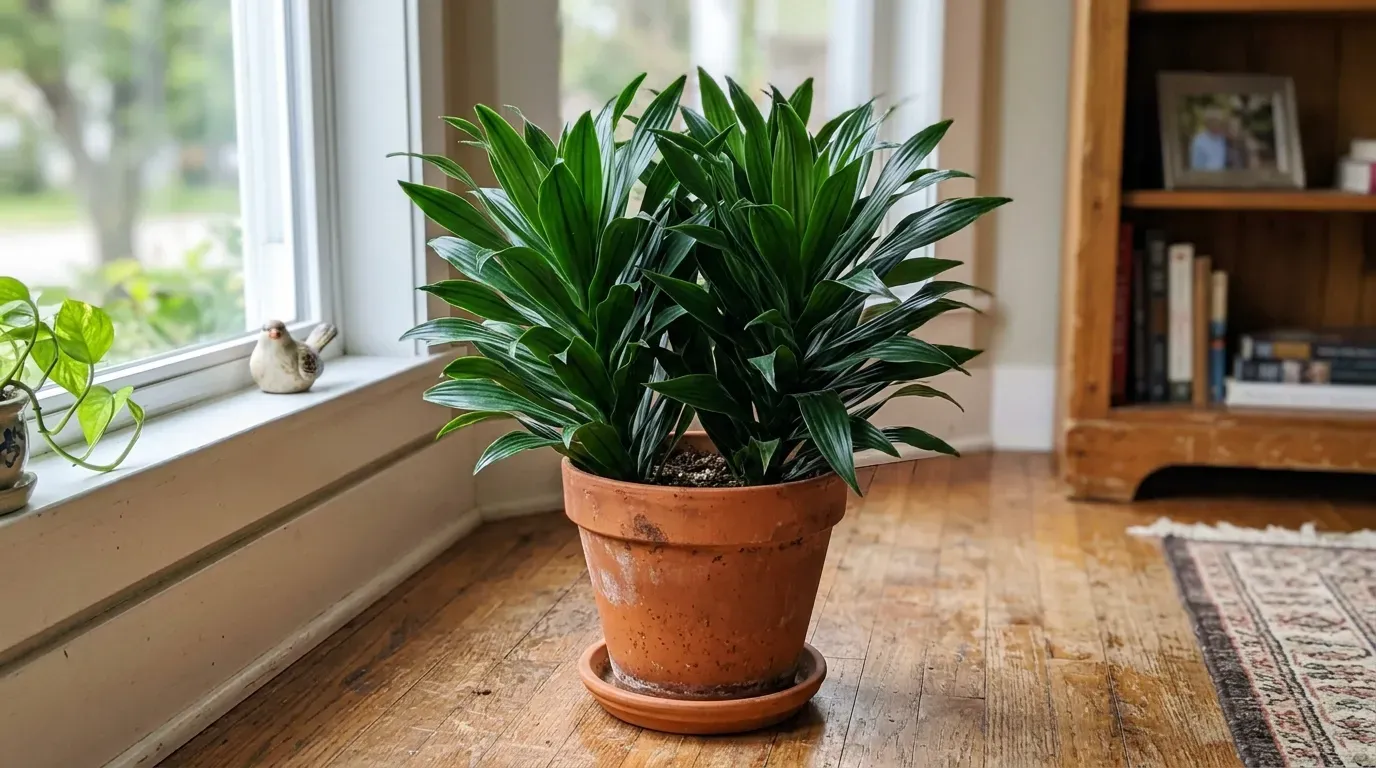
Grow Dracaena fragrans 'Janet Craig' with medium light, a long dry-down, and cleaner water so those deep emerald swords stay full without brown tips.


Janet Craig Dracaena
Dracaena fragrans 'Janet Craig'
Care Level
Easy
Light
Medium
Water
Moderate
Humidity
Moderate
If your Janet Craig Dracaena is stacking brown tips, dropping yellow lower leaves, or looking tired in a hallway, the usual story is tap water, wet soil, or a dim corner that never quite dries. This plant handles imperfect light better than most foliage, which is why it shows up in offices. It does not handle constantly soggy roots.
Plant pros weigh in on a clear baseline: medium indirect light, let the top half to three-quarters of the mix dry, and use water that is kinder than hard tap when tips keep browning. Keep it away from pets. Dracaenas contain saponins that are toxic if chewed.
Full plant profile: /plant/janet-craig-dracaena/.
Quick Facts
- Difficulty: Easy
- Light: Medium
- Water: Allow the top half to three-quarters of the soil to dry
- Pet Safety: Toxic
Light Requirements
Janet Craig Dracaena (Dracaena fragrans ‘Janet Craig’) thrives in medium indirect light. It can survive in a dimmer hallway, but growth slows and the mix stays wet longer, which raises rot risk.
Direct sun leaves brown scorch marks on those sword-shaped leaves. An east window or a few feet back from a bright south or west window is a strong fit. If the plant is stretching and the soil never lightens, move it closer to filtered light rather than watering on a calendar.
This is the larger, looser cousin of Dracaena Compacta. Compacta stays in tight clusters. Janet Craig makes a fuller upright rosette that can reach cane height indoors if you let it.
Watering Schedule
Let the top half to three-quarters of the soil dry before you water again. Soak thoroughly until water leaves the drainage holes, then empty the saucer.
This plant is sensitive to fluoride and minerals in tap water. Distilled water, rainwater, or tap water left out overnight can reduce brown tips. Keep the mix moist but never soggy in spring and summer. Water less in fall and winter, when growth slows.
Yellow lower leaves with wet soil usually mean you watered too soon. Crispy tips with dry air and hard water are a different problem. Fix the water and the dry-down before you assume the plant is thirsty.
Humidity & Temperature
Average home humidity is usually enough. Keep the plant away from cold drafts, AC vents, and heaters. Prefer temperatures in the mid-60s to low 80s Fahrenheit.
Wipe the large leaves with a damp cloth so dust does not block light. If tips keep browning in winter, raise humidity a little with a pebble tray or a nearby humidifier, and switch to cleaner water. Dry air and minerals often stack.
Soil & Potting
Use a well-draining peat-based potting mix in a planter with drainage holes. A little perlite helps the mix dry on a realistic schedule. Empty the saucer after every soak so roots do not sit wet.
This plant is slow. Repot only when roots crowd the pot or the mix has broken down, usually every two to three years. A pot that is too large holds unused wet soil around a modest root ball.
Fertilizer
Feed once a month in spring and summer with a balanced liquid houseplant fertilizer diluted to half strength. Skip autumn and winter. Extra fertilizer builds salts that show up as brown tips, the same look as hard tap water.
Pruning & Maintenance
Trim brown tips along the natural leaf curve with clean scissors. Do not cut straight across the blade if you can follow the taper. Remove fully yellow lower leaves at the base.
If the plant gets taller than you want, you can cut a cane and root the top as a cutting. New growth often sprouts below the cut on the remaining stump. Wipe leaves regularly so the deep green stays glossy.
Propagation
Take a stem cutting with at least one node, or air-layer a tall cane. Let the cut end callus for a day, then place it in moist, airy mix or clean water. Keep bright, indirect light. Roots are slow compared with pothos. Pot up when roots are a couple of inches long.
Common Problems
Brown leaf tips: Hard tap water, dry air, or inconsistent watering. Switch to rainwater or distilled water, empty saucers, and keep the plant off heater blast.
Yellow lower leaves with wet soil: Overwatering. Stretch the dry-down and confirm drainage holes are open.
Brown scorch patches: Direct sun. Move back from the glass.
Soft base or sour soil: Root rot. Unpot, check roots, and restart healthy cane sections if the crown is mushy.
Pro Tips for Long-Term Maintenance
Treat brown tips on your Janet Craig Dracaena as a water-quality clue first, not a reason to water more. Pair a long dry-down with rainwater or distilled water, and the swords stay deep green. The same habit helps related canes like Dragon Tree and Corn Plant.

About the Author
Silas
The Practical Greenhouse Mentor
"Silas treats the greenhouse like a workshop of practical results. After 40 years of dirty hands, he’s learned that thriving plants are the result of honest observation and small, correct moves rather than luck. He’s the neighbor who knows exactly why your Pothos is pouting and how to fix it without the fuss."