
Hoya carnosa Care
Grow Hoya carnosa (wax plant) with bright light, a chunky mix, a dry-down between waterings, and patience for those fragrant star clusters.


Hoya carnosa
Hoya carnosa
Care Level
Easy
Light
Bright Indirect
Water
Moderate
Humidity
Moderate
If your Hoya carnosa grows long vines but never blooms, the fix is usually brighter light and a chunkier mix, not more fertilizer. Plant pros weigh in the same way: wax plants thrive when roots can breathe and the pot dries between drinks.
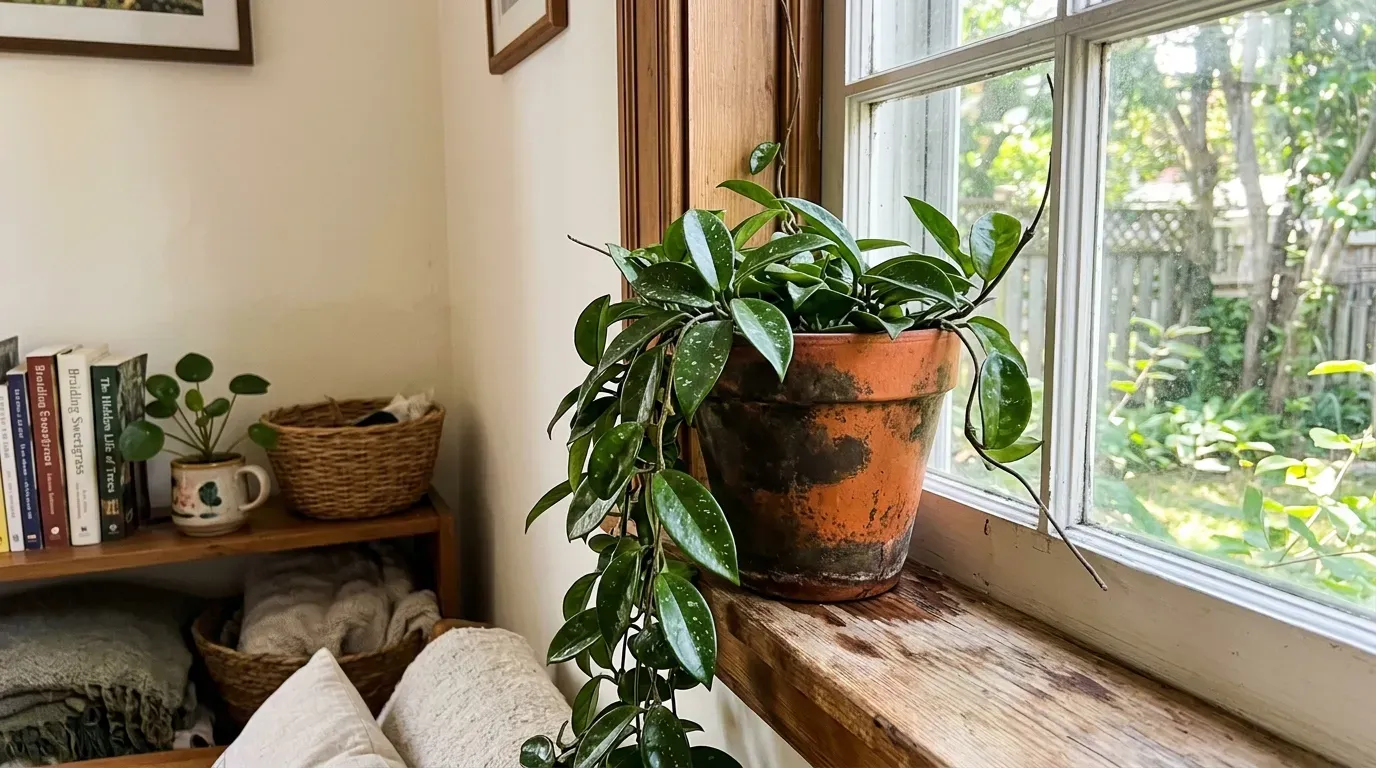
Hoya carnosa (wax plant / porcelain flower) is a tough epiphytic vine with thick leaves and fragrant star-shaped blooms. Give it bright indirect light, a chunky mix with drainage holes, and a real dry-down between waterings. Once buds form, leave the flower spurs alone and keep the plant in place.
Full plant profile: /plant/hoya-carnosa.
Quick Facts
- Difficulty: Easy
- Light: Bright Indirect
- Water: Water when leaves soften or the mix is dry most of the way down
- Pet Safety: Non-toxic to cats and dogs
Light Requirements
Bright, filtered light builds thick leaves and sets blooms. An east window is excellent. South or west light works behind a sheer or a few feet back from hot glass. Weak light makes sparse vines and few flowers.
Hard midday sun can bleach or scorch leaves. If internodes stretch and leaves shrink, move closer to brighter light before you fertilize.
Rotate hanging baskets so one side does not go bald.
Watering Schedule
Hoyas store water in thick leaves. Water thoroughly when the mix is dry through most of the pot, or when leaves lose their firm feel. Empty the saucer. In winter, stretch the gap.
Overwatering is the usual failure in dense soil. Underwatering wrinkles leaves; they usually plump again after a soak if roots are healthy.
During bud set, keep the rhythm steady. Big wet-dry swings drop flower clusters.
Humidity & Temperature
Moderate humidity helps, especially while blooming. Average homes work. Group plants or use a humidifier in dry winter air.
Keep temperatures roughly 65°F to 80°F. Protect from cold drafts. Once buds appear, leave the plant in place. Moving a budding Hoya is a classic way to lose the show.
Soil & Potting
Use a chunky epiphytic mix. Roots want air. A practical blend:
- One part potting mix
- One part orchid bark
- One part perlite or pumice
Always use a drainage hole. Hoyas often bloom better when slightly snug. Repot only when the mix breaks down or roots jam the pot, usually every two to three years in spring.
After repotting, wait a few days before a heavy watering if roots were disturbed.
Fertilizer
Feed monthly in spring and summer with a balanced liquid fertilizer, or use a bloom-focused feed as buds approach. Hold fertilizer in winter.
Do not blast a stressed or freshly potted vine with full-strength feed. Light and water rhythm matter more than extra nutrients for flowering.
Pruning & Maintenance
Train vines on a hoop, trellis, or hanging basket. Prune to shape in active growth, but leave the short flower spurs (peduncles). Hoyas often rebloom from the same spurs.
Wipe dusty leaves so light can reach the waxy surface. Check for mealybugs in leaf joints.
Propagation
Stem cuttings root well in water, perlite, or sphagnum. Take a cutting with at least one node, let the cut dry briefly if the stem is very wet, then root in bright indirect light. Pot up when roots are a couple of inches long.
Common Problems
No blooms: Not enough light, too much nitrogen, or constant repotting into oversized pots. Increase light and keep the plant slightly snug.
Yellow soft leaves: Overwatering or dense mix. Improve drainage and dry-down.
Wrinkled leaves: Thirst or root loss. Check pot weight and roots.
Mealybugs: White cotton in joints. Treat and isolate.
Dropped buds: Drafts, moves, or watering swings during bloom set.
Pro Tips for Long-Term Maintenance
When you see the first buds, stop rearranging the vine. Same window, same watering rhythm, no hard prune on the flower spurs. Stability usually beats last-minute tinkering for a full bloom set.

About the Author
Silas
The Practical Greenhouse Mentor
"Silas treats the greenhouse like a workshop of practical results. After 40 years of dirty hands, he’s learned that thriving plants are the result of honest observation and small, correct moves rather than luck. He’s the neighbor who knows exactly why your Pothos is pouting and how to fix it without the fuss."