
Happy Bean Plant Care
Grow Peperomia ferreyrae (Happy Bean Plant) with bright indirect light, a partway dry-down, and a gritty mix so those lime bean-shaped leaves stay firm.


Happy Bean Plant
Peperomia ferreyrae
Care Level
Easy
Light
Bright Indirect
Water
Moderate
Humidity
Moderate
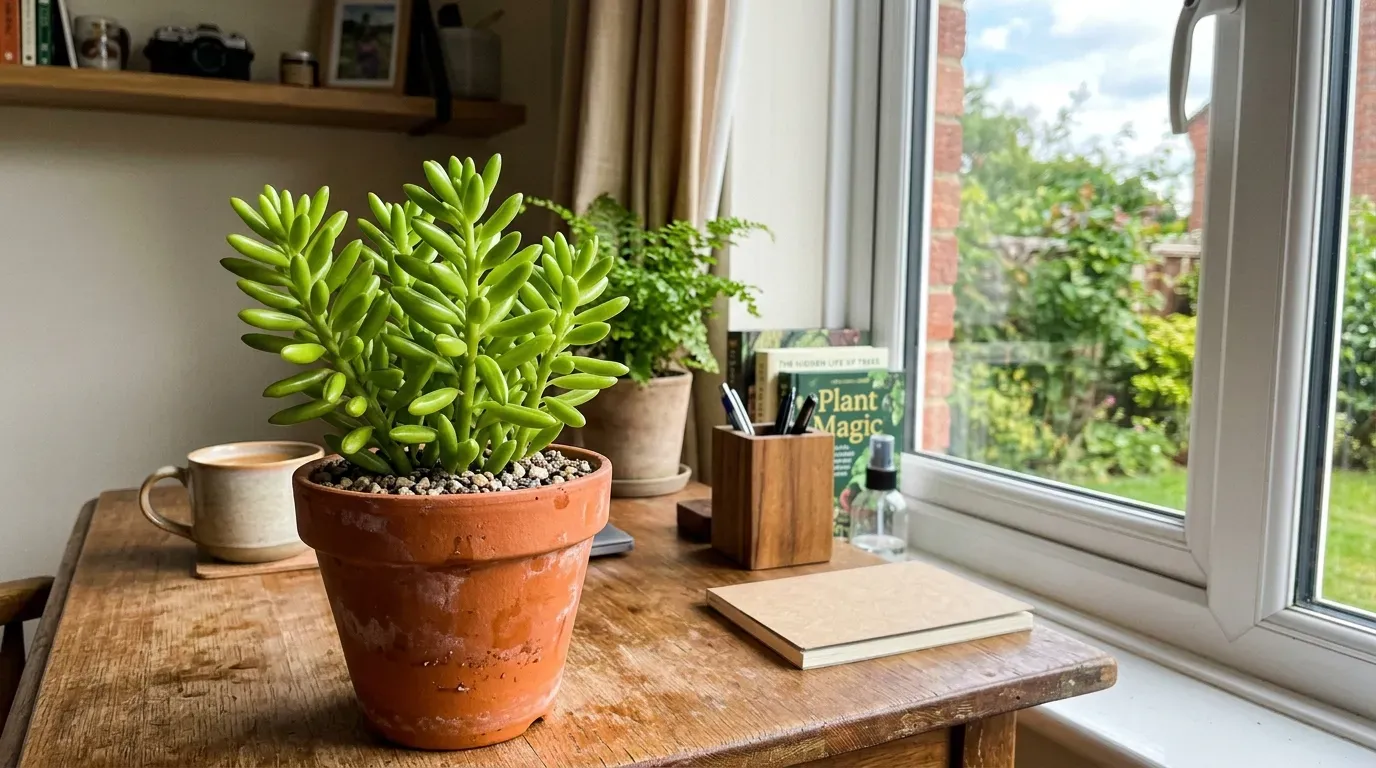
If your Happy Bean Plant yellows, wrinkles, or collapses at the soil line, overwatering is the usual story. Those elongated lime leaves look like small green beans, and each one stores water behind a translucent window. The plant forgives a dry spell far more than a soggy desk pot.
Plant pros weigh in on a simple baseline: bright indirect light, water when the top half to three-quarters of the mix has dried, and keep the planter small with real drainage holes. Peperomia ferreyrae is considered non-toxic to cats and dogs.
Full plant profile: /plant/happy-bean-plant/.
Quick Facts
- Difficulty: Easy
- Light: Bright Indirect
- Water: Allow the top half to three-quarters of the soil to dry
- Pet Safety: Safe
Light Requirements
Happy Bean Plant (Peperomia ferreyrae) thrives in bright, indirect light. Some morning sun is fine. Harsh afternoon rays can burn the leaf windows and leave pale, scarred patches.
In a dim corner, stems stretch and the beans look sparse. An east window or a bright shelf a few feet from south or west glass is a strong fit. Cupid Peperomia wants a similar filtered-bright setup if you are grouping peperomias together.
Watering Schedule
Water when the top half to three-quarters of the soil has dried. Soak thoroughly, then drain fully, and never leave the planter sitting in a saucer of water.
Wrinkled or drooping beans with dry mix usually mean thirst. Yellow, soft leaves with wet mix mean you watered too soon. In winter, stretch the gap between soaks as growth slows.
Humidity & Temperature
Moderate humidity is enough for most homes. Keep temperatures between 65°F and 75°F, and above about 50°F. Protect from cold window glass in winter and from AC vents that dry the foliage.
A pebble tray or plant grouping helps in very dry rooms. You do not need greenhouse humidity for this one.
Soil & Potting
Use a cactus or succulent mix with extra perlite or coarse sand. Terracotta helps wick extra moisture, which suits those semi-succulent roots.
Select a small pot with drainage holes. A large pot holds too much wet soil for a compact 8 to 12 inch plant. Repot only when roots fill the container or the mix stays wet for more than a week.
Fertilizer
Feed every four weeks in spring and summer with a balanced liquid houseplant fertilizer diluted to half strength. Skip autumn and winter. Extra feed can make weak, floppy stems.
Pruning & Maintenance
Snip yellow or damaged beans at the base. Check the crevices where leaves meet the stem. Mealybugs like those tight spots. A cotton swab with isopropyl alcohol can lift a small infestation if you catch it early.
Rotate the pot so the mound stays even. Dust is less of an issue than on broad-leaf plants, but a gentle rinse in the sink (then a full drain) keeps windows clear.
Propagation
Take stem cuttings or leaf cuttings and place them in moist, airy mix or water. A stem piece with a few beans roots more reliably than a single leaf. Keep bright, indirect light. Roots often show within a couple of weeks. Pot several cuttings together if you want a full mound faster.
Common Problems
Yellow, soft leaves with wet soil: Overwatering. Let the mix dry deeper, and confirm drainage holes are open.
Drooping or wrinkled beans with dry mix: Thirst. Give a deep soak, then return to the partway dry-down.
White fluff in leaf crevices: Mealybugs. Isolate the plant, wipe pests off, and repeat checks for a few weeks.
Burned, pale patches on the windows: Too much direct afternoon sun. Filter the light.
Pro Tips for Long-Term Maintenance
Pinch a bean on your Happy Bean Plant before you water. If it feels firm, wait. If it has a slight give and the mix is dry halfway down, soak and drain. That leaf check keeps a small terracotta pot safer than a weekly pour.

About the Author
Silas
The Practical Greenhouse Mentor
"Silas treats the greenhouse like a workshop of practical results. After 40 years of dirty hands, he’s learned that thriving plants are the result of honest observation and small, correct moves rather than luck. He’s the neighbor who knows exactly why your Pothos is pouting and how to fix it without the fuss."