
Fishtail Palm Care
Grow Caryota mitis (Fishtail Palm) with bright indirect light, even moisture, high humidity, and clean water to protect those jagged leaflets from tip burn.


Fishtail Palm
Caryota mitis
Care Level
Moderate
Light
Bright Indirect
Water
Moderate
Humidity
High
If your Fishtail Palm tips brown or leaflets look speckled, dry air, hard tap water, or spider mites are usual suspects. This architectural multi-stemmed palm needs bright light and humidity that most heated homes do not provide by default.
Plant pros weigh in on a practical baseline: bright indirect light, water when the top inch dries, humidity around 50% or higher, and cleaner water when tips keep burning. Wear gloves when pruning. Sap and berries contain calcium oxalate crystals.
Full plant profile: /plant/fishtail-palm/.
Quick Facts
- Difficulty: Moderate
- Light: Bright Indirect
- Water: Water when the top inch of soil is dry
- Pet Safety: Toxic
Light Requirements
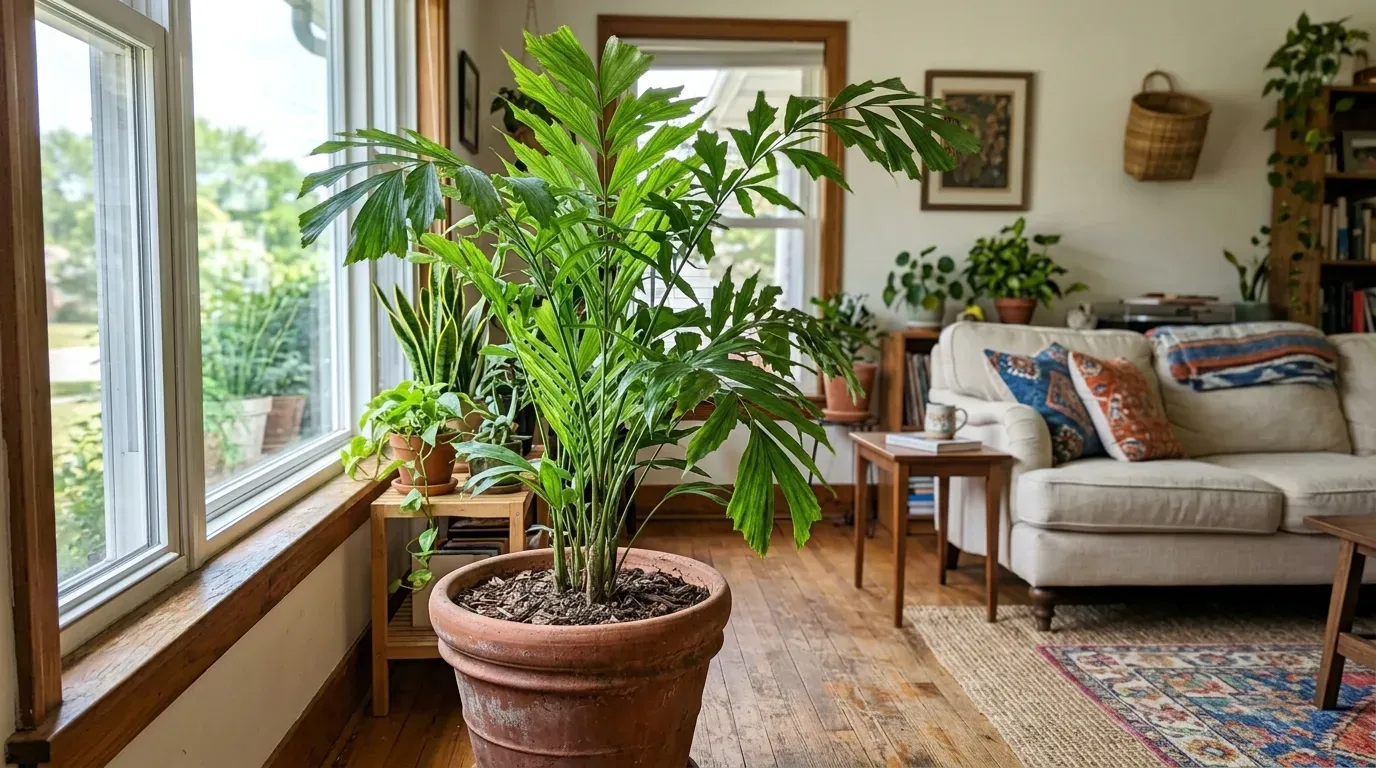
Fishtail Palm (Caryota mitis) needs plenty of light to keep jagged leaflets crisp and growth moving. Without enough light, fronds dull and growth stalls.
An east-facing window is ideal. West or south windows work if the plant sits a few feet back from hot afternoon glass. Direct hard sun bleaches and burns fronds.
Watering Schedule
This is a moisture-loving palm that still rots in mud. Water when the top inch feels dry. Soak until water flows from the drainage holes, then empty the saucer.
Fishtail Palms are sensitive to fluoride and chlorine. Brown, crispy tips often track tap water chemistry. Try rainwater, distilled water, or filtered water if tips keep burning despite good humidity.
Humidity & Temperature
Aim for humidity of about 50% or higher. Dry indoor air crisps leaflet tips quickly. Use a humidifier, plant grouping, or a pebble tray.
Prefer warm, stable temperatures between 65°F and 85°F. Keep the plant away from cold drafts, AC vents, and radiators.
Soil & Potting
Use a peat-based mix with about one-third perlite or coarse sand so the pot holds some moisture but still drains. Choose a sturdy pot with drainage holes. These palms get tall and top-heavy, so a heavy ceramic or clay planter helps.
Repot only when root-bound. Palms have delicate roots that resent rough disturbance.
Fertilizer
Feed once a month in spring and summer with a palm fertilizer that includes magnesium and manganese, diluted to half strength. Skip autumn and winter feeding. Yellowing fronds can signal nutrient gaps, but check watering and drainage first.
Pruning & Maintenance
Wipe fronds monthly with a soft, damp cloth. Dust blocks light and hides early mites. Remove fully brown fronds at the base. If only tips are brown, you can trim following the natural leaflet shape without cutting into healthy green tissue.
Wear gloves. Sap can irritate skin. Keep the plant out of pet reach.
Propagation
Home growers usually divide basal suckers during repotting or grow from seed, which is slow. When separating a sucker, keep developed roots attached, pot into fresh mix, and keep warm and humid while it establishes. Stem cuttings do not work like vine cuttings.
Common Problems
Spider mites: Speckling, pale fronds, and fine webbing in dry rooms. Wipe leaves, raise humidity, and treat with neem oil or insecticidal soap as directed.
Brown tips: Low humidity, hard tap water, or fertilizer salts. Improve humidity, switch water, and flush if salts are visible.
Yellowing fronds: Nutrient deficiency or overwatering. Check pot weight and drainage before feeding harder.
Mushy stems at the base: Root rot from waterlogged soil. Improve drainage and lengthen the dry-down slightly.
Pro Tips for Long-Term Maintenance
Do not prune away fronds on your Fishtail Palm as soon as they start to yellow. Palms draw nutrients from older fronds to support new growth. Leave a frond until it is fully brown and dry, then snip it at the base. That habit, plus cleaner water and higher humidity, keeps tip burn from cascading through the canopy.

About the Author
Silas
The Practical Greenhouse Mentor
"Silas treats the greenhouse like a workshop of practical results. After 40 years of dirty hands, he’s learned that thriving plants are the result of honest observation and small, correct moves rather than luck. He’s the neighbor who knows exactly why your Pothos is pouting and how to fix it without the fuss."